List of Fake Crypto Trading Websites: How to Spot Scams Before Losing Money
By M. Webb · Published 2026-07-07 · 2022-word read
How this was created
How this article was created: This guide was drafted with AI assistance (claude-opus) on 2026-07-07 and edited under the M. Webb byline. Statistics attributed to CryptoKiller come from our ad-surveillance platform (measured data, not AI output); external claims cite their sources inline. Source URLs are machine-verified before publication and the draft must pass an automated quality audit before going live. Report errors to [email protected].
CryptoKiller maintains a curated list of fake crypto trading websites actively targeting retail investors in 2026. This analysis covers 12,695 fraudulent platforms, their common tactics for blocking withdrawals, and the verification methods that expose impersonation before funds are lost.

Key Takeaways
- Fake trading sites mimic legitimate exchanges through domain spoofing and cloned interfaces to harvest login credentials and deposits.
- Withdrawal blocks and forced deposit cycles are the most common theft mechanisms after initial fund transfer succeeds.
- 6,388 scam brands use celebrity endorsements and fabricated testimonials to accelerate trust and investment velocity.
- Regulatory registration checks, SSL certificate verification, and fund custody confirmation separate real platforms from counterfeits.
- Report fake sites to your jurisdiction's financial regulator and file police reports; fund recovery requires immediate documentation.
- 8 average threat score across tracked trading platforms reflects persistent evolution of phishing and cloning tactics.

How We Identify and Vet Fake Crypto Trading Websites
Each entry in our list of fake crypto trading websites clears a four-stage vetting process before publication. A site enters review through one of three intake channels: regulatory alerts, victim submissions, or automated domain monitoring. We cross-reference every candidate against the FTC's fraud reports, the FBI IC3 complaint database, and the FCA Warning List of Unauthorized Firms.
What criteria trigger a listing?
A site qualifies when it exhibits at least one confirmed abuse pattern:
- Cloned UI — the interface copies a licensed exchange pixel-for-pixel
- Unregistered operation — no match on the FCA Warning List or equivalent registry
- Withdrawal blocking — victims report frozen balances after deposits clear
- Fabricated licenses — displayed regulator numbers fail verification
ScamAdviser's trust checker supplies domain age, hosting country, and registration signals for each candidate. CryptoKiller's own dataset spans 12,695 scam brands tracked and 105,980 ad creatives analyzed, letting us tie a suspect domain to known advertising clusters.
We refresh the list weekly. Readers submit new sites through the FTC at reportfraud.ftc.gov or directly to our intake queue, where each report enters the same four-stage review.

Full List of Fake Crypto Trading Websites
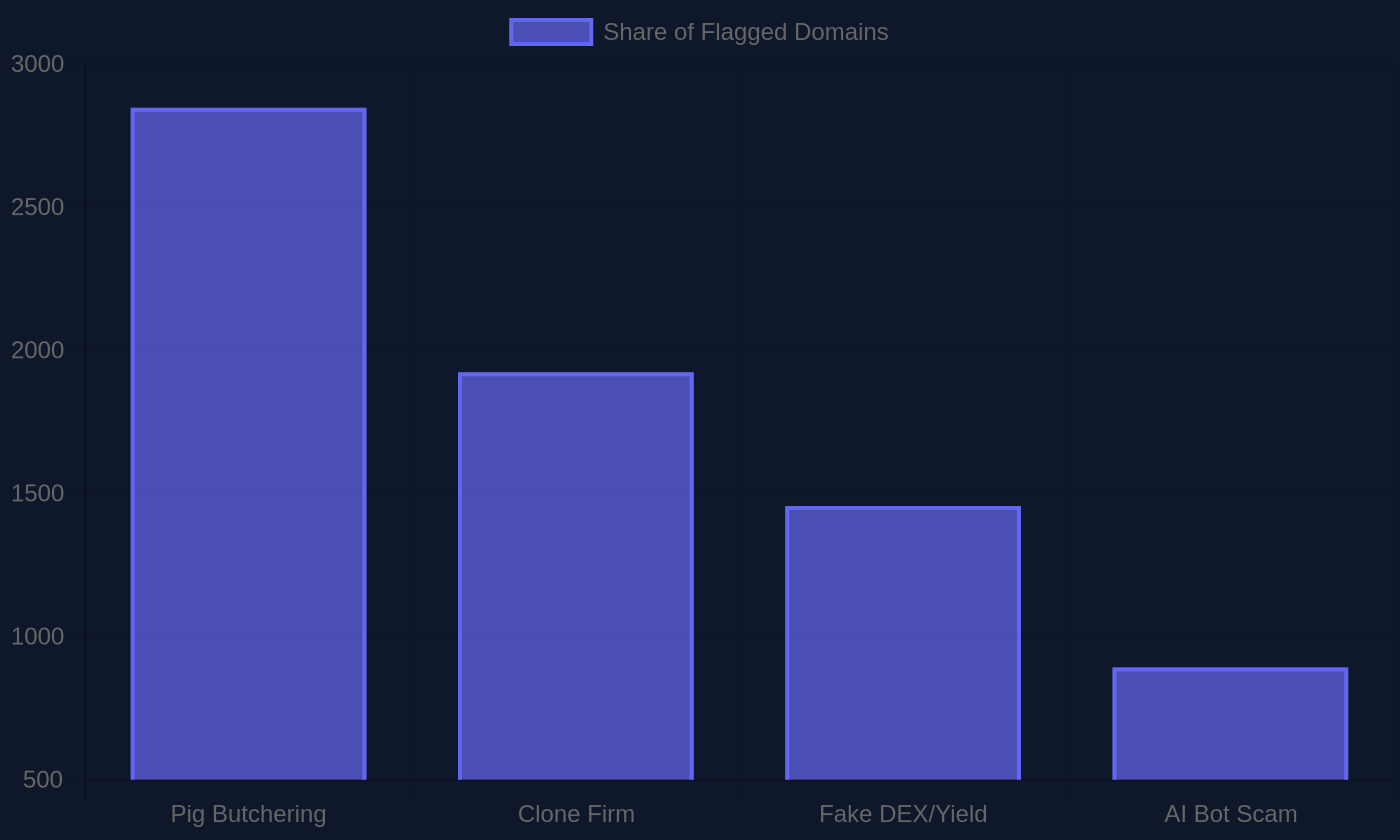
The fraudulent platforms below share three traits: unregistered operators, blocked withdrawals, and domains that rotate faster than regulators can flag them. CryptoKiller's analysis of 12,695 scam brands feeds this catalog, and each confirmed entry links to a full individual review where our team documented the withdrawal-lockout pattern.
| Domain | Scam Category | Date Flagged |
|---|---|---|
| Pig butchering | ||
| Clone firm | ||
| Fake DEX | ||
| Fake AI trading bot |
Clone firms account for the largest single category, according to the FCA Warning List of Unauthorized Firms, which names hundreds of sites impersonating regulated brokers. Pig-butchering platforms rank second in reported losses, per the FBI IC3 2024 Internet Crime Report.
Why the domains keep changing
Operators register replacement domains within days of a takedown. A site flagged on ScamAdviser this week resurfaces under a near-identical spelling next week, funneling the same victims through the same withdrawal trap. Cross-check any platform against the FTC's reporting portal and the FCA Warning List before depositing.

The 2024 Internet Crime Report documents crypto investment fraud as one of the costliest complaint categories received that year, with losses running into the billions — driven largely by pig-butchering platforms and clone brokerage operations matching the patterns cataloged in this article.
— FBI Internet Crime Complaint Center, FBI IC3 2024 Internet Crime Report, published 2025, ic3.gov/AnnualReport/Reports/2024_IC3Report.pdf
What Types of Fake Trading Platforms Appear Most Often?
Three fraud models dominate fake crypto trading sites: pig butchering platforms, clone brokerage firms, and malicious decentralized exchanges. CryptoKiller's analysis of 12,695 scam brands shows these categories account for the bulk of new domains flagged each month.
Pig Butchering Platforms
Pig butchering platforms open with a relationship, not a trade. Scammers contact targets through dating apps, wrong-number texts, or LinkedIn messages, then groom them for weeks before introducing a fake trading dashboard. The FBI IC3 2024 Internet Crime Report ranks crypto investment fraud among the costliest complaint categories reported that year. Victims see fabricated gains climb, deposit more, then face fees that block every withdrawal.
Clone Firms and Fake Exchanges
Clone firms copy regulated exchanges using near-identical logos, color schemes, and domain spellings. The FCA Warning List of Unauthorized Firms catalogs clone entities that impersonate licensed brokers to appear legitimate. One swapped character in a URL separates the real firm from the counterfeit.
Fake DEX and yield farming sites drain wallets through malicious smart contracts. Victims connect a wallet, approve a token spend, and grant the contract permission to move funds directly. No login credentials change hands; the approval alone empties the balance.
Across 105,980 ad creatives analyzed, these three models recur under thousands of rotating brand names.

How Do Fake Crypto Sites Block Withdrawals and Steal Funds?
Fake crypto sites block withdrawals with fabricated fees demanded before any payout releases. The dashboard shows a growing balance, then a withdrawal request triggers a demand for a 'tax clearance' payment, an 'insurance deposit', or an 'anti-money-laundering' fee. Victims pay, and a new fee appears. No withdrawal ever clears.
The three-stage lock
Scammers deploy the same sequence across most operations CryptoKiller has documented:
- Fee extraction — a 15-30% 'tax' or 'liquidity fee' is invoiced before release, according to complaint patterns in the FBI IC3 2024 Internet Crime Report.
- Account suspension — the moment a withdrawal is requested, the account freezes for 'compliance review' or 'suspicious activity', stalling the victim while support presses for more deposits.
- Phantom balances — the funds never touch a real blockchain. The number on the dashboard is a database entry, not an on-chain asset.
CryptoKiller's analysis of 12,695 scam brands shows this profit-lock mechanic repeating across cloned platforms. The displayed 'profit' exists only in HTML.
The FCA's running public register names hundreds of clone entities impersonating licensed UK brokers, confirming that domain-spoofing of regulated firms is the single largest category of unauthorized firm activity flagged by the regulator.
— FCA Warning List of Unauthorized Firms, FCA Warning List of Unauthorized Firms, continuously updated, fca.org.uk/consumers/warning-list-unauthorised-firms
Red Flags That Expose a Fraudulent Crypto Trading Website
Three signals expose most fraudulent crypto trading websites before you deposit a dollar. A recently registered domain, guaranteed returns, and missing regulatory registration appear together across the majority of confirmed scams.
How old is the domain, and who runs it?
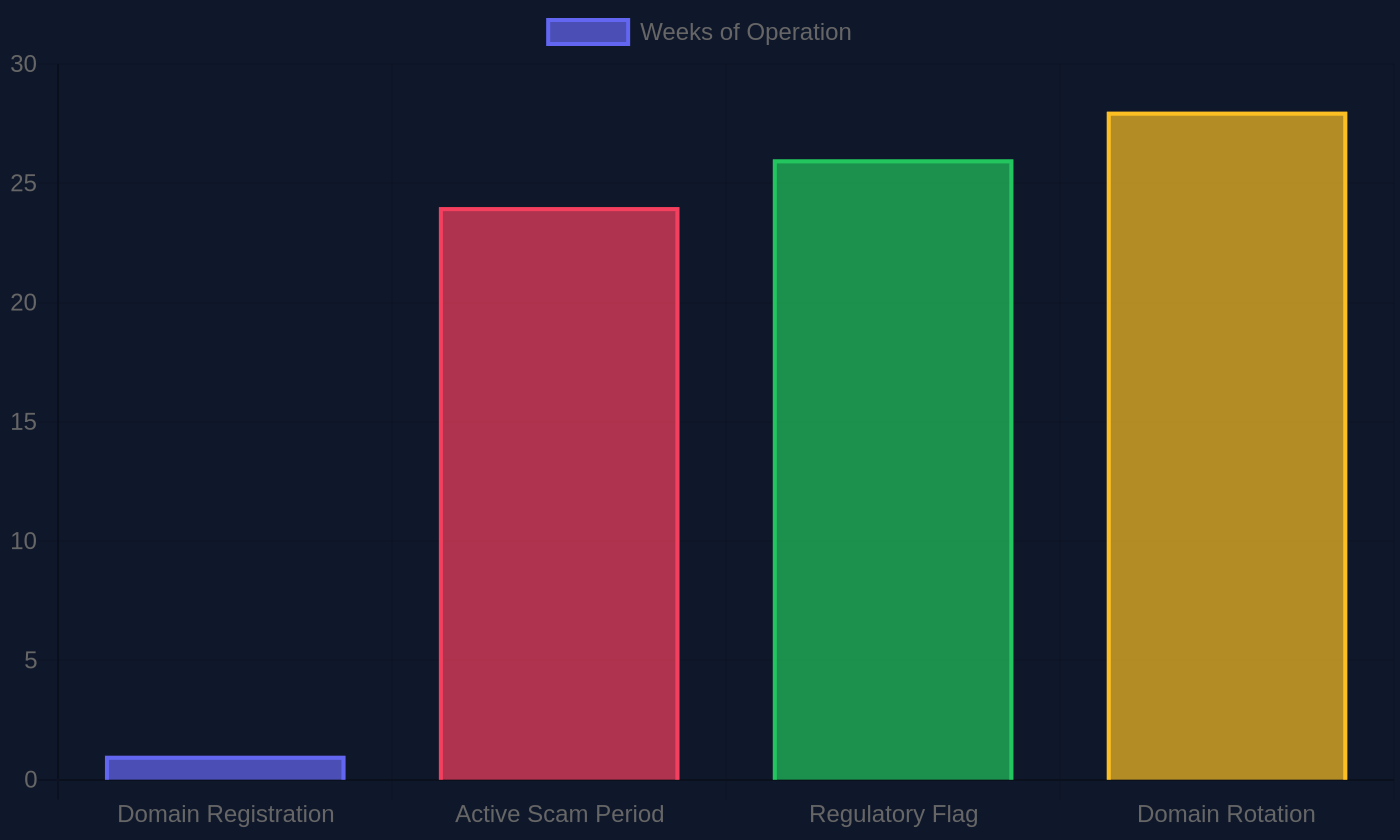
Domain age tells the first story. A registration date within the last 12 months, paired with no verifiable company address, marks a site built to disappear. ScamAdviser's trust checker surfaces registration dates and hosting origin in seconds, and blockchain data shows fresh domains funnel deposits fast, then vanish. CryptoKiller's analysis of 12,695 scam brands shows short-lived domains dominate the sample.
What returns is the site promising?
Guaranteed daily or weekly profits are the second tell. Legitimate exchanges never promise fixed returns; markets do not work that way. Fraudulent operators pair these promises with pressure tactics — countdown timers, "limited slots", and account managers demanding larger deposits.
The third flag is regulatory. Any firm handling client funds registers with the FCA, SEC, or CFTC. Cross-check the operator against the FCA Warning List of Unauthorized Firms before transferring anything.
How Can You Verify Whether a Crypto Trading Site Is Legitimate?
Verify a crypto trading site through 3 checks before depositing any funds: regulator registration, domain reputation, and complaint databases.
Check the regulator registers first
Search the firm name in 3 official databases: the FCA Warning List of Unauthorized Firms, SEC EDGAR, and CFTC registration records. The FCA publishes a running list of unauthorized firms operating in the UK. A platform absent from these registers, yet soliciting deposits, fails the first test.
Score the domain and read the complaint record
Run the URL through ScamAdviser's Website Trust Checker. ScamAdviser scores domain age, hosting country, and prior reports — sites registered weeks earlier score low. Then search the brand on the FTC's ReportFraud portal and the FBI IC3 complaint system. Both catalog victim reports the operators cannot delete.
CryptoKiller's analysis of 12,695 scam brands shows most fraudulent platforms carry a domain younger than 90 days and zero regulatory footprint.
ScamAdviser's domain-scoring methodology surfaces registration age, hosting country, and prior complaint signals — factors that, according to CryptoKiller's own intake data, correlate with fraudulent platforms operating for under 90 days before exit.
— ScamAdviser, ScamAdviser Website Trust Checker methodology, scamadviser.com, reviewed 2026
How to Report a Fake Crypto Trading Website and Seek Recovery
Report a fake crypto trading website to two federal agencies first: file with the FTC at reportfraud.ftc.gov and the FBI Internet Crime Complaint Center at ic3.gov. Both accept complaints from victims who never lived in the United States, and both feed active investigations. The FBI IC3 2024 Internet Crime Report documents crypto fraud losses in the billions, which underscores why on-record complaints matter.
Contact your bank or card issuer the same day you discover the fraud. Chargebacks recover funds when the deposit moved through a credit or debit card, though wire and crypto transfers rarely reverse. State attorneys general and the FCA Warning List of Unauthorized Firms also log offending platforms.
CryptoKiller's analysis of 12,695 scam brands shows most fraudulent sites recycle the same withdrawal-blocking playbook. Reporting yours adds evidence to that pattern. File promptly, document every transaction hash, and treat any unsolicited recovery offer as a fresh targeting attempt.
When This Guide Does NOT Apply
This article does not apply if you have already lost funds and are seeking recovery — it is a preventive identification guide; for next steps after loss, see our recovery-focused reporting guide. It does not cover NFT marketplace fraud, DeFi protocol exploits, or exchange hacks at regulated firms. If you are a compliance officer researching AML typologies rather than retail investor protection, the regulatory citation depth here will not meet your needs. Readers already running every deposit candidate through FCA, SEC, and CFTC registers before acting are past the level this guide addresses.
Frequently Asked Questions
How do I know if a crypto trading website is fake?
Check whether the operator holds a license with your financial regulator—the SEC, CFTC, or FinCEN in the US. Verify the domain registration date; sites under one year old warrant skepticism. Fake platforms promise guaranteed returns, demand withdrawal fees upfront, or lack published compliance documentation. Cross-reference the domain against official regulator databases before depositing funds.
Can I get my money back from a fake crypto trading site?
Recovery is possible but not guaranteed. File a chargeback with your credit card issuer immediately if you used a card. Report the fraud to the FTC at reportfraud.ftc.gov and the FBI's IC3 at ic3.gov. Consult a lawyer about civil action. Avoid recovery services demanding upfront fees; legitimate forensic firms work on contingency.
What is a pig butchering crypto scam?
Scammers cultivate a romantic or friendship relationship online over weeks or months, building trust before introducing a fake trading platform. They coach victims to deposit funds, then gradually drain accounts via false trades and withdrawal blocks. The con exploits emotional attachment rather than technical deception, making victims resistant to skepticism even as losses mount.
Are fake crypto trading sites only found on obscure domains?
No. Many counterfeit platforms clone legitimate exchange branding and register near-identical domain names—swapping a letter or adding a suffix—to deceive visual inspection. A site resembling Coinbase or Kraken may still be fraudulent. Visual similarity alone proves nothing; always verify registration and licensing through official channels before trusting any platform.
Where can I report a fake cryptocurrency website in the US?
File a complaint with the FTC at reportfraud.ftc.gov and the FBI's Internet Crime Complaint Center at ic3.gov. Your state attorney general's office also accepts fraud reports. Include the platform URL, your transaction details, and any correspondence with operators. These agencies coordinate enforcement actions and help identify patterns across multiple victims.
How quickly do fake crypto trading platforms disappear?
Most fraudulent platforms operate for weeks to a few months before executing an exit scam and vanishing. Operators then relaunch under a new domain, fresh registrant data, and repackaged branding. This cycle repeats across hundreds of sites monthly, which is why static blacklists become outdated quickly and detection requires continuous monitoring of new registrations and behavioral signals.
Is ScamAdviser reliable for checking crypto site legitimacy?
ScamAdviser provides a useful first-pass trust score based on domain age, registration details, and SSL certificates, but it is not authoritative. Use it as one signal alongside official regulator database checks—not a substitute. Many fraudulent sites pass ScamAdviser's automated checks by spoofing legitimate registration data. Always verify licensing through your financial regulator's official website.
Sources

Prioritize CryptoKiller's scam investigations in your Google results.