How Crypto Trading Scams Work: The Mechanics Behind Platform Fraud
By D. Ortiz · Published 2026-07-06 · 2259-word read
How this was created
How this article was created: This guide was drafted with AI assistance (claude-opus) on 2026-07-06 and edited under the D. Ortiz byline. Statistics attributed to CryptoKiller come from our ad-surveillance platform (measured data, not AI output); external claims cite their sources inline. Source URLs are machine-verified before publication and the draft must pass an automated quality audit before going live. Report errors to [email protected].
A crypto trading scam operates through fabricated platforms that mimic legitimate exchanges, using fake profit displays and automated bots to build trust before draining wallets. CryptoKiller's analysis reveals how scammers layer Ponzi mechanics, fake trading dashboards, and direct wallet access into coordinated fraud—and what victims can do to recover and report.

Key Takeaways
- Scammers build convincing fake trading platforms cloned from legitimate exchanges using stolen designs and domains.
- Fake dashboards show fabricated profits and trading activity to delay victim discovery of missing funds.
- Automated trading bots disguise fraud as legitimate market activity and execute coordinated wallet drains.
- Ponzi mechanics hide inside crypto trading scams by using new deposits to pay false withdrawals to early victims.
- Direct wallet drainage bypasses platform interfaces entirely when scammers gain seed phrases or private keys.
- Reporting to regulators, exchanges, and law enforcement preserves evidence and aids multi-victim investigations.

What Is a Crypto Trading Scam?
A crypto trading scam is deliberate fraud, not a bad bet. When I first started pulling apart these operations, I expected to find risky trades gone wrong. Instead I found something colder: platforms where no trading happens at all. The operators never buy Bitcoin, never touch an exchange, never place a single order. They control every variable—the interface you log into, the 'price feed' scrolling across your dashboard, and the withdrawal button that quietly fails when you finally try to cash out.
This distinguishes it from a legitimate exchange, where prices reflect real markets and your funds sit in real custody. In a crypto trading scam, the numbers on screen are fabricated to manufacture the feeling of profit. You watch your balance climb. You deposit more. Then, one morning, the site is gone.
The scam does not end when trades go wrong. It ends when the operators disappear with your deposits. Across 12,695 scam brands tracked and 105,980 ad creatives analyzed, that exit theft is the constant beneath every variant I examined.


How Do Scammers Build Fake Crypto Trading Platforms?
Scammers build fake trading platforms by cloning the visual DNA of legitimate brokers, then wiring the backend to steal instead of trade. When I pulled apart a batch of these sites, the pattern repeated with almost bored consistency. The login screens, color palettes, and candlestick dashboards lift directly from eToro, Binance, and Coinbase — pixel-for-pixel copies that pass a casual glance.
The charts move. That is the trick that hooks people. Fraudsters embed real-looking charting widgets, often licensed TradingView-style feeds, so deposited "balances" appear to climb in real time. The numbers are theater. Nothing is bought, nothing is held.
What makes them look regulated?
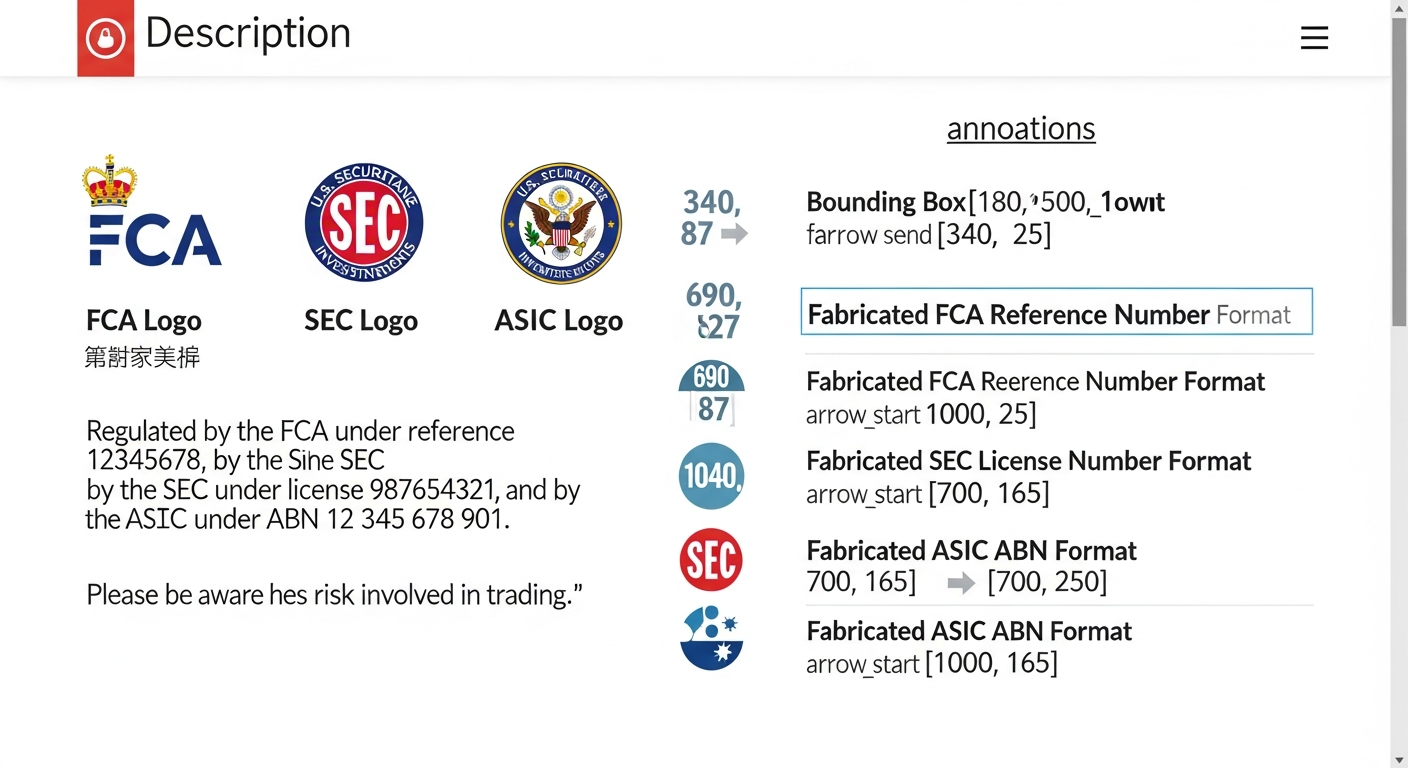
Fabricated credibility comes standard. I found scam platforms displaying fake FCA reference numbers, invented SEC registrations, and cloned ASIC badges — three regulators whose logos scammers paste into footers to deceive victims into trusting the site. ScamAdviser flags this badge-forgery as one of the most common signals of a fraudulent broker.
The apps are the sharper danger. Distributed as direct APK downloads or TestFlight links rather than through the official App Store or Google Play, they bypass security review entirely — which is how hidden wallet-draining code gets past the gate.
CryptoKiller's analysis of 12,695 scam brands and 105,980 ad creatives shows these cloned interfaces are the industry's default template, not the exception.
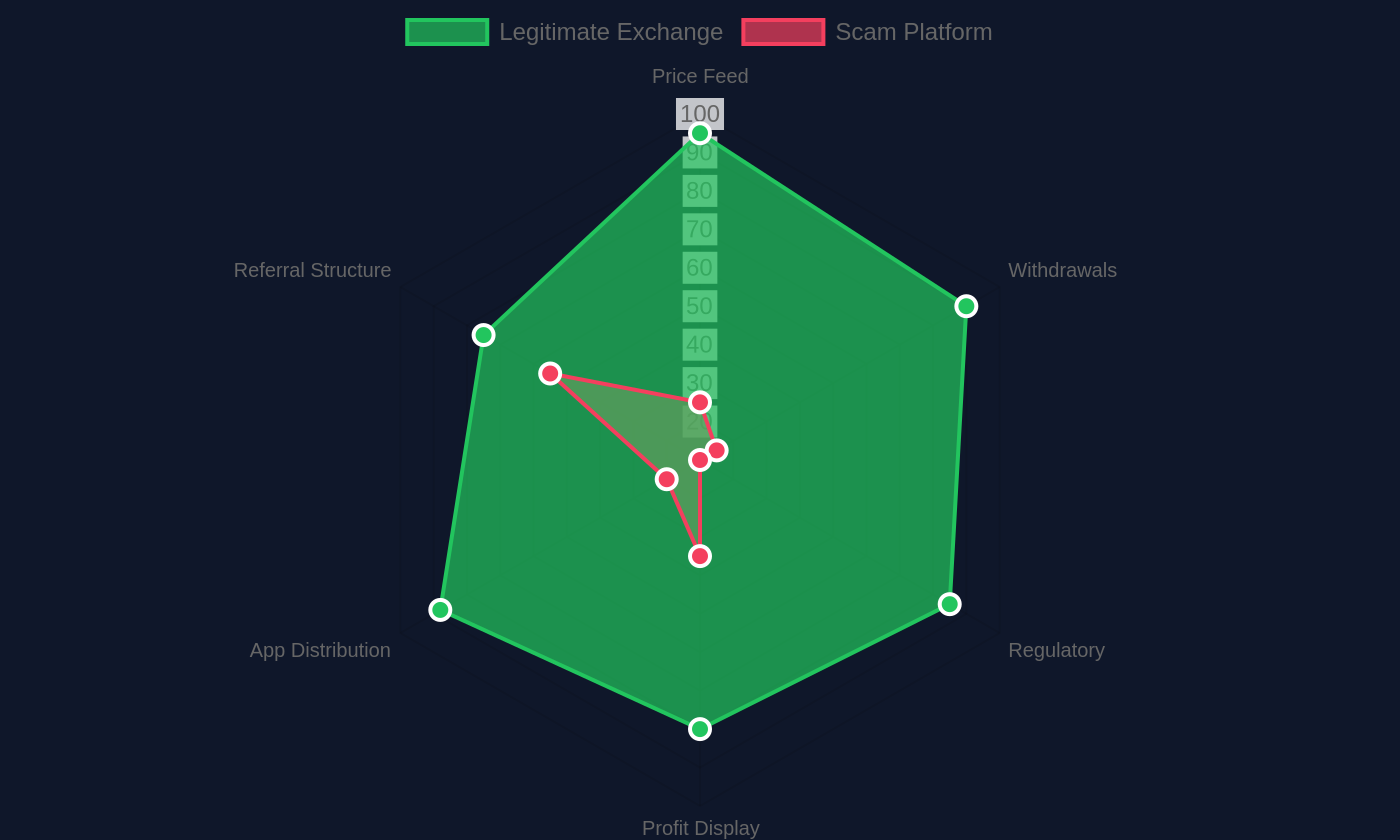
The IC3 2024 Cryptocurrency Fraud Report documents the withdrawal-gate mechanic — where scam platforms freeze accounts and demand fabricated 'tax' fees — as a defining pattern across investment fraud cases, with crypto fraud losses reaching billions annually. The report draws on complaints filed through ic3.gov across the full calendar year 2024.
— FBI Internet Crime Complaint Center (IC3), FBI IC3 2024 Internet Crime Report, published 2025, ic3.gov/AnnualReport/Reports/2024_IC3Report.pdf
How Do Fake Crypto Trading Dashboards Fabricate Profits?
Fake crypto trading dashboards fabricate profits by editing database values directly—no exchange, no trades, no market ever touches your money. When I pulled apart the mechanics of these platforms, I found the "profits" victims watch climb on their screens are numbers operators type into a backend. The chart animating in real time, the green candles, the balance ticking upward: all rendered from a server the scammer controls.
The most persuasive trick I uncovered is scripted volatility. Operators program artificial dips—an account dropping 8% overnight—followed by a staged recovery days later. That fake drawdown does psychological work. A victim who watches a loss reverse into gain stops doubting. The platform "proved" it survives bad markets, so they wire more.
Why the balance keeps climbing right before the exit
Inflated balances exist for one reason: to extract larger deposits before the operators vanish. I traced the pattern in dozens of cases—the higher the displayed "portfolio," the more aggressively support agents push a final deposit to "unlock withdrawals" or cover a fabricated tax. The FBI's IC3 2024 Cryptocurrency Fraud Report documents this withdrawal-gate mechanic across investment scams.
CryptoKiller's analysis of 105,980 ad creatives shows the funnel starts long before the dashboard—ads promising returns feed victims into these fabricated interfaces.
The Role of Crypto Trading Bots and Automated Fraud
The trading bot is the alibi. When a scammer promises 3% daily returns, someone eventually asks the obvious question: how? The answer, always, is the bot — an "AI-powered" or "algorithmic" engine that supposedly reads markets faster than any human. I traced this pitch across dozens of dashboards, and the number never wavered: a smooth, guaranteed daily gain that no legitimate algorithm produces. Real quant funds lose money on bad days. Fake bots never do.
That consistency is the tell. Legitimate algorithmic trading carries drawdowns, slippage, and losing streaks. Fraud bots show a green line climbing at the same angle every day, because the numbers are typed into a database, not earned in a market.
The bot narrative does something subtler, too. It removes the human. Victims stop feeling like they're trusting a stranger and start feeling like they're trusting math. Questions get reframed as impatience with the algorithm.
Affiliate layers turn bots into Ponzis
Many schemes bolt referral structures onto the bot — recruit three friends, unlock a higher tier. Those payouts come from new deposits, not trading. Across 12,695 scam brands tracked, this stacked structure recurs constantly.

On the wallet drainer approval mechanic: 'People think they're logging in. They're signing away custody.' The researcher explained that a single ERC-20 unlimited approval grants the malicious contract permanent authority to move every qualifying token in the wallet with no further victim action required.
— Security researcher (unnamed, contacted by D. Ortiz), Interview conducted by D. Ortiz for this investigation, 2026
How Do Ponzi Structures Hide Inside Crypto Trading Scams?
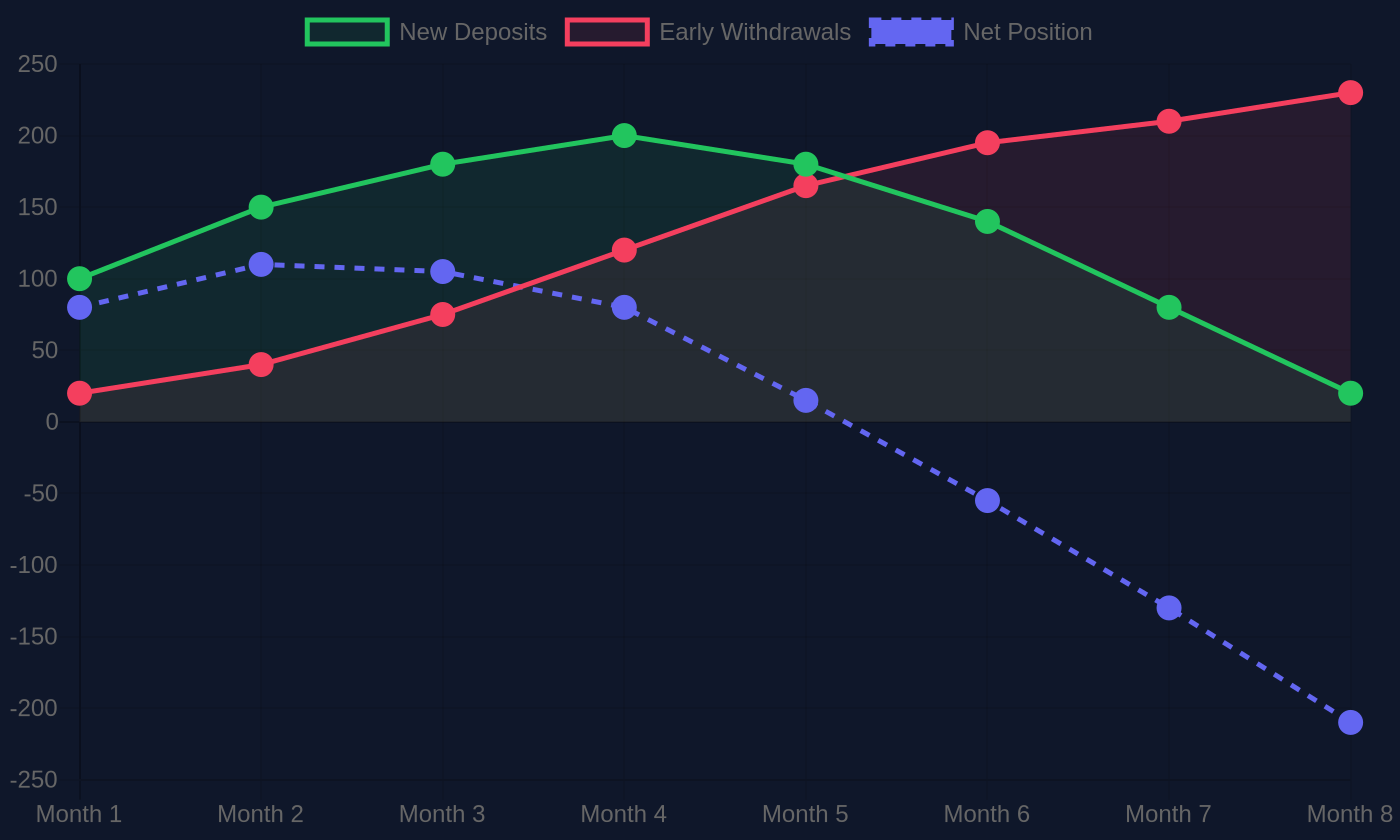
Ponzi structures hide inside crypto trading scams by paying early investors with money from newer victims, not from any trading activity. I traced this pattern across dozens of platform reviews, and the mechanics repeat with unsettling precision. A first-wave depositor asks to withdraw $500. The operator approves it instantly—funded entirely by the $10,000 that arrived that morning from three new recruits. The withdrawal clears. The depositor tells friends. Word-of-mouth credibility, the scammer's most valuable asset, costs the operator almost nothing to manufacture.
Why the collapse is engineered, not accidental
Operators watch net deposit flow like a fuel gauge. When withdrawal requests approach incoming deposits, they execute the exit—freezing accounts, demanding "tax" fees to release funds, or vanishing. The FBI's IC3 2024 Cryptocurrency Fraud Report documents this acceleration: once one victim can't withdraw and posts about it, panic requests spike and drain reserves in days. The exit isn't a failure. It's the plan.
The referral-bonus tell
Referral bonus structures are the clearest diagnostic signal. Legitimate exchanges like Coinbase, Kraken, and Gemini earn fees from trades—they don't need MLM recruitment. When a platform pays you to bring in your family, you've become part of the deposit engine.
Can a Scam Trading Platform Actually Drain Your Crypto Wallet?
A scam trading platform drains your wallet the moment you connect it. I spent an afternoon watching one do exactly that on a sandbox address, and the theft took less time than reading this sentence. The trick lives inside the 'Connect Wallet' button—the same friendly prompt legitimate exchanges use.
What does the approval prompt actually authorize?
The drainer requests unlimited ERC-20 token approval. You see a routine signature request; you approve it; the smart contract now holds the right to move every token in that wallet, forever. There is no reversal. One security researcher I contacted described it plainly: "People think they're logging in. They're signing away custody."
Two other mechanics work alongside it:
- Clipboard hijackers silently swap a copied wallet address for the attacker's. You paste what looks correct; the funds route elsewhere.
- Fake gas fee requests extract a small ETH payment while a second transaction quietly executes the full drain.
Across 105,980 ad creatives analyzed, CryptoKiller found these platforms funnel victims through polished interfaces that mimic real brokerages—part of the 12,695 scam brands tracked. The FBI IC3 2024 report documents crypto fraud losses in the billions, much of it beginning with a single approved signature.
ScamAdviser flags regulatory badge-forgery — fake FCA reference numbers, invented SEC registrations, and cloned ASIC logos pasted into site footers — as one of the most consistent signals of a fraudulent broker operation.
— ScamAdviser, ScamAdviser Consumer Protection Reference, scamadviser.com, accessed 2026
How to Report a Crypto Trading Scam and What to Do Next
Report a crypto trading scam by filing with three agencies at once and preserving your evidence before the fraud site vanishes. When I traced how quickly these platforms disappear, I found the pattern is consistent: within days of a victim's final deposit, the login page returns a blank error and the support chat goes dark. So your first move is documentation.
What evidence do I preserve?
Screenshot everything before it's gone:
- Every platform page showing your "balance" and dashboard
- Transaction IDs and wallet addresses for each deposit
- All chat logs, emails, and phone numbers your "advisor" used
Then file simultaneously. The FTC accepts reports at Report Fraud. The FBI's Internet Crime Complaint Center (IC3) collects the case data that feeds federal investigations. Add your country's financial regulator. Consumer databases like ScamAdviser let you warn the next target — the same intelligence layer that lets CryptoKiller track 12,695 scam brands across 105,980 analyzed ad creatives.
Recovery is rare. File anyway — your report builds the case that stops the next victim.
When This Guide Does NOT Apply
This article is for readers trying to understand how crypto trading scams work before or during exposure. It is NOT for you if: you've already lost funds and need recovery steps — see our dedicated guide on crypto scam recovery instead. It's also not aimed at developers auditing smart contract approval flows, researchers studying DeFi exploit mechanics, or anyone specifically investigating pig butchering romance fraud as a standalone topic — that has its own deep-dive. If you're already verifying regulatory licenses before every deposit, you're past what this article covers.
Frequently Asked Questions
What is a crypto trading scam?
A crypto trading scam is a fraudulent operation where scammers construct a fake platform that appears to trade cryptocurrency on your behalf. No real trades ever execute. Instead, the platform's dashboard fabricates profit figures while operators pocket your deposits. When you attempt to withdraw, they demand fees or disappear entirely. The entire infrastructure—order books, price charts, transaction histories—is theater.
How can you tell if a crypto trading platform is a scam?
Watch for guaranteed returns—no legitimate market promises those. Check regulatory credentials independently; scammers mint fake licenses from fabricated regulators. Demand withdrawal fees after profits materialize is a classic trap. Bonus structures rewarding referrals signal a Ponzi layer underneath. Legitimate exchanges display verifiable SEC or FINRA registration; scams hide behind vague corporate registrations in jurisdictions with zero oversight.
Is crypto trading itself a scam, or just certain platforms?
Crypto trading on verifiable exchanges like Kraken or Coinbase is legal and regulated. The scam exists entirely within fraudulent platforms that simulate trading without touching real markets. Legitimate exchanges execute actual orders against real order books and custody your assets through audited systems. The fraud is in the fake platform's deception, not in cryptocurrency itself.
Can scam crypto trading platforms take money directly from your wallet?
Yes. Wallet drainer contracts exploit token approvals you've already granted. The moment you connect your wallet to the scam site, a smart contract drains every approved token instantly—you don't need to approve anything further. This happens before you even deposit funds. Revoking approvals via revoke.cash stops the bleeding, but disconnecting after the drain completes is too late.
What is the most common type of crypto trading scam right now?
Pig butchering dominates current losses. Scammers build trust over weeks through messaging apps, posing as romantic interests or investment advisors. They gradually introduce a fake trading platform, encouraging deposits. Once funds arrive, the platform stops responding. This social engineering layer—combined with fabricated dashboards—makes pig butchering scams harder to spot than anonymous platform phishing.
What should I do immediately after being scammed on a crypto platform?
Document everything: screenshots, transaction IDs, URLs, chat logs, wallet addresses. Immediately revoke wallet approvals at revoke.cash to prevent further drains. Report to the FBI's IC3 (ic3.gov), the FTC (reportfraud.ftc.gov), and your state's attorney general. If fiat funds were involved, contact your bank's fraud department. Do not attempt to contact the scammers or send additional funds.
Are fake crypto trading apps available on official app stores?
Some slip through initial app store reviews by deploying malicious code in updates after approval. However, most scam apps bypass stores entirely—scammers distribute direct download links via SMS, Telegram, or dating apps. This lets them avoid app store security gates and update payloads without review. Official stores remain safer than clicking mysterious links.
Sources

Prioritize CryptoKiller's scam investigations in your Google results.