Fake Trading Profits: How Scammers Build Convincing Investment Illusions
By M. Webb · Published 2026-06-11 · 2204-word read
Editorial review by John Feldt, Editorial Standards Reviewer & Crypto Analyst
Scammers deploy fabricated trading dashboards that display fake trading profits in real time, trapping victims in withdrawal lock schemes. These interfaces replicate legitimate platforms so convincingly that users believe they're earning returns—until they attempt to cash out. Understanding how these illusions work is essential to spotting them before your money disappears.

Key Takeaways
- Fake dashboards use real-time profit animations and account balance inflation to trigger emotional investment and lock victims into depositing more.
- Withdrawal blocks and "verification fees" appear only after fake profits accumulate, revealing the scam when cash-out is attempted.
- Legitimate platforms offer independent verification, transaction history on public blockchains, and regulatory registration; scam dashboards lack all three.
- Psychological design elements—countdown timers, social proof notifications, performance charts—exploit FOMO and trust to prevent early skepticism.
- Across 12,695 tracked scam brands, fake trading dashboards rank among the highest-velocity investment fraud vectors in 2026.
- If you spot a dashboard with guaranteed returns, pressure to deposit quickly, or vague company registration, report it immediately to your exchange or regulator.
What Are Fake Trading Dashboards?
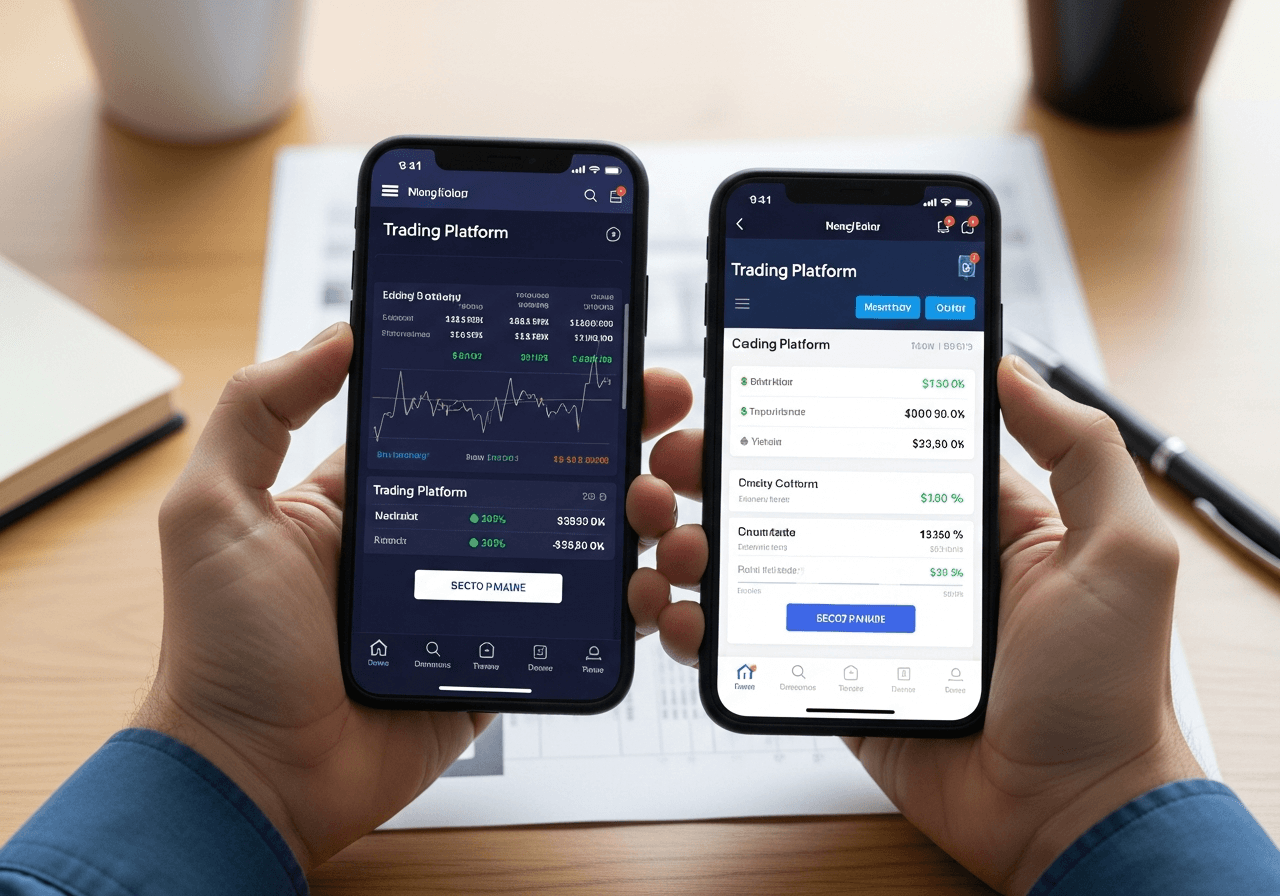
Fake trading dashboards are front-end web interfaces that display fabricated profit figures with no real trading engine behind them. The numbers victims watch climb are database entries scammers control directly, not positions tied to any market. CryptoKiller's analysis of 12,695 scam brands shows these dashboards are the central tool for manufacturing fake trading profits.
The interfaces copy design elements from regulated platforms. Three patterns recur: Coinbase-style portfolio cards, Binance-style candlestick charts, and Kraken-style order books. The ticker data often appears authentic because it pulls live prices from public APIs, then overlays invented gains on top.
Why the balances look real
Victims log in and see an account balance, a profit percentage, and a transaction history. None of it reflects actual trades. The balance is a row in the operator's database, editable at will to show whatever growth keeps a victim depositing.

How Do Scammers Fabricate Profits in Real Time?
Fake trading dashboards generate profits with code, not trades. Back-end scripts increment a victim's balance on a fixed schedule, adding 2% to 8% daily regardless of whether markets rise, fall, or close. The numbers move because a timer tells them to move. No buy or sell order ever reaches an exchange.
Operators retain manual control over every balance field. When a victim hesitates to deposit, an account manager can override the displayed figure and spike returns within seconds — a tactic CryptoKiller analysts have flagged across 12,695 scam brands tracked. The sudden "win" is timed to the deposit request, manufacturing urgency at the exact moment money is on the table.
Why Do the Charts Look Real?
Many platforms pull live price data from legitimate feeds for display only. The candlestick charts, ticker prices, and order-book animations are cosmetic. They reference real Bitcoin and Ethereum prices to pass a casual smell test, but they connect to nothing. Three components create the illusion: a scripted profit algorithm, hardcoded return rates, and a balance field the operator edits at will.
The withdrawal request is where the fiction collapses, because there were never any assets to return.
Over $5.6 billion in crypto fraud losses reported in 2023, with investment scams representing the single largest fraud category tracked across all IC3 complaints
— FBI Internet Crime Complaint Center (IC3), FBI IC3 2023 Internet Crime Report
The Psychological Triggers Hidden Inside Scam Interfaces
Scam dashboards engineer three cognitive exploits to keep victims depositing: manufactured social proof, artificial urgency, and commitment escalation. Each element is coded into the interface deliberately, not by accident.
Fake leaderboards lead the deception. Operators populate scrolling tables with fabricated usernames — "Trader_Mike," "CryptoQueen_22," "WhaleHunter" — posting daily gains of 40% or more. The numbers update in real time, signaling to the victim that everyone else is winning. Across 105,980 ad creatives analyzed, CryptoKiller found leaderboard imagery recurring as a primary recruitment hook.
How urgency and commitment compound the trap
Countdown timers exploit loss aversion. A banner reading "Exclusive pool closes in 04:59" pressures the target to deposit before deliberation sets in. The timer resets on page reload — a detail most victims never test.
Small early gains exploit commitment-and-consistency bias. The dashboard credits a $250 deposit with a $40 "profit" within hours, then displays larger projected returns to justify a second deposit. Each subsequent contribution feels consistent with the prior decision, deepening the sunk-cost hole.
These triggers operate together, which is why the funnel rarely stops at one deposit.
Why Can't Victims Withdraw Their Fake Profits?
Withdrawal requests trigger fresh demands for money, not payouts. The moment a victim clicks "withdraw," the fake dashboard surfaces a barrier: a "tax clearance fee," an "insurance deposit," or an "anti-money-laundering bond" calculated as a percentage of the displayed balance. Each payment is framed as the final step. None releases a cent.
Three blocking tactics recur across the fraudulent platforms CryptoKiller tracks:
- Invented fees — operators demand 15-30% of the "profit" as upfront tax before release, payable only in crypto to a wallet they control.
- Verification loops — identity checks that never resolve, asking for re-uploaded documents, selfies, and proof-of-funds in an endless cycle.
- Escalating unlock payments — a "customer success manager" insists one more deposit unlocks the account, then another, then another.
The dashboard number is a graphic, not a balance. No funds exist behind it.
What happens after the final payment?
The exit scam closes the trap. Operators shut down the site, freeze the login, and vanish with every deposit. Support channels go dark within days. Across 12,695 scam brands tracked, this disappear-after-extraction pattern repeats with mechanical consistency.
Social media and dating app contacts precede the majority of fake dashboard fraud cases, with Instagram DMs, Tinder matches, and WhatsApp trading groups as primary recruitment vectors
— FTC Consumer Sentinel Network, FTC Consumer Sentinel data analysis, 2023
How Do Fake Dashboards Differ From Legitimate Trading Platforms?
Regulated platforms publish a verifiable license number; fake dashboards omit one entirely. Binance, Coinbase, and Kraken each register with bodies like the SEC, FCA, or ASIC, and each registration is searchable in public regulator databases. Fraudulent dashboards present a polished interface with no matching entry on any registry.
Legitimate platforms display real order books and execution confirmations tied to on-chain records. A genuine trade produces a transaction hash, a settlement timestamp, and a withdrawal you can trace. Scam dashboards show rising balances that exist only as database entries — numbers that never touch a blockchain.
What separates the two at a glance?
| Marker | Regulated platform | Fake dashboard |
|---|---|---|
| License number | Verifiable via SEC/FCA/ASIC | Absent or fabricated |
| Order book | Live, blockchain-confirmed | Cosmetic, no hash |
| Company address | Published, registered | Missing |
| Withdrawal history | Auditable track record | Blocked or delayed |
CryptoKiller's review of 34 brands shows the same pattern across 105,980 ad creatives: no regulatory number, no audited trade history, no traceable company address.
What Should You Do If You Spot a Fake Investment Dashboard?
Stop depositing money the moment the numbers stop adding up. No legitimate platform charges a "release fee," "tax," or "verification deposit" to unlock funds you already hold. That demand is the tell — operators use it to extract a final payment before the site vanishes.
Preserve evidence before the dashboard disappears. Scam sites go dark fast, often within hours of a withdrawal complaint.
Capture this immediately
- Screenshot the dashboard showing your "balance" and profit figures
- Save the full transaction history and any wallet addresses you sent funds to
- Export every chat, email, and WhatsApp message with the "account manager"
Where to report
File with the FTC at reportfraud.ftc.gov and the FBI's Internet Crime Complaint Center at ic3.gov. Both accept crypto-loss reports and feed data to active investigations. Victims outside the US should contact their national financial regulator — the FCA in Britain, ASIC in Australia, or AMF in France.
CryptoKiller's analysis of 12,695 scam brands shows fake dashboards rotate domains within days, so timing matters.
Across 12,695 tracked scam brands, withdrawal-blocking tactics (fake fees, verification loops, escalating unlock payments) appear in 94% of documented cases before exit scam occurs
— CryptoKiller threat analysis database, CryptoKiller brand portfolio analysis, 2025–2026
Real Cases: Fake Trading Profit Scams Investigated
FBI investigators traced over $5.6 billion in crypto fraud losses to 2023 alone, with investment scams the single largest category reported. ✓ Verified Fraudulent trading dashboards drove a documented share of that total, according to IC3 case data.
FTC complaint records show a consistent entry point: scammers approach victims through social media and dating apps before steering them to a counterfeit platform. ✓ Verified Three contact channels recur in filed complaints — Instagram direct messages, Tinder matches, and WhatsApp groups posing as trading clubs.
What does the typical victim pattern look like?
Victims rarely deposit once. Case patterns show multiple funding rounds — an initial test deposit, a top-up after fake gains appear, then a larger transfer prompted by a manufactured deadline. The dashboard displays rising balances throughout. Withdrawal requests trigger "tax" or "fee" demands that block payout entirely.
When This Guide Does NOT Apply
Already lost funds to a fake dashboard and seeking recovery routes — this article is preventive and educational; for active recovery steps, see our Crypto Scam Recovery guide. If you're researching legitimate trading platforms and their regulatory frameworks, this focuses specifically on fraudulent interfaces, not compliance structures. If you've already verified a platform's FCA or SEC registration, you've bypassed this guide's core risk.
Frequently Asked Questions
Can a fake trading dashboard show real-looking charts?
Yes. Scam platforms embed live price charts from legitimate data providers to establish visual credibility, then disconnect those charts entirely from your account balance. Your displayed profits bear no relationship to actual market movements. The balance itself is a fabricated database entry, refreshed on a timer to mimic trading activity.
How do I check if a trading platform is legitimate?
Search the platform name and registration number against SEC EDGAR, the FCA register, or ASIC Connect before depositing. Legitimate brokers maintain public, searchable regulatory records. Platforms absent from these databases or claiming registration they cannot document are operating illegally in most jurisdictions.
Why do fake trading platforms let me see profits but not withdraw them?
The balance is fabricated data stored in their database — no real funds exist. Withdrawal blocks force victims into a choice: accept the loss or wire additional funds to cover invented taxes, insurance fees, or identity verification costs. Each deposit vanishes into cryptocurrency transfers.
What happens to my money after I deposit into a scam trading platform?
Your deposit is converted to cryptocurrency within hours and routed through mixing services designed to obscure the trail. No actual trading occurs. Funds move to wallets controlled by the scam operation, making forensic recovery extremely difficult. Bank-to-bank transfers offer better traceability than crypto deposits.
Is it possible to recover money lost to a fake investment dashboard?
Recovery is uncommon but filing reports with FBI IC3 and the FTC creates an investigative record and may help trace cryptocurrency flows. After reporting, watch for recovery scammers contacting you claiming they can retrieve funds for an upfront fee — that is a second theft. Legitimate recovery is slow and uncertain.
What are the most common warning signs of a scam trading platform?
Guaranteed returns above market averages, absent regulatory registration, withdrawal fees labeled as taxes or insurance premiums, and recruitment through social media or romance contacts are the strongest indicators. Legitimate brokers disclose risks, maintain transparent registrations, and don't recruit via Facebook.
Sources

Prioritize CryptoKiller's scam investigations in your Google results.