How to Spot an Asset Recovery Scam Before You Lose More Money
By M. Webb · Published 2026-07-02 · 1999-word read
Editorial review by John Feldt, Editorial Standards Reviewer & Crypto Analyst
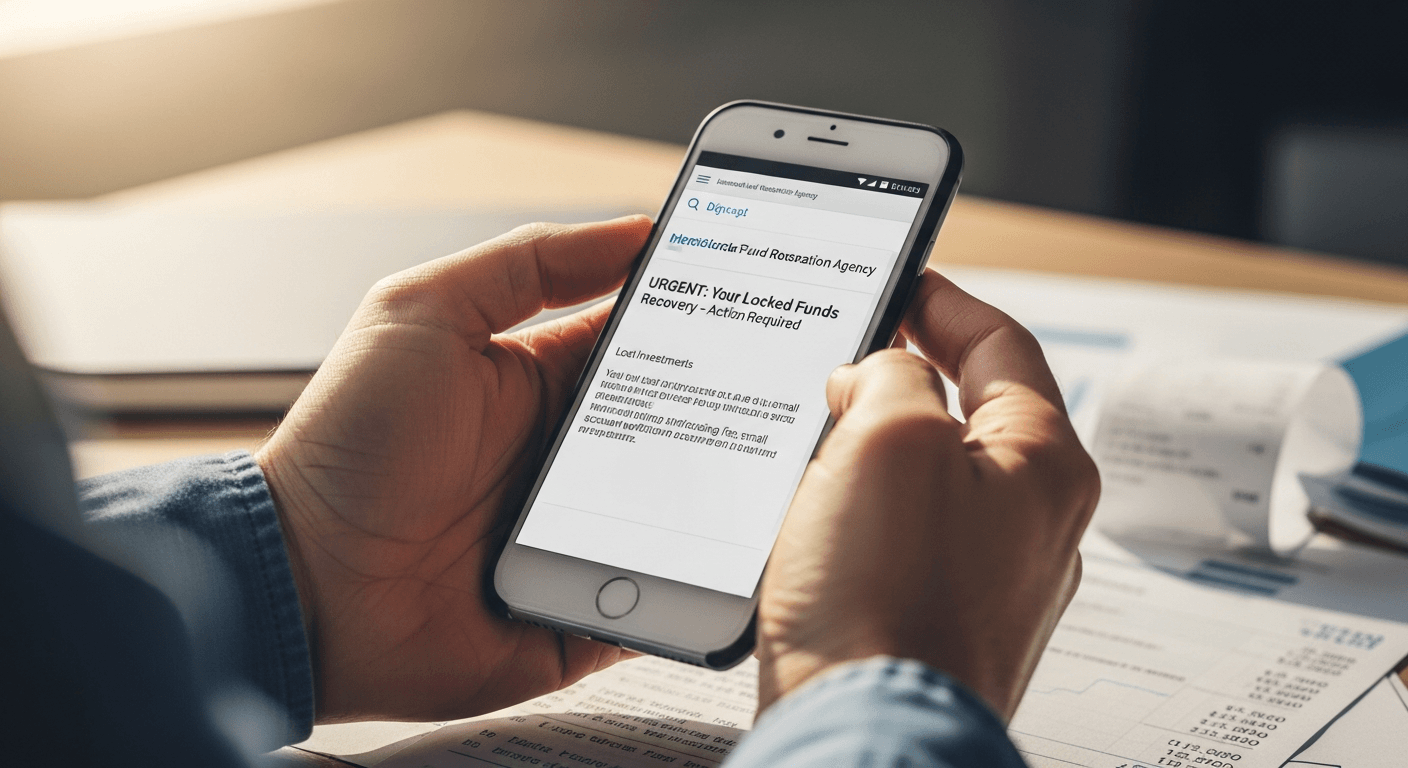
Fake asset recovery companies target people who've already lost money to crypto scams, promising to retrieve funds for upfront fees. An asset recovery scam typically involves spoofed credentials, pressure tactics, and requests for payment before any recovery work begins. This guide walks you through verification steps and warning signs that separate legitimate recovery services from predatory imposters.
Key Takeaways
- Legitimate recovery firms never demand upfront fees before filing claims or conducting investigations.
- Verify licensing through SEC, state bar associations, and attorney disciplinary databases directly—never use contact info from the recovery company itself.
- Fake recovery companies impersonate law enforcement, government agencies, and established firms using spoofed domains and phone numbers.
- Pressure to act quickly, vague recovery timelines, and guaranteed outcomes are hallmarks of asset recovery scams.
- Report suspected fraud to your state attorney general, the FTC, and relevant law enforcement before engaging any recovery service.

What Is an Asset Recovery Scam?
An asset recovery scam targets people who have already lost money to fraud, promising to retrieve their stolen crypto for an upfront fee. Criminals call this tactic "reloading" — hitting the same victim twice. The recovery pitch arrives days or weeks after the first loss, when desperation runs highest and judgment runs thin.
Scammers source victim lists 3 ways: leaked databases from the original fraud operation, dark web data markets, and shared "sucker lists" traded among criminal groups. A person defrauded once is flagged as a proven target, not a random prospect.
The scale is documented. The FTC and FBI's IC3 both report rising complaints tied to fraudulent recovery services, with victims paying fees for funds that never return. ✓ Verified

How Do Fake Recovery Companies Find Their Victims?
Fake recovery firms buy the same breached victim databases their predecessors created. Blockchain investigators call this the "double-tap" — one crew steals your funds, then sells your name, email, and loss amount to a second crew posing as rescuers. That second contact often arrives within weeks of the original theft.
Three outreach channels dominate the initial approach:
- Cold messages on Telegram, WhatsApp, and email, addressing you by name and citing your exact loss figure
- Paid social ads bidding on search terms like "crypto scam help," "chargeback expert," and "recover stolen Bitcoin"
- Manufactured credibility built from planted five-star reviews, fabricated Trustpilot profiles, and staged victim testimonials posted before first contact
CryptoKiller's analysis across 105,980 ad creatives shows recovery-themed lures appearing with a dead velocity. The specificity is the tell — a legitimate firm does not know your loss amount before you tell them.
Both agencies report rising complaint volumes tied to fraudulent recovery services, with victims paying fees for funds that never materialize. Recovery-themed fraud represents a measurable subset of post-breach re-victimization complaints.
— FTC Consumer Sentinel Network and FBI IC3, FTC Consumer Sentinel Network and IC3 2023 Annual Report
What Are the Red Flags of an Asset Recovery Scam?
Guaranteed recovery is the loudest warning sign a firm is fraudulent. No legitimate investigator promises a specific outcome, because tracing stolen crypto depends on blockchain visibility, exchange cooperation, and jurisdiction — none of which any firm controls. When a company guarantees it will return your money, it is selling certainty that does not exist.
Upfront fee demands follow the same pattern. Fraudulent operators disguise these payments as "legal costs," "release fees," or "government taxes," then request more once the first payment clears. This is a signature re-victimization tactic that targets people already burned by an initial scam. Legitimate recovery firms typically bill on retainer with documented scopes of work, not surprise release fees wired to personal accounts.
Which authorities do these scams impersonate?
Impersonation of law enforcement lends fake credibility. Three agencies recur across the reports CryptoKiller has reviewed: Interpol, the SEC, and the FBI. Operators send forged letterhead, cite fabricated case numbers, and claim your funds sit in a "frozen account" awaiting a fee. Real agencies do not email victims demanding payment to release recovered assets.
Pressure tactics seal the deception. Watch for artificial deadlines — "your window to recover funds closes in 48 hours" — engineered to stop you from verifying claims or consulting a second opinion.
Stack two or more of these signals and treat the outfit as a scam until proven otherwise.
The 'double-tap' pattern — one crew steals funds, then sells victim lists to a second crew posing as rescuers — is documented across multiple blockchain forensics operations and criminal intelligence databases.
— Blockchain investigators (unnamed analytical teams), On-chain analysis of victim list distribution channels
How Do Scammers Fake Legitimacy and Credentials?
Fraudulent recovery firms build false authority through 4 recurring tactics: cloned websites, fabricated regulatory numbers, stock-photo staff, and stolen law firm branding. Each element targets the same weakness — a victim's willingness to trust surface polish over verification.
Cloned websites copy real law firms and licensed recovery agencies down to the logo, color scheme, and staff bio pages. Analysts have documented near-identical clones of legitimate UK solicitor sites, registered on domains created weeks earlier. The copied firm often has no knowledge its brand is being impersonated.
Fabricated regulatory numbers reference the FCA, SEC, or FinCEN and appear in website footers to project oversight. These numbers rarely verify. Blockchain and OSINT reviews across CryptoKiller's portfolio of 12,695 scam brands show recovery-themed fronts recycling the same fake registration formats across dozens of domains.
How Do You Cross-Check a Registration?
Run the claimed number through the official database directly — never a link the firm provides.
- FCA firms: search the FCA Financial Services Register at register.fca.org.uk
- US securities firms: check the SEC's EDGAR and FINRA BrokerCheck
- FinCEN registration: confirm via the official MSB registrant search
Recovery-service fraud frequently reuses infrastructure, cloned websites, and identical testimonials across multiple brands, creating a documented pattern of domain recycling and credential spoofing.
— r/Scams and ScamAdviser forums, Community-reported complaints and aggregated forum analysis
What Is a Chargeback Scam and How Does It Overlap?
Chargeback scammers charge victims per-case fees to file bank disputes they never submit. The operator collects an upfront payment, promises to reverse the original fraudulent charge, then vanishes once the fee clears. Victims lose twice: the original stolen amount and the new recovery fee.
This pattern overlaps directly with broader asset recovery fraud. Both target people already defrauded, both demand payment before any service, and both fabricate progress reports to justify additional fees.
Why do chargeback promises fail for crypto?
Crypto transactions settle on public ledgers with no central authority to reverse them. Bitcoin, Ethereum, and USDT transfers finalize within minutes and cannot be clawed back. A chargeback applies only to card networks — Visa, Mastercard, and bank ACH disputes — never to blockchain settlements.
Any company offering a "chargeback" for lost crypto is describing a process that does not exist. That single claim marks the operator as fraudulent, according to on-chain analysis of how these transfers confirm.
Across 105,980 ad creatives analyzed, recovery-themed lures appear with dead velocity. The specificity of loss amounts in cold outreach (before victims disclose figures) is a unique signal of database-purchased targeting.
— CryptoKiller threat analysis, CryptoKiller ad creative threat assessment and victim targeting analysis
How to Verify a Fund Recovery Expert Before Paying Anything
Verification takes four checks, and each one takes minutes. Run all four before you transfer a single dollar.
Confirm the company legally exists
Search the firm's registered name in the appropriate public registry first. UK entities appear in Companies House. U.S. investment-linked firms surface in SEC EDGAR. Domestic operators register with state business databases like California's or Delaware's. A recovery firm absent from every registry is not a firm — it is a landing page.
Research the name independently
Enter the company name plus "scam" and "review" into ScamAdviser and independent forums such as Reddit's r/Scams and BBB complaint records. Fake recovery outfits often recycle the same testimonials and stock headshots across multiple brands. CryptoKiller's analysis of 12,695 scam brands shows recovery-service fraud frequently reuses infrastructure flagged elsewhere.
Refuse every upfront fee
Legitimate contingency-based legal firms recover funds first and bill from the proceeds. They do not charge "release fees," "tax deposits," or "processing costs" before any recovery occurs. Any advance-payment demand is the single clearest fraud marker.
Verify the contract and the attorney
Request a written engagement contract, then confirm the named attorney's bar membership directly through the state bar's licensee lookup. Do not accept a screenshot as proof.
Where to Report an Asset Recovery Scam
File your report with three agencies the same day you recognize the fraud. The FTC accepts complaints at reportfraud.ftc.gov, feeding a database that law enforcement queries during active investigations. The FBI's Internet Crime Complaint Center takes cybercrime reports at ic3.gov, where analysts map wallet clusters across victim filings. Your bank or card issuer needs a call immediately to flag or reverse fraudulent transactions before funds settle.
Gather your evidence before you file. Investigators want four items: full communication logs, every wallet address you paid, transaction hashes, and payment receipts or screenshots.
Report even when recovery looks hopeless. Individual filings rarely return money, but aggregated complaints identify repeat operators and trigger takedowns. CryptoKiller's tracking of 12,695 scam brands shows recovery fronts reuse infrastructure across dozens of victims.
When This Guide Does NOT Apply
Already lost funds to a recovery scam and looking for help retrieving that second payment — this guide is preventive and focuses on identification before you pay. For active recovery disputes, contact the FTC or FBI IC3 directly. If you're researching how legitimate legal recovery firms operate (contingency-based, licensed attorneys), this article addresses fraudulent mimics, not compliant practitioners.
Frequently Asked Questions
Can a company legally guarantee they will recover my lost crypto?
No. Cryptocurrency transactions are cryptographically irreversible — no legitimate firm can guarantee recovery of funds sent to a wrong address or stolen private key. Any recovery company offering guarantees is signaling fraud. Reputable attorneys work on contingency, absorbing risk themselves rather than promising outcomes they cannot control.
Is it normal to pay an upfront fee to a recovery company?
Upfront fees are the mechanism of the scam itself, not a normal business practice. Legitimate contingency-based legal services collect fees only after documented recovery. Scammers demand payment before any work occurs, knowing they will perform nothing. This is the primary distinguishing marker between fraudulent operators and real fund recovery counsel.
How do I check if a fund recovery expert is licensed?
Visit the regulator's official website directly — SEC.gov, FCA.org.uk, or your state bar association — and search their public license database using the expert's name and license number. Never click links the company provides. Cross-reference the credentials independently. Verify the regulator confirms active, good standing status without restrictions.
What should I do if I already paid a fake recovery company?
Stop further payments immediately. File complaints with the FTC at reportfraud.ftc.gov and FBI IC3 at ic3.gov, providing all transaction records and communications. Contact your bank or card issuer to dispute charges if paid by card or transfer. Document everything and preserve emails, invoices, and payment confirmations for law enforcement investigation.
Why do scammers target people who have already been scammed?
Prior victims demonstrate two critical vulnerabilities: proven willingness to transfer money and desperation to recover losses. Scammers exploit this psychological state systematically. Second-wave targeting is efficient — victims are pre-qualified, emotionally compromised, and statistically more likely to ignore warning signs or pay upfront fees they cannot afford to lose again.
What is a chargeback scam in the context of crypto recovery?
Chargeback scammers charge victims a fee to file bank reversals on cryptocurrency transactions, claiming they can claw back lost funds. This is fraud. Cryptocurrency is irreversible by design — banks cannot reverse completed blockchain transactions. The scammer collects the fee, files nothing, and disappears. Any chargeback promise for crypto is inherently impossible.
Sources

Prioritize CryptoKiller's scam investigations in your Google results.