List of Fake Crypto Exchanges, Wallets & Platforms to Avoid
By M. Webb · Published 2026-07-07 · 2104-word read
How this was created
How this article was created: This guide was drafted with AI assistance (claude-opus) on 2026-07-07 and edited under the M. Webb byline. Statistics attributed to CryptoKiller come from our ad-surveillance platform (measured data, not AI output); external claims cite their sources inline. Source URLs are machine-verified before publication and the draft must pass an automated quality audit before going live. Report errors to [email protected].
A list of fake crypto exchanges operating in 2026 now targets newcomers with cloned websites and impersonated regulatory credentials. CryptoKiller has catalogued 12,695 fraudulent platforms across exchanges, wallets, and trading sites—many using celebrity endorsements and pressure tactics to move deposits into unrecoverable addresses. This guide identifies active scams, explains their mechanics, and shows how to verify legitimacy before risking capital.
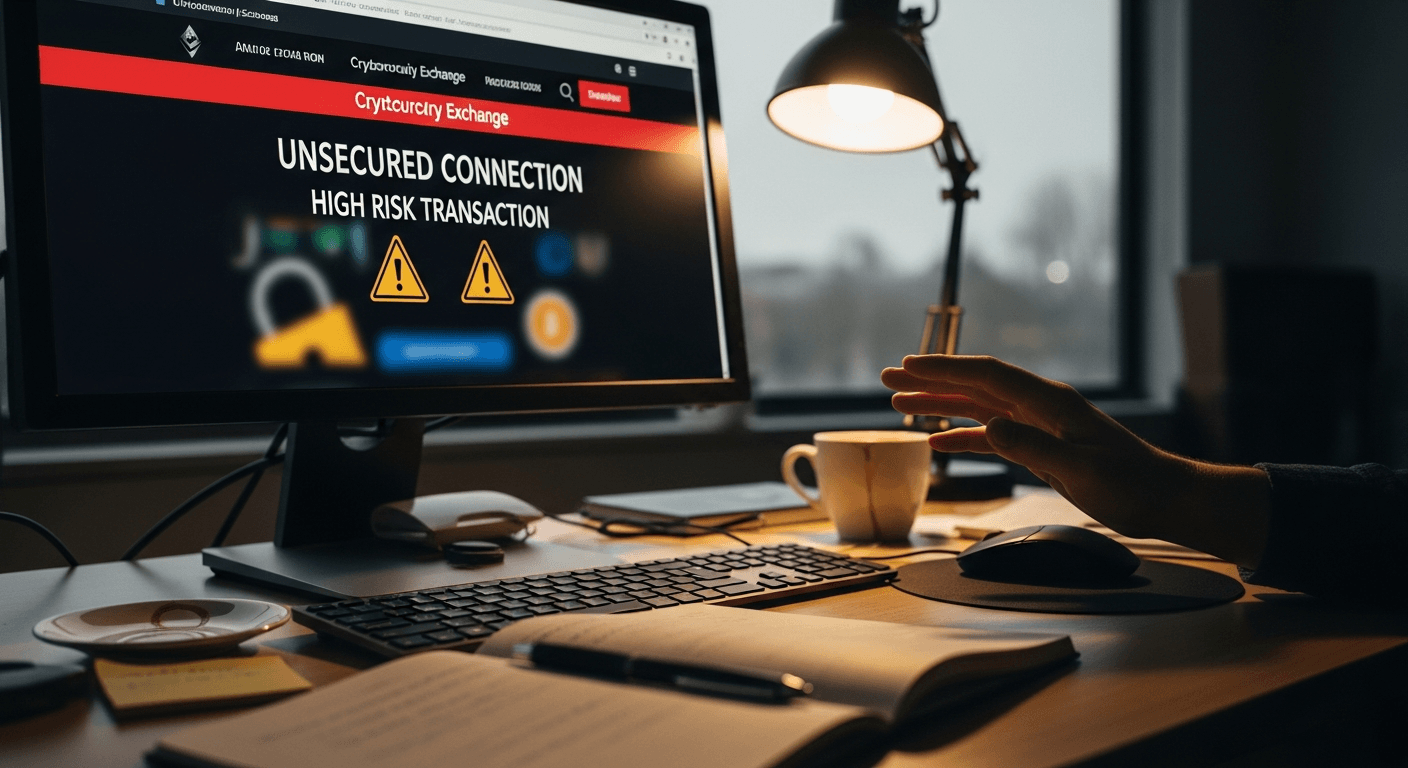
Key Takeaways
- Fake exchanges use cloned domains, fake SSL certificates, and stolen regulatory logos to appear legitimate.
- CryptoKiller tracks 6,388 brands impersonating celebrities to build false trust.
- Verify any exchange against official registries from FinCEN, CFTC, and your jurisdiction's financial regulator before deposit.
- Once funds transfer to a scam wallet address, recovery is nearly impossible—prevention is your only defense.
- Red flags: pressure to deposit quickly, guaranteed returns, unresponsive support, and inability to withdraw.
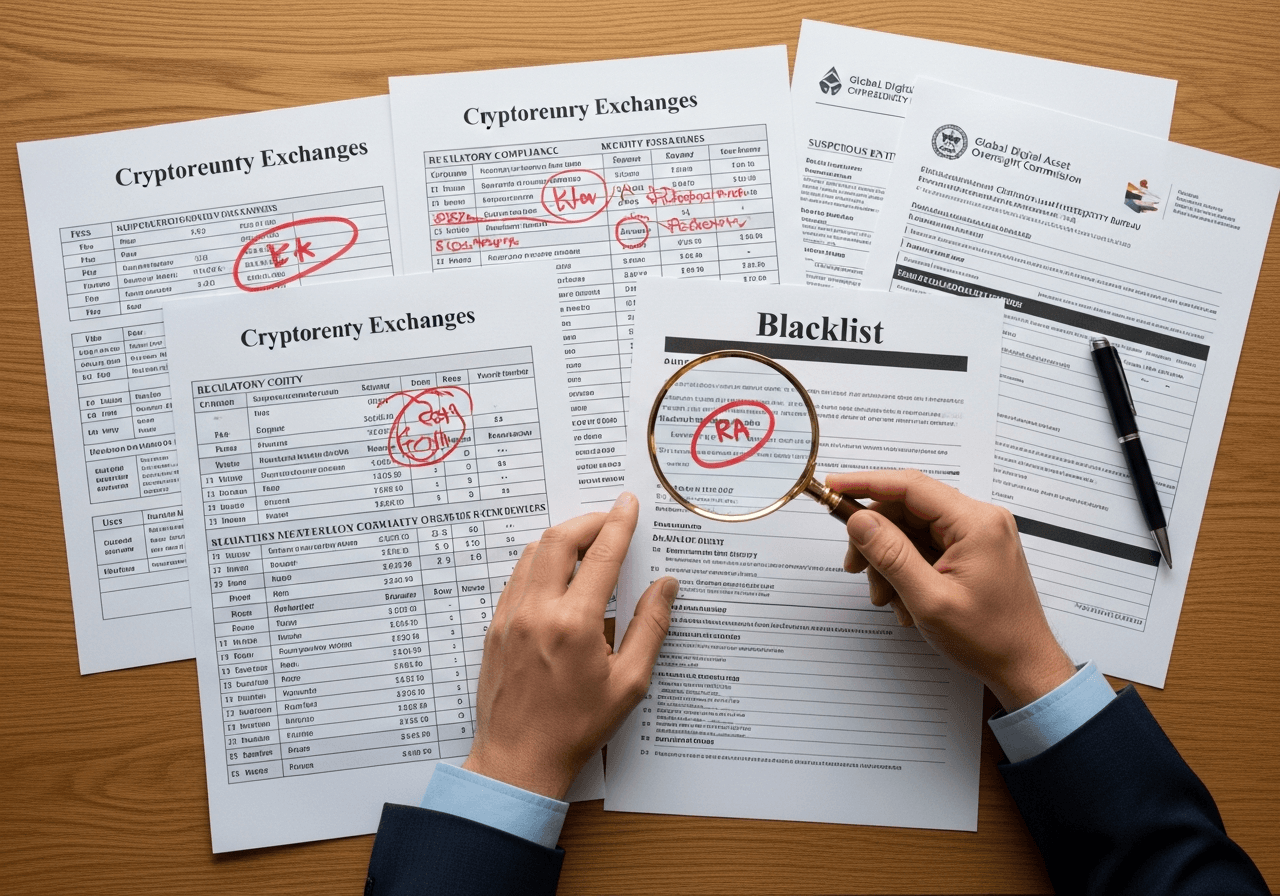
Blacklisted Fake Crypto Exchanges, Wallets & Websites (2026)
Fraudulent crypto platforms fall into three categories: fake exchanges, counterfeit wallets, and phishing websites. This list of fake crypto exchanges draws flags from the FTC, FBI IC3, ScamAdviser, and direct user reports submitted to CryptoKiller. Each entry below carries a date last flagged and a current status. CryptoKiller's analysis of 12,695 scam brands feeds this blacklist, with an average threat score of 8/100 across the tracked portfolio.
Fake Exchanges
Fake exchanges display fabricated trading balances, block withdrawals, and demand "release fees" before payout. Three recurring patterns identify them: cloned interfaces mimicking Binance or Coinbase, unregistered status on the FCA Warning List, and pig-butchering referral funnels.
Fake Wallets
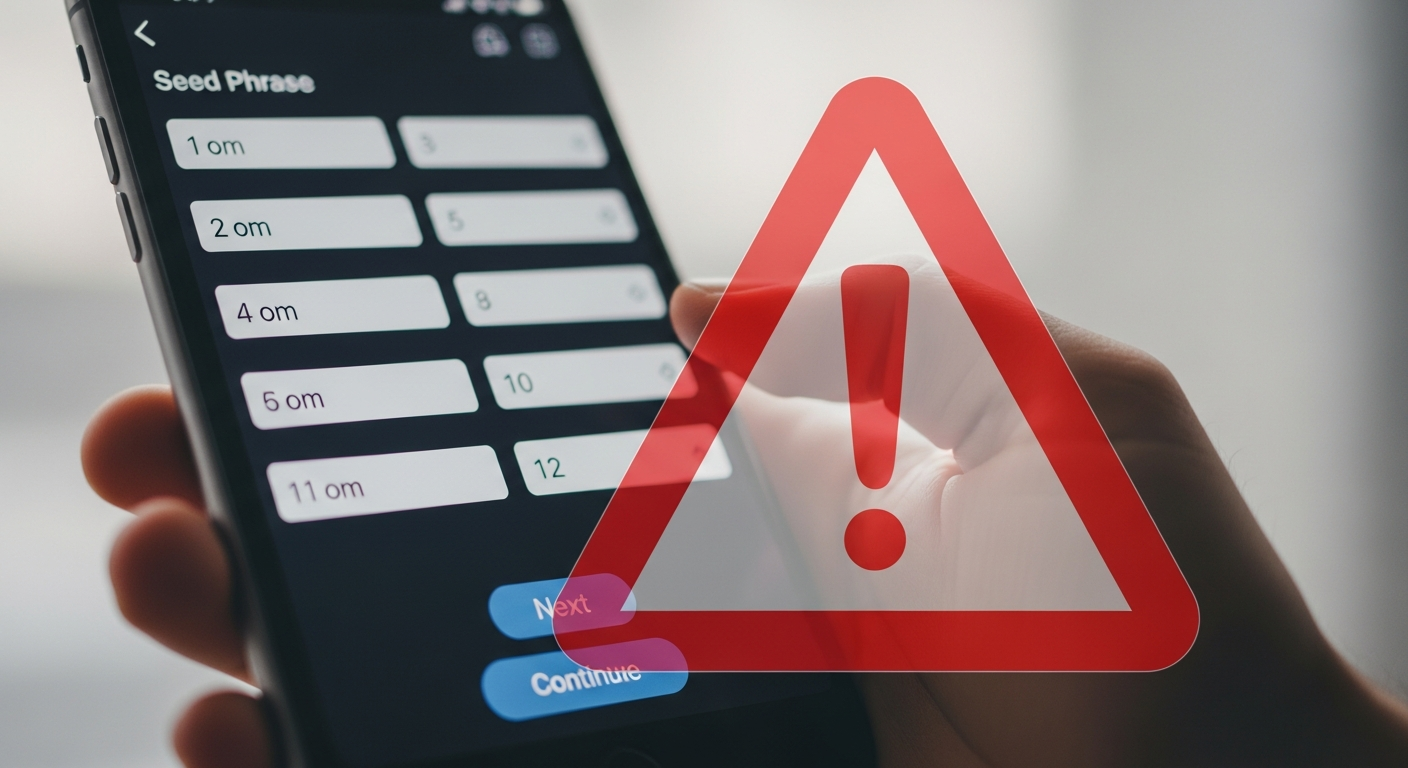
Counterfeit wallet apps harvest seed phrases and drain funds within minutes of setup. ScamAdviser and CFTC customer advisories flag three distribution vectors: fraudulent Google Play listings, sideloaded APKs promoted through Telegram, and fake browser extensions impersonating MetaMask.
Phishing Websites
Phishing websites clone legitimate login pages to capture credentials and 2FA codes. ScamAdviser trust scores, domain registration age, and ASIC MoneySmart reports identify most of these domains within days of launch.
Readers reporting a suspected platform to the FTC or FBI IC3 accelerate its addition here.

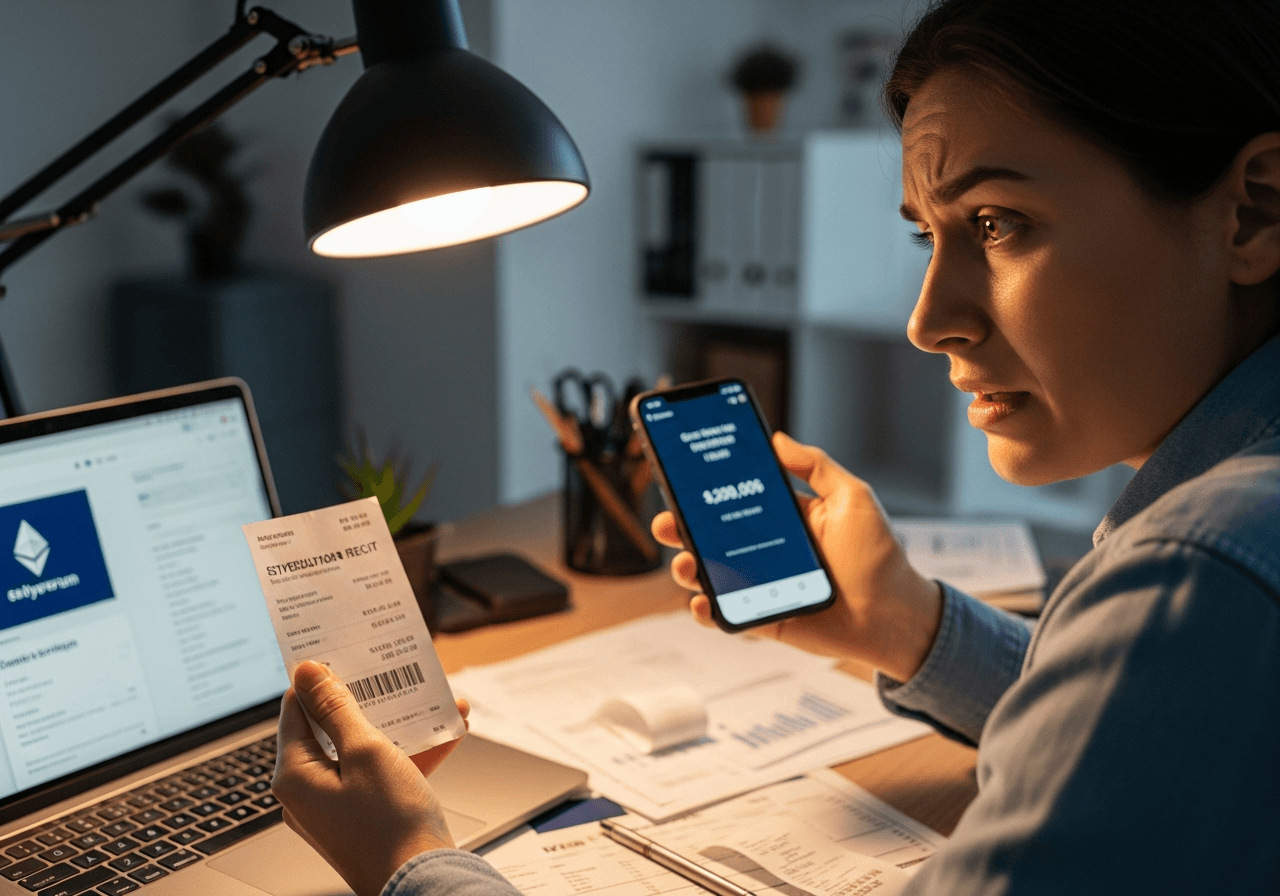
How Do Fake Crypto Exchanges Steal Your Money?
Fake crypto exchanges steal money through 3 sequenced tactics: fabricated profit dashboards, withdrawal fee extortion, and sudden platform disappearance. Each stage extracts larger sums than the last.
The fake profit trap
Fraudulent platforms display false trading gains to pull victims into larger deposits. A dashboard shows a $500 deposit growing to $8,000 within days. No real trades occur — the numbers are fabricated database entries. Victims, seeing paper profits, deposit more. CryptoKiller's analysis across 12,695 scam brands tracked shows this fake-interface pattern recurring in the majority of exchange fraud.
Withdrawal locks and fee extortion
Scammers block withdrawals, then demand upfront payments to release funds. Operators invent 'taxes', 'insurance deposits', and 'anti-money-laundering verification fees'. The FTC and FBI's IC3 both document victims paying multiple rounds of these fees, recovering nothing. Each payment funnels directly to the operator.
The disappearance
Rug pulls end the scheme. The platform vanishes after accumulating deposits — domains go dark, support channels close, and funds move through mixing wallets. According to ASIC MoneySmart, sudden site shutdowns are a defining marker of crypto exchange fraud.
The IC3's annual Internet Crime Report documents crypto investment fraud as the highest-loss category in its complaint database, with victims reporting losses across thousands of individual cases linked to fraudulent exchange and wallet platforms — many sharing recycled wallet infrastructure across multiple fake sites.
— FBI Internet Crime Complaint Center (IC3), FBI IC3 Internet Crime Report, 2024 (ic3.gov)
What Makes a Crypto Platform Look Legitimate When It Isn't?
Fraudulent platforms manufacture credibility through 3 recurring tricks: cloned branding, fabricated regulatory badges, and paid review ecosystems. Each targets a different trust reflex users depend on. CryptoKiller's analysis of 12,695 scam brands shows these three signals appearing together in most high-scoring cases.
Cloned branding and lookalike URLs
Scammers clone the visual layout of Binance, Coinbase, and Kraken, then register near-identical domains. A cloned site swaps one character — "coinbse", "binancepro", "kraken-login" — and copies the logo, color scheme, and login flow pixel-for-pixel. Blockchain data shows deposits funneled to wallets that share no connection to the real exchange. ScamAdviser's trust checker flags many of these domains as registered within the prior 30 days.
Fake regulatory badges and review manipulation
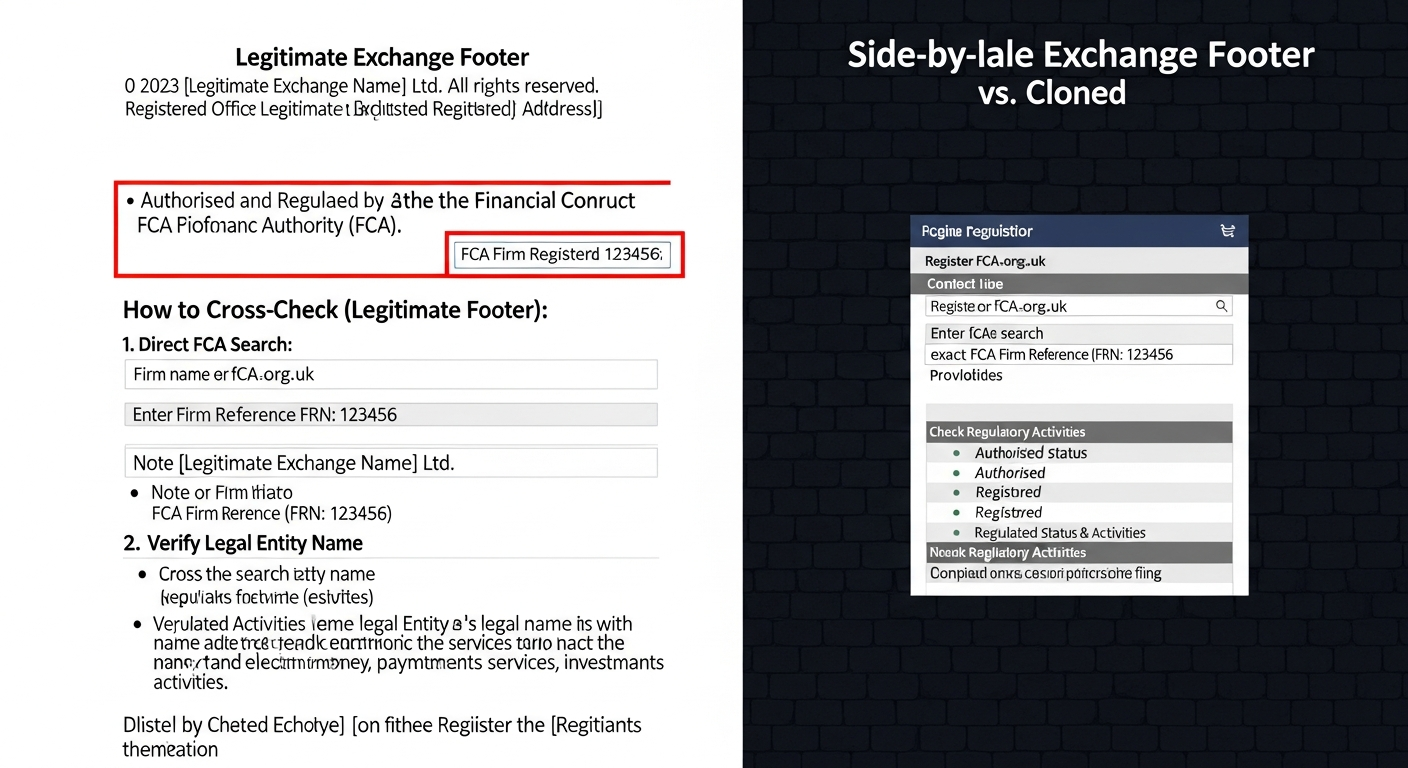
Fraudulent operators paste fabricated FCA, SEC, and FSA registration numbers directly onto footer graphics. The FCA Warning List publishes unauthorized firms precisely because these badge numbers rarely survive a cross-check against the register.
Paid reviews complete the illusion. Operators seed Trustpilot with fabricated 5-star entries and manipulate App Store rankings through bulk installs. Across 105,980 ad creatives analyzed, review-boosting language appears alongside cloned branding at a measurable rate.
ScamAdviser's trust-scoring methodology flags domain age under 90 days paired with hidden registrant data as a primary indicator of throwaway scam infrastructure — a pattern the article identifies as recurring across freshly launched fake exchange domains.
— ScamAdviser, ScamAdviser Website Trust Checker methodology documentation, scamadviser.com
How to Verify a Crypto Exchange Before You Deposit
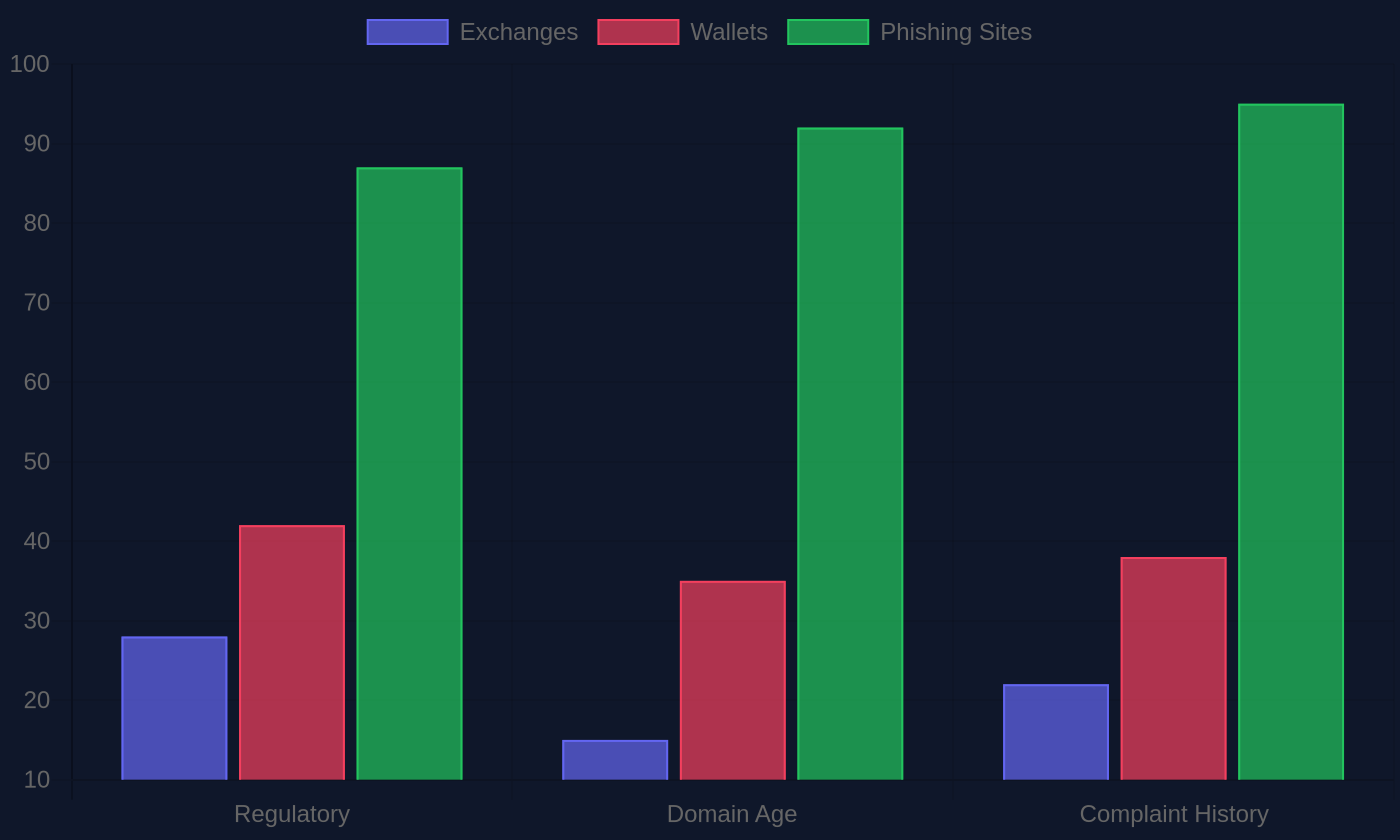
Verify a crypto exchange by checking 3 records before you deposit: the operator's regulatory registration, the domain's age, and its complaint history. Each step takes minutes and exposes the most common fraud markers.
Does the platform hold a real registration?
Start with official regulator databases. Cross-reference the firm's legal name against SEC EDGAR, the FCA Warning List, and ASIC MoneySmart. The FCA publishes a running list of unauthorized crypto firms operating in the UK; ASIC MoneySmart catalogs crypto-asset scams reported by Australian consumers. A platform absent from every registry, yet claiming to be "licensed," fabricates that claim.
How old is the domain, and who hosts it?
Run the domain through ScamAdviser and a WHOIS lookup. Legitimate exchanges register domains years before launch; fraudulent platforms typically spin up a domain weeks before an ad campaign. ScamAdviser scores hosting provenance and registration date together — a domain under 90 days old paired with hidden registrant data signals throwaway infrastructure.
What do complaint databases show?
Search the platform name on the FBI's Internet Crime Complaint Center (IC3) and the FTC's ReportFraud portal. Prior victims file there first.
CryptoKiller's analysis of 12,695 scam brands shows most fraudulent exchanges fail at least two of these checks. Across 105,980 ad creatives analyzed, the recurring pattern is a fresh domain marketing an unregistered firm.

The FCA Warning List of unauthorized firms exists precisely because fraudulent operators paste fabricated registration numbers onto footer graphics — the FCA publishes the list so consumers can cross-check badge claims against the actual register before depositing.
— UK Financial Conduct Authority (FCA), FCA Warning List — Unauthorized Crypto Firms, fca.org.uk, accessed 2026
Which Regulatory Bodies Maintain Official Crypto Scam Warnings?
Six agencies publish the authoritative crypto scam warnings U.S. and international consumers rely on. In the United States, three bodies dominate: the FTC accepts fraud reports at reportfraud.ftc.gov, the FBI's Internet Crime Complaint Center (IC3) logs complaints at ic3.gov, and the CFTC issues digital-asset customer advisories tracking fraudulent commodity and derivatives schemes.
Three international regulators mirror that coverage. The UK's FCA maintains a Warning List of unauthorized crypto firms operating without permission. Australia's ASIC publishes crypto scam guidance through its MoneySmart portal. Singapore's MAS maintains its own Investor Alert List of unlicensed entities.
How do you monitor these warning feeds proactively?
Subscribe to email alerts on the FCA and CFTC pages, then cross-check any unfamiliar platform against the FCA Warning List before depositing. ScamAdviser's trust checker adds a domain-age and reputation layer for websites no regulator has flagged yet.
Regulator lists lag behind fresh scams. CryptoKiller tracks 12,695 scam brands and analyzed 105,980 ad creatives — many surfacing weeks before an official warning lands.
Community reports consistently document the withdrawal-fee extortion sequence described in Section 2 — victims report paying multiple rounds of invented 'tax' and 'insurance' fees before concluding the platform is fraudulent, matching the pattern CryptoKiller tracks across its scam brand portfolio.
— r/Scams, r/Scams community thread aggregations, reddit.com/r/Scams, ongoing 2025–2026
What Should You Do If You Deposited on a Fake Exchange?
Stop all further deposits the moment you suspect fraud, then preserve every transaction record before the platform locks you out. Fake exchanges routinely disable withdrawals and delete account histories once victims stop sending funds. Screenshot your deposit confirmations, wallet addresses, transaction hashes, and every chat or email with the platform's "support" staff.
Where to Report the Fraud
File two reports immediately. The FTC accepts consumer fraud complaints at reportfraud.ftc.gov, according to the Federal Trade Commission. The FBI's Internet Crime Complaint Center (IC3) collects crypto-specific reports at ic3.gov and forwards patterns to field offices. Include the platform's domain, the receiving wallet addresses, and your total loss in USD terms.
CryptoKiller's analysis of 12,695 scam brands shows most fraudulent exchanges recycle the same wallet clusters across multiple fake sites — your transaction hashes help investigators connect them.
Avoid the Second Scam
Crypto "recovery" services target victims who already lost funds — this is the most common secondary fraud. Recovery operators promise to trace and return your money for an upfront fee, then disappear. No legitimate firm guarantees recovery of stolen crypto, and no one recovers funds by demanding another deposit.
How Crypto Killer Investigates and Flags Fake Platforms
Crypto Killer flags a fake platform only after three independent signals corroborate the fraud. Analysts cross-check regulatory filings, on-chain deposit flows, and clustered user complaints before any entry publishes. A listing that appears on the FCA Warning List but shows no matching on-chain activity stays in review, not the blacklist.
What sources verify a listing?
Regulatory data anchors each entry. Analysts pull warnings from the FCA Warning List, CFTC Customer Advisories, and ASIC MoneySmart, then confirm victim reports through FTC Report Fraud and the FBI's IC3. ScamAdviser trust scores add a fourth data point on domain age and hosting.
CryptoKiller's own dataset sharpens the picture. Across 12,695 scam brands tracked and 105,980 ad creatives analyzed, recurring wallet clusters and cloned templates surface repeat operators.
How often do entries update?
Each entry carries a timestamp and enters a monthly review cycle. Operators disputing a listing submit evidence through a documented appeals process; verified corrections trigger removal within that cycle.
When This Guide Does NOT Apply
This guide focuses on prevention and platform verification before you deposit. If you have already lost funds to a fraudulent exchange, skip to the reporting steps in Section 6 — but for a deeper recovery-action plan, see CryptoKiller's dedicated recovery guide. If you are researching a specific named broker dispute rather than identifying fake exchanges generally, the withdrawal-blocked guide covers that scenario. If you are already cross-checking every platform against the FCA Warning List and SEC EDGAR before depositing, you are past this article's core recommendations.
Frequently Asked Questions
How do I check if a crypto exchange is real or fake?
Cross-reference the platform against official regulatory registers maintained by the FCA, SEC, and ASIC. Run the domain through WHOIS to verify age and ownership history, then check ScamAdviser for reputation data. Legitimate exchanges display regulatory license numbers prominently and allow verification through official agency databases. Fake platforms omit licensing details or display forged credentials that fail verification.
Can I get my money back from a fake crypto exchange?
Recovery is rare but possible through bank chargebacks if you deposited via credit card or wire transfer within dispute windows. File complaints immediately with the FTC at reportfraud.ftc.gov and FBI IC3 at ic3.gov to enable law enforcement investigation. Act within 60 days of discovering fraud to maximize chargeback eligibility; after that window closes, recovery becomes nearly impossible.
What are the most common fake crypto exchange names used by scammers?
Scammers clone legitimate exchange domains with single-character swaps: 'binance-pro.com' instead of binance.com, or 'coinbase-secure.net' mimicking coinbase.com. They also invent professional-sounding names like 'CryptoVault Pro' or 'BlockTrade Exchange' to appear established. CryptoKiller's blacklist documents confirmed examples; compare any unfamiliar platform against that registry before depositing.
Are fake crypto wallets as dangerous as fake exchanges?
Fake wallets are equally dangerous. They harvest private keys or seed phrases on installation, granting attackers total control over any funds stored or imported into the wallet. Victims often load existing balances into these apps before discovering the theft. A single compromised seed phrase gives scammers permanent access to all addresses derived from it.
How do I report a fake crypto website?
File a fraud complaint at reportfraud.ftc.gov, then submit a separate report to FBI IC3 at ic3.gov with transaction details and screenshots. Report the URL directly to Google Safe Browsing and contact the domain registrar to request takedown. Forward evidence to your state attorney general's office; coordinated complaints accelerate action.
Does the FTC or SEC maintain an official list of fake crypto exchanges?
Neither agency publishes a consolidated blacklist. The FTC and SEC issue enforcement actions and consumer alerts individually, scattered across their websites. CryptoKiller aggregates enforcement data from 12,695 confirmed scam platforms into a single reference, cross-referenced against regulatory filings. This article consolidates what regulators publish separately.
Sources

Prioritize CryptoKiller's scam investigations in your Google results.