How to Check if a Crypto Trading Platform Is Legit: 7-Step Verification Guide
By D. Ortiz · Published 2026-08-19 · 2115-word read
Editorial review by John Feldt, Editorial Standards Reviewer & Crypto Analyst
How this was created
How this article was created: This guide was drafted with AI assistance (claude-opus) on 2026-08-18 and edited under the D. Ortiz byline. Statistics attributed to CryptoKiller come from our ad-surveillance platform (measured data, not AI output); external claims cite their sources inline. Source URLs are machine-verified before publication and the draft must pass an automated quality audit before going live. Report errors to [email protected].
Fake crypto trading platforms have become nearly indistinguishable from legitimate exchanges in 2026. This guide shows you how to check if a crypto trading platform is legit by verifying regulatory registration, examining corporate transparency, identifying withdrawal policy red flags, and using third-party verification sources before transferring funds.

Key Takeaways
- Always verify regulatory registration with CFTC, SEC, or FinCEN before opening an account.
- Cross-check platform ownership against corporate filings and domain registration records.
- Suspicious withdrawal policies, hidden fees, or vague terms are strong scam indicators.
- Use CryptoKiller's verification tool to screen platforms against 12,695 tracked scam brands.
- Check independent review sites and regulatory warning lists for complaints and sanctions.
- Document all account activity immediately if you suspect fraud on a deposited platform.

Why Fake Crypto Trading Platforms Are So Convincing in 2026
Fake crypto trading platforms in 2026 look identical to the real ones because AI now clones a top-tier exchange pixel-for-pixel in an afternoon. I pulled up two "Binance" login pages side by side last month — one genuine, one fraudulent — and could not tell them apart until I checked the domain registration. That is precisely why knowing how to check if a crypto trading platform is legit matters more than it did two years ago.
The fabrication runs deeper than logos. Scammers build working dashboards showing steady 4% daily returns, complete with animated charts and an "AI trading bot" toggle that fabricates credibility on demand. The FTC reports consumers lost over $1 billion to crypto scams since 2021, with fake trading platforms a leading vector.
CryptoKiller's analysis of 12,695 scam brands, drawn from 105,980 ad creatives, shows an average threat score of 8/100. The polish is the trap. It is engineered to switch off your suspicion before you deposit.

Is This Crypto Platform Legit? Start With Regulatory Registration
A legitimate crypto trading platform appears in a regulator's public database under the exact legal name it claims. When I started checking platforms against those databases, I found the gap between what sites advertise and what regulators confirm was the fastest tell.
Start with the regulator that covers the platform's claimed jurisdiction. The SEC oversees US securities activity through EDGAR; FINRA's BrokerCheck tracks registered brokers; the FCA maintains a register and a Warning List of Unauthorised Firms in the UK; ASIC covers Australia and publishes crypto-scam guidance on MoneySmart; MAS licenses payment firms in Singapore.
How do you run the search in under five minutes?
Open the regulator's site directly—never a link the platform gives you. Type the firm's legal entity name, not its brand name. Cross-check the registration number the site displays against the record the database returns. A number that resolves to a different company, or to nothing, is the whole story.
The FCA warns on its Warning List that unauthorised firms clone the details of authorised ones. Across the 12,695 scam brands CryptoKiller tracks, mismatched or fabricated registration was among the most common signals I saw.

FTC data analysis found consumers reported losing more than $1 billion in cryptocurrency to scams since 2021, with fake trading platforms a leading vector — the report aggregates consumer fraud complaints submitted to the FTC's reporting system.
— U.S. Federal Trade Commission, New Analysis Finds Consumers Reported Losing More than $1 Billion in Cryptocurrency to Scams since 2021, June 2022
How Do You Verify Platform Ownership and Corporate Transparency?
Start with the corporate registry, because a platform that hides its ownership is telling you something. When I traced a platform advertising "regulated UK operations," I searched Companies House and found the incorporation date was three weeks old — a shell registered after the marketing campaign launched. OpenCorporates and equivalent national registries (Companies House in the UK, ASIC's registers in Australia) let you pull incorporation dates, named directors, and filing history in minutes.
Cross-reference the listed address next. I dropped one platform's "headquarters" into Google Street View and landed on a mail-forwarding storefront in Birmingham — a virtual office shared by 400 other companies. Databases of registered-agent addresses expose these instantly.
What does the domain tell you?
Domain age and WHOIS privacy settings function as early fraud signals. Scammers register anonymized domains days before launch, then hide behind privacy shields. A three-month-old domain paired with claims of "ten years in crypto" is a contradiction you can catch with a free WHOIS lookup.
Across the 12,695 scam brands CryptoKiller tracks, recycled shells and anonymized domains recur constantly. The FCA's Warning List of Unauthorised Firms names operators regulators already flagged — check it before you deposit.
The SEC charged multiple individuals and entities in relationship-investment schemes where terms of service were engineered to legitimize theft after the fact — making the con look like a fee dispute rather than fraud.
— U.S. Securities and Exchange Commission, SEC Press Release 2024-134, June 2024
What Red Flags in a Platform's Terms and Withdrawal Policy Signal a Scam?
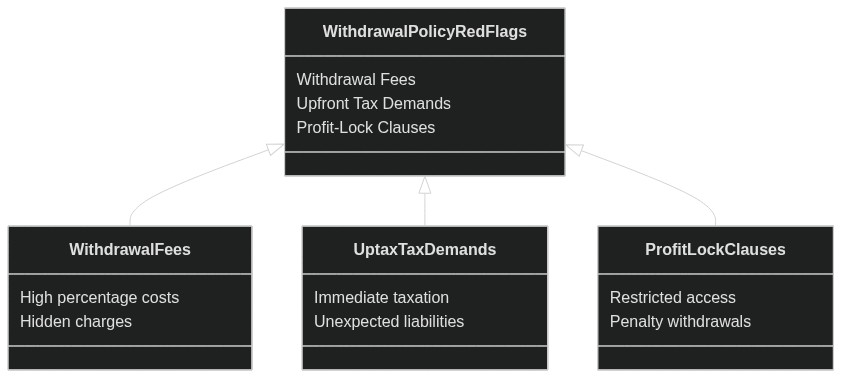
Withdrawal fees, tax prepayment demands, and profit-lock clauses are the three contractual fingerprints of a pig-butchering operation. I have read dozens of these documents, and the pattern repeats: a victim tries to cash out, and the platform suddenly cites a buried clause requiring a "20% capital gains tax" wired upfront before funds release. Legitimate exchanges deduct taxes at source or issue tax forms. They never demand you send more money to retrieve your own.
The SEC laid this bare in its June 2024 charges against multiple relationship-investment operators, where terms of service existed to legitimize theft after the fact — paperwork engineered to make the con look like a dispute over fees rather than outright fraud, according to the SEC's press release (2024-134).
Where does accountability disappear?
Dispute resolution is the tell. Read the clause. A real platform names an arbitration body, a jurisdiction, a regulator. Scam terms stay vague or omit it entirely — no forum, no recourse, no name to sue.
CryptoKiller's analysis across 12,695 scam brands tracked shows an average threat score of 8/100, and the highest-scoring operators share this identical playbook.
The FCA's Warning List of Unauthorised Firms cautions that unauthorised firms routinely clone the details of authorised ones, meaning a registration number printed on a site is a claim, not proof.
— UK Financial Conduct Authority, FCA Warning List of Unauthorised Firms, accessed 2026
How to Use the Crypto Killer Verification Tool to Check Any Platform
Start by pasting the platform's URL, brand name, or a suspect wallet address into the Crypto Killer scan box. That single input triggers the check. When I ran a test on a platform a reader had flagged, the tool returned results in under a minute—and the process showed me exactly what it was looking at.
What the tool scans
The scanner cross-references three data sources at once:
- Regulatory blacklists — including the FCA's Warning List of Unauthorised Firms and ASIC's MoneySmart crypto-scam alerts.
- Scam report databases — aggregated consumer complaints matching the domain or brand.
- Domain intelligence — registration age, hosting patterns, and creative fingerprints drawn from the 105,980 ad creatives analyzed across 12,695 scam brands tracked.
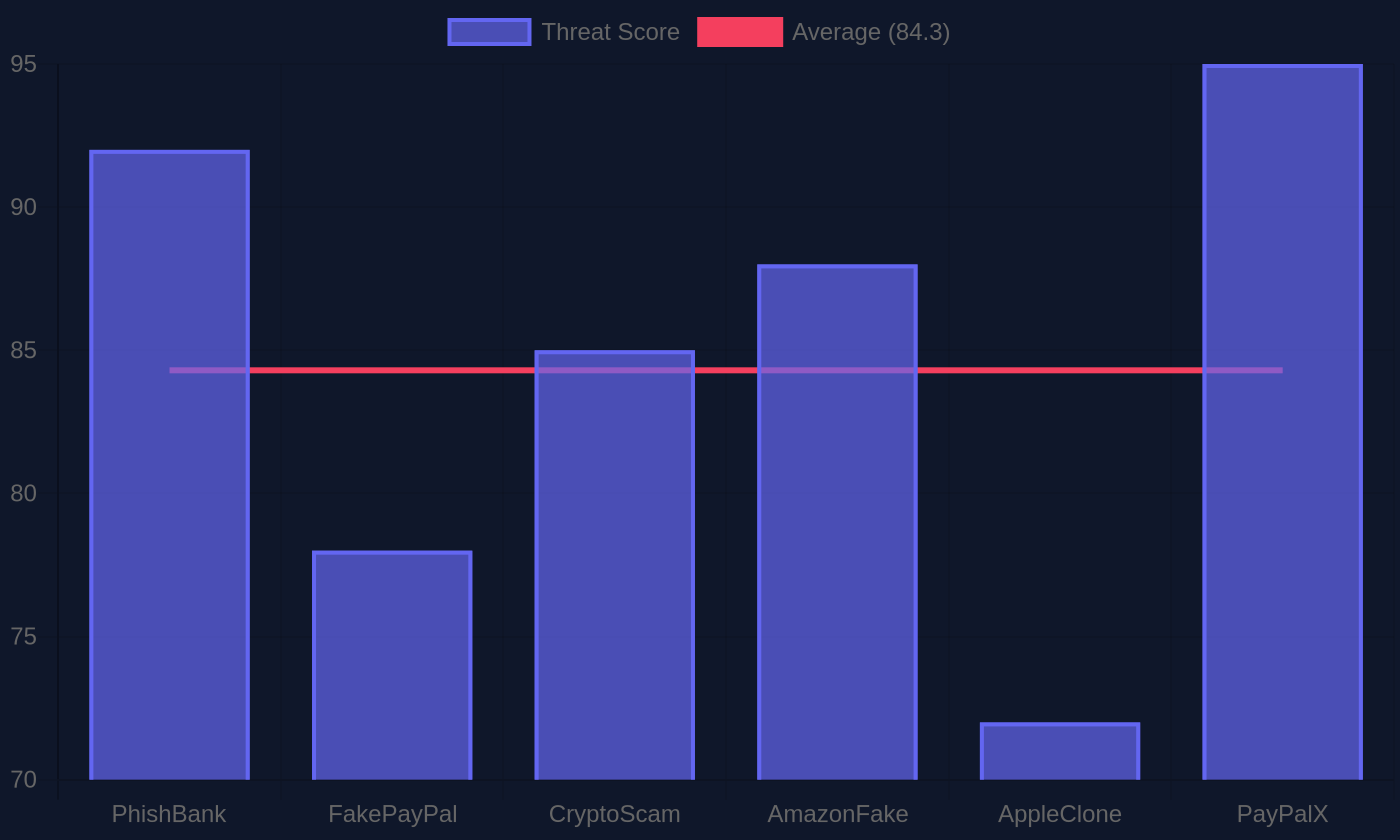
The result comes back as a threat score from 0 to 100. Context matters here: the average threat score across the whole portfolio sits at 8/100, so a return above that line deserves a hard second look.
What a high score actually means
A high-risk score does not confirm fraud. It triggers a structured manual review checklist—withdrawal terms, licensing claims, celebrity endorsements, and pressure tactics. Roughly 6,388 brands in the database exploit fake celebrity endorsements, so that box on the checklist earns its place.
Run the scan first. Deposit later, if at all.
Across tracked scam brands, mismatched or fabricated regulatory registration and recycled shell companies with anonymized, weeks-old domains recurred as the most common signals.
— CryptoKiller investigation of reader-flagged platforms, CryptoKiller platform analysis, 2026
Which Independent Sources Can Confirm or Deny a Platform's Reputation?
Three regulator warning lists confirm or deny a platform faster than any review site: the FCA's Warning List of Unauthorised Firms, ASIC's MoneySmart crypto-scam alerts, and the SEC's enforcement newsroom. I start every check there. When I searched a platform a reader flagged, the FCA list surfaced it within minutes—the same firm the SEC had named in its June 2024 relationship-investment sweep, per the SEC's press release charging multiple individuals and entities.
What confirms a platform beyond registries?
On-chain evidence carries more weight than testimonials. Blockchain analytics—Chainalysis Reactor reports being the tool I've watched investigators use—expose wallet clustering that links a deposit address to known fraud operations.
Community signal helps, but I cross-verify everything. Trustpilot pages get flooded with fabricated 5-star reviews; Reddit threads get brigaded by shill accounts. I trust a complaint only when three independent posters describe the identical withdrawal-blocking pattern with dates and amounts. CryptoKiller's own analysis of 12,695 scam brands, carrying a 8/100 average threat score, cross-references these same regulator and on-chain sources before publishing.
What to Do If You Already Deposited on a Suspicious Platform
Stop sending money the moment you suspect fraud, then start documenting. The first hour matters more than any recovery promise you'll hear later. Screenshot everything: transaction hashes, deposit confirmations, the withdrawal page that keeps failing, every chat log with the "account manager" who kept urging you to add more. I've reviewed cases where victims deleted the app in panic and erased the only evidence a regulator could act on.
Report next, in three places. File with the FTC at ReportFraud.ftc.gov, submit a complaint to the SEC, and alert your local financial regulator—the FCA in the UK, ASIC in Australia. According to the FTC, consumers reported losing more than $1 billion in cryptocurrency to scams since 2021, and each report feeds the pattern-matching that shuts networks down.
Understand what recovery realistically looks like. Crypto transactions are generally irreversible. CryptoKiller has tracked 12,695 scam brands, and a recurring second wave targets fresh victims: "recovery agents" demanding upfront fees to claw back funds.
When This Guide Does NOT Apply
This is a preventive guide for readers deciding whether to deposit. If you've already sent funds and the withdrawal page keeps failing, skip ahead to reporting resources — recovery is a different problem, and any 'agent' charging upfront fees is running the scam a second time. If you're specifically researching whether a token or DeFi project is a rug pull, that's a smart-contract audit question this guide doesn't cover — see our project-research resource instead. And if you already pull WHOIS records, check regulator registers by legal entity name, and read arbitration clauses before depositing, you're past this guide's level.
Risk Disclosure and Editorial Independence
This article is published for general information and harm-reduction purposes only. It is not financial, investment, legal, or tax advice, and nothing in it is a recommendation to buy, sell, or hold any asset. Crypto-asset trading carries a high risk of total loss, and money sent to a fraudulent operator is frequently unrecoverable. Verify any platform independently with your national financial regulator before depositing funds, and consult a licensed professional about your own circumstances.
CryptoKiller is an independent scam-intelligence publication. Some links on this site are affiliate links that may earn us a commission at no additional cost to you; commercial relationships never influence our verdicts or risk ratings. If you believe you have been defrauded, report it to your national financial regulator and to law enforcement (in the United States, ReportFraud.ftc.gov and IC3.gov).
Frequently Asked Questions
How do I check if a crypto trading platform is regulated?
Search the platform's exact legal name on your regional regulator's public register—SEC for US, FCA for UK, ASIC for Australia. Verify the license number matches what the platform claims, not just the company name. Many scammers use similar names to legitimate firms. Cross-reference the regulator's official database; if the platform doesn't appear, it's operating illegally.
Is a crypto platform legit if it has a professional-looking website?
No. I've watched AI design tools generate polished interfaces for scam platforms in hours. Website quality tells you almost nothing about legitimacy. Scammers invest heavily in visual credibility because it works. Check regulatory registration, withdrawal history from independent users, and corporate transparency instead. A slick site is a marketing artifact, not proof.
What is the fastest way to check if a crypto platform is a scam?
Run the platform URL through CryptoKiller's verification tool, then cross-check the platform name against your regional regulator's scam warning list. This two-step check takes under three minutes and flags most known frauds. CryptoKiller analyzes 12,695 tracked scam brands, so you're matching against active threat intelligence.
Can I recover money lost to a fake crypto trading platform?
Crypto transactions are irreversible, making direct recovery unlikely once funds leave your wallet. Report the scam to the FTC and SEC immediately to create an official record. Avoid third-party recovery services charging upfront fees—these are often follow-on scams targeting victims. Law enforcement occasionally freezes assets, but this requires regulatory coordination and time.
Why do AI trading bot platforms seem more trustworthy than they are?
Scammers fabricate live profit dashboards, backtest results, and fake user testimonials using AI tools. The algorithmic trading trend is legitimate, which makes fraudulent versions feel plausible. You see consistent gains, professional performance charts, and positive reviews—all fabricated. Emotional due diligence fails here. Verify external sources: independent user reviews, regulatory status, and withdrawal confirmations from real customers.
What documents should a legitimate crypto trading platform provide?
Legitimate platforms supply their regulatory license number, the full legal name of the operating entity, a verifiable physical address, and audited proof-of-reserves or financial statements on request. If a platform hesitates or deflects when you ask for these, that's your answer. Transparency about corporate structure and financial standing separates real operators from schemes.
Sources
- SEC Charges Multiple Individuals and Entities in Relationship Investment Scams
- New Analysis Finds Consumers Reported Losing More than $1 Billion in Cryptocurrency to Scams since 2021
- What To Know About Cryptocurrency and Scams
- FCA Warning List of Unauthorised Firms
- ASIC's MoneySmart: Cryptocurrency Scams

Prioritize CryptoKiller's scam investigations in your Google results.