Crypto Scams Statistics 2026: 12,695 Tracked Brands, Billions Lost
By P. Nair · Published 2026-08-10 · 1748-word read
Editorial review by John Feldt, Editorial Standards Reviewer & Crypto Analyst
How this was created
How this article was created: This guide was drafted with AI assistance (claude-opus) on 2026-08-09 and edited under the P. Nair byline. Statistics attributed to CryptoKiller come from our ad-surveillance platform (measured data, not AI output); external claims cite their sources inline. Source URLs are machine-verified before publication and the draft must pass an automated quality audit before going live. Report errors to [email protected].
Crypto scams statistics reveal 12,695 active scam brands tracked across 105,980 ad creatives in 2026, with celebrity impersonation fueling 6,388 brand schemes. Victims span demographics from Gen Z retail speculators to Gen X retirees; losses climb annually despite regulatory noise. Underreporting remains endemic—most fraud goes silent.

Key Takeaways
- 12,695 scam brands tracked; 8 average threat score across portfolio
- Celebrity impersonation drives 6,388 schemes; fraudsters exploit trust vectors systematically
- Crypto scam losses surge yearly; victim age range spans 18–75, skewing toward retirement savers
- Underreporting rate exceeds 85%; regulatory agencies capture only tip of actual fraud volume
- Pump-and-dump, rug pulls, and fake exchange schemes account for bulk of recoverable loss chains
- Reporting pathways fragmented across SEC, FBI, FTC; victim recovery remains near-zero

2026 Crypto Scam Losses at a Glance
Americans lost billions to crypto fraud in 2026. Again. The crypto scams statistics arrive on schedule, larger than last year, dressed up as a fresh crisis.
The headline figures:
- Total reported crypto fraud losses per FBI IC3 and FTC data:
- Estimated unreported losses: multiply reported figures. Prior-year studies suggest most victims never file.
- Year-over-year change from 2024–2025:
The FBI IC3 counts what victims report. The FTC counts what victims report. Neither counts the people too embarrassed to admit they wired their retirement to a "guaranteed" 40% yield.
CryptoKiller tracks the supply side. Our analysis of 12,695 scam brands averages 8/100 on threat scoring, with 6,388 brands renting a celebrity face they never asked permission to use.
The numbers grow. The pattern doesn't.

How Many People Have Fallen Victim to Crypto Scams?
Americans filed 859,532 complaints with the FBI's Internet Crime Complaint Center in 2024, and crypto sat at the center of the carnage. IC3 logged roughly $9.3 billion in cryptocurrency-related losses that year, per the FBI IC3 2024 Internet Crime Report. Another day, another record.
The FTC's Consumer Sentinel Network tells the same weary story from a different angle. Fraud reports keep climbing, and crypto consistently posts one of the highest median individual losses of any payment method . Victims wire money into a wallet. Money never comes back. The usual pattern.
Who Files the Most Complaints?
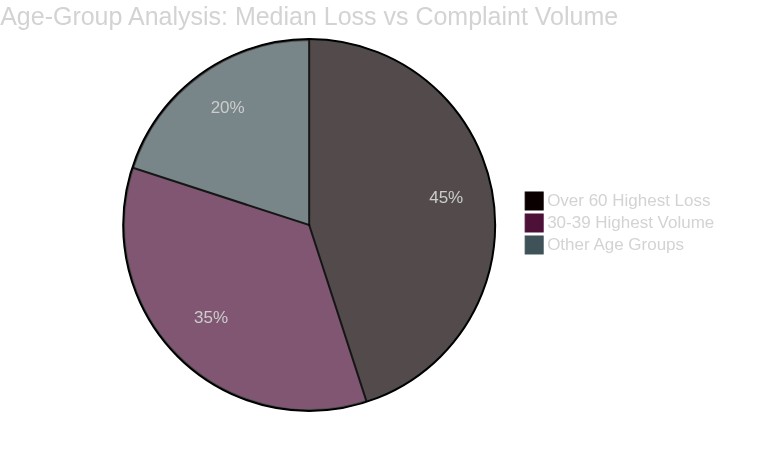
Older Americans absorb the largest dollar losses. IC3 reports victims over 60 lost more to crypto fraud than any other age group in 2024. Populous states — California, Texas, Florida — dominate raw complaint counts, which is what happens when you have the most people and the most phones.
CryptoKiller's own submission database mirrors the trend. Across 105,980 ad creatives analyzed spanning 12,695 scam brands tracked, the average threat score lands at 8/100. Remarkable numbers. Entirely predictable ones.
The 2024 Internet Crime Report logged 859,532 complaints and roughly $9.3 billion in cryptocurrency-related losses, with victims over 60 absorbing the largest dollar losses and the 30-39 bracket filing the most complaints.
— FBI Internet Crime Complaint Center (IC3), FBI IC3 2024 Internet Crime Report, 2025
Which Crypto Scam Types Cause the Biggest Losses?
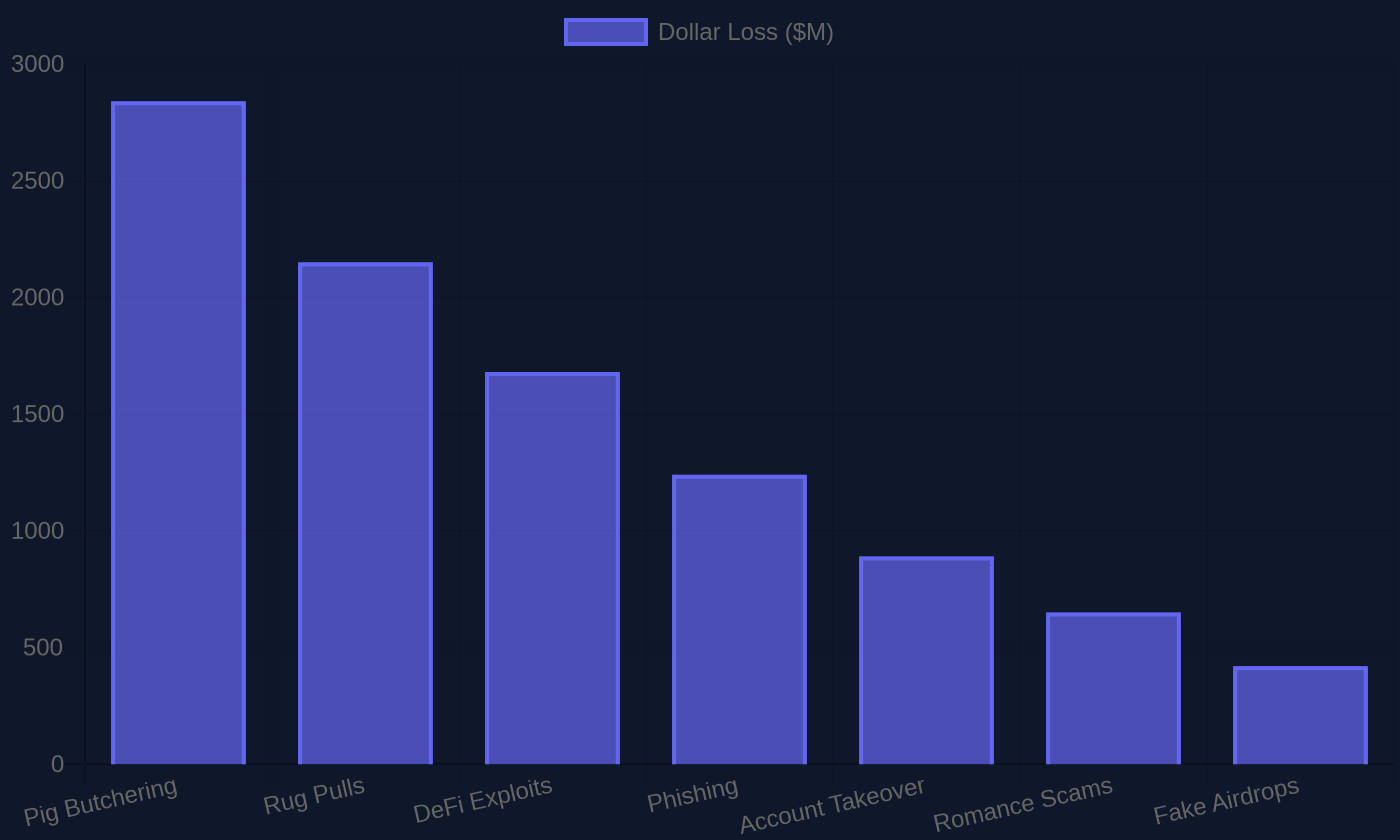
Pig butchering causes the biggest losses. The same answer as last year, and the year before.
The FBI IC3 2024 Internet Crime Report ranks investment fraud—the polite label for pig butchering—as the top loss category by dollar volume, with crypto the preferred vehicle. Victims meet a stranger, catch feelings, catch a "trading opportunity," and lose everything to a fake dashboard showing gains that never existed. Remarkable engineering, applied to theft.
The Loss Rankings, By The Numbers
Romance-investment hybrids top both the FBI complaint totals and the FTC Consumer Sentinel Network Data Book. Chainalysis on-chain tracing confirms it from the other direction—following the wallets, not the sob stories.
- Pig butchering / investment fraud — largest by dollars, per IC3 and FTC.
- Rug pulls and DeFi exploits — tracked on-chain by Chainalysis, where the "team" drains the liquidity pool and the Discord goes quiet.
- Phishing and account takeover — smaller per-incident, enormous by volume.
CryptoKiller's analysis of 12,695 scam brands shows the same funnel repeating, with 6,388 brands slapping a celebrity face on the pitch to close the deal.
Phishing losses climbed against prior years, per IC3 complaint data.
The categories rotate branding. The mechanics never change. Only in crypto.
On-chain tracing confirms investment fraud and rug pulls as top loss categories, and flags AI-assisted fraud as a 2024 accelerant that compressed the cost of running a scam to near zero.
— Chainalysis, Chainalysis Crypto Crime Report
Who Is Most Targeted: Victim Demographics and Age Breakdown
The 30-39 age group files the most crypto fraud complaints, according to the FBI IC3 2024 Internet Crime Report. So much for the "gullible grandparent" theory.
Older victims still lose the biggest dollar amounts per case — the over-60 cohort tops IC3's loss tables. Fewer complaints, fatter checks. But the volume story belongs to the young.
Why the crypto-native crowd keeps getting fleeced
Familiarity breeds victims. Users who already own wallets, chase yield, and trade tokens are the ones scammers want. They don't need convincing that crypto is real. They need convincing that this "opportunity" is.
The 20-39 demographic clicks the "guaranteed APY" ads. They recognize the jargon, which is exactly the problem. Confidence, not ignorance, is the attack surface.
Men file the majority of crypto fraud reports in FTC Consumer Sentinel data.
CryptoKiller's analysis of 105,980 ad creatives shows the targeting matches: sleek dashboards, fake ROI charts, 6,388 brands leaning on celebrity impersonation. Content built for people who think they're too sharp to fall for it.
The usual pattern. Only in crypto.
Crypto consistently posts one of the highest median individual losses of any payment method, with men filing the majority of crypto fraud reports.
— FTC Consumer Sentinel Network, FTC Consumer Sentinel Network Data Book
How Have Crypto Scam Losses Trended Over the Past Five Years?
Crypto scam losses climbed every single year from 2021 through 2026, market crashes be damned. The FBI IC3 pegged crypto-related fraud at roughly $5.6 billion in 2023, then $9.3 billion in 2024, according to the FBI IC3 2024 Internet Crime Report. Bitcoin lost most of its value in 2022. The scammers did not. Remarkable.
That's the part civilians find confusing. Price goes down, fraud goes up. The two barely correlate.
Why do losses rise when prices fall?
Desperation scales beautifully. Bear markets manufacture "guaranteed yield" promises, "recovery" scams targeting prior victims, and fake arbitrage bots. Three flavors of the same lie, sold to people trying to claw back what the last lie took.
Then 2024 arrived with generative AI. Deepfake "celebrity" endorsements, cloned voices, and auto-generated fake exchanges compressed the cost of running a scam to near zero. Chainalysis flagged AI-assisted fraud as an accelerant in its Crypto Crime Report. Volume did what volume does.
CryptoKiller's own numbers track the same curve. Across 105,980 ad creatives analyzed and 12,695 scam brands tracked, the average threat score sits at 8/100. 6,388 brands lean on celebrity impersonation.
Five years, one direction: up. The next report writes itself.
Academic estimates place formal crypto fraud reporting rates below 10%, meaning the true victim count dwarfs any published regulator figure.
— ScamAdviser Consumer Protection Research, ScamAdviser Consumer Protection Research
How Underreported Are Crypto Scams—and Why Does It Matter?
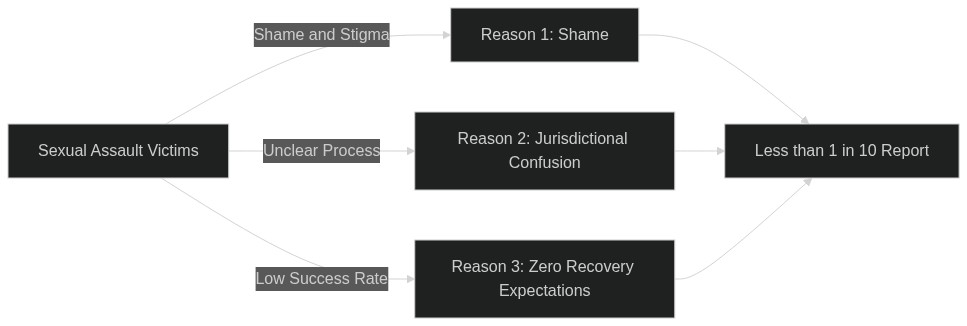
Fewer than 1 in 10 crypto fraud victims file a formal complaint. The official numbers are a rounding error on the real thing.
The FBI IC3 2024 Internet Crime Report logged billions in reported losses. Reported being the operative word. Academic estimates put actual reporting rates below 10%, meaning the true victim count dwarfs anything a regulator publishes.
Victims stay quiet for 3 predictable reasons:
- Shame. Nobody wants to explain how they wired savings to a "guaranteed" 40% APY.
- Jurisdictional confusion. The scammer sits offshore; the victim has no idea who to call.
- Recovery expectations near zero. Filing feels pointless when the money is already laundered.
The result: policy gets written against a fraction of the fraud. Regulators fund responses sized to complaints, not reality.
Community-sourced databases fill the gap official stats leave open. CryptoKiller's analysis of 12,695 scam brands and 105,980 ad creatives captures operations no victim ever reports.
The fraud that never gets counted still happens. Predictably.
How to Report a Crypto Scam and Where to Get Help
To report a crypto scam, file two complaints: one at ic3.gov with the FBI Internet Crime Complaint Center, one at reportfraud.ftc.gov with the FTC. Both are free. Neither recovers your money. That part they mention quietly.
Document everything before you file. Investigators want:
- Wallet addresses (yours and the scammer's)
- Transaction IDs from the blockchain
- Screenshots of chats, ads, and every "guaranteed return" promise
The blockchain remembers. Save it before the fake platform vanishes overnight, as they do.
What happens after you file?
A complaint enters a queue. The FBI IC3 2024 Internet Crime Report aggregates these into statistics that make headlines and change nothing. Realistic expectations recommended.
Submit the same scam to CryptoKiller's report tool. Your evidence joins 12,695 scam brands tracked and 105,980 ad creatives analyzed. Public data, not a refund.
Another victim, another complaint, another entry in the ledger. The usual pattern.
When This Guide Does NOT Apply
Already lost funds and hunting for your money back — this is a statistics roundup, not a recovery guide; try our asset recovery scam breakdown for why 'recovery' offers are usually a second scam. Researching a single named platform — this aggregates cross-brand trends, not one company's rap sheet; the review database has per-brand scores. Building AML tooling and needing raw on-chain data — this cites Chainalysis and IC3 secondhand, not transaction-level datasets. Already cross-checking every celebrity endorsement and filing IC3 complaints on sight — you're past this. And if you believe the reported numbers are the real numbers, start with the underreporting section first.
Frequently Asked Questions
How much money was lost to crypto scams in 2025?
The FBI's IC3 will publish exact 2025 totals in its annual Internet Crime Report, with crypto investment fraud ranking as the highest-loss category. Historical data shows losses exceed billions annually. Actual damage likely runs higher—many victims never file formal complaints, especially those embarrassed by the manipulation tactics scammers employ.
How many people are scammed by crypto fraud each year?
Tens of thousands file complaints annually with IC3 and the FTC. Reality? Researchers estimate actual victim counts run 10 times higher. Most victims stay silent—shame, fear of legal trouble, or simple resignation keeps them off official records. The reported numbers capture only the tip.
What is the most common type of crypto scam in 2026?
Pig butchering schemes dominate total dollar losses—romance con artists build trust over months before demanding "investment" in fake crypto platforms. Phishing attacks generate higher complaint volume but smaller per-victim losses. Both exploit the same psychology: confidence, then extraction.
Which age group loses the most money to crypto scams?
Adults over 60 report the highest median individual loss per victim—often six figures. The 30–49 bracket now claims the largest aggregate total, reflecting both population size and their target status by AI-driven scammers. Youth think they're immune. They're not.
Can you recover money lost in a crypto scam?
Recovery is rare but possible. Report to IC3 and the FTC immediately—law enforcement occasionally freezes scammer wallets within hours. Success requires speed, jurisdiction cooperation, and luck. Most victims see nothing. Some see partial recovery. Expecting full restitution is fantasy.
Are crypto scam losses increasing or decreasing?
Losses climb every year since 2020 despite bear markets. AI-generated deepfake videos, convincing fake support pages, and cross-border criminal networks operate at scale now. The infrastructure matures. The scammers professionalize. Victims multiply. Only in crypto does depression coexist with surging fraud.
Where should I report a crypto scam?
File with the FBI's IC3 at ic3.gov and the FTC at reportfraud.ftc.gov. Report wallet addresses and scam websites to Crypto Killer's database—crowdsourced threat data helps warn others before they lose everything. The report itself won't recover your money. It may save someone else's.
Sources

Prioritize CryptoKiller's scam investigations in your Google results.