How Crypto Scams Work: Anatomy of Deception in 2026
By M. Webb · Published 2026-07-13 · 2044-word read
Editorial review by John Feldt, Editorial Standards Reviewer & Crypto Analyst
How this was created
How this article was created: This guide was drafted with AI assistance (claude-opus) on 2026-07-13 and edited under the M. Webb byline. Statistics attributed to CryptoKiller come from our ad-surveillance platform (measured data, not AI output); external claims cite their sources inline. Source URLs are machine-verified before publication and the draft must pass an automated quality audit before going live. Report errors to [email protected].
A crypto scam typically follows a predictable sequence: fraudsters build false trust through impersonation or fabricated returns, then extract funds through fake deposit schemes or exit scams. CryptoKiller's analysis of 12,695 scam brands reveals dead velocity across 6,388 brands using celebrity impersonation alone. Understanding how scammers manipulate psychology and fabricate profits is your first defense.
Key Takeaways
- Scammers impersonate celebrities and use fake profit screenshots to establish false credibility before requesting deposits.
- Most crypto scams follow exit-scam or advance-fee patterns; legitimate platforms never guarantee returns or rush deposits.
- Verify regulatory status, check blockchain transaction history, and confirm team identity before investing any funds.
- Fake deposit schemes show balance increases but prevent withdrawal; this is the clearest sign of fraud.
- If scammed, document all communications, report to your country's financial regulator, and file with law enforcement immediately.
- Average scam brands in CryptoKiller's portfolio score 8 on threat scale; scores above 70 indicate imminent fraud risk.

What Is a Crypto Scam?
A crypto scam is a fraudulent scheme that steals funds by exploiting the irreversibility of blockchain transactions. Once a victim sends cryptocurrency to a scammer's wallet, no bank, no chargeback, and no central authority reverses the transfer. That finality is the core mechanic fraudsters exploit.
The FBI's Internet Crime Complaint Center (IC3) reports crypto fraud losses exceeding billions of dollars annually, with sharp year-over-year growth. The FTC tracks a parallel surge in consumer complaints tied to investment and payment scams.
Cryptocurrency attracts fraudsters for three reasons: pseudonymous wallets obscure identity, cross-border transfers evade jurisdiction, and irreversible settlement blocks recovery. Investigators trace funds on-chain, yet seizure depends on cooperation that rarely arrives across borders.
CryptoKiller's analysis of 12,695 scam brands tracked shows the scale of the problem is operational, not theoretical. Across 105,980 ad creatives analyzed, fraudulent operators recycle the same funnels at speed. Understanding the mechanics comes before recognizing the specific schemes that follow.


The Most Common Types of Crypto Scams in 2026
Five scam categories dominate crypto fraud losses in 2026: pig butchering, rug pulls, fake exchanges, investment fraud, and romance scams. Each exploits a different trust vector, but the payout mechanics converge on the same outcome — irreversible transfers to attacker-controlled wallets. CryptoKiller's analysis of 12,695 scam brands maps these categories across active campaigns.
Which crypto scams cause the largest losses?
Pig butchering scams account for the largest share of crypto fraud losses globally, according to FBI IC3 complaint data. Attackers cultivate a relationship over weeks, then funnel victims into a fake trading platform showing fabricated gains. The victim deposits repeatedly; withdrawals never clear.
Rug pulls target DeFi protocols and NFT projects where developers drain liquidity, then abandon the contract. Three recurring markers appear: anonymous teams, locked sell functions, and liquidity pulled within days of launch.
Fake exchanges and cloned wallets impersonate legitimate platforms to harvest login credentials and seed phrases. The interface mirrors a real brand; the deposit address routes elsewhere.
Investment fraud and romance scams
Investment fraud promises fixed daily returns — 1%, 2%, sometimes higher — a structure the SEC's virtual currency investor alert flags as a hallmark of Ponzi mechanics. Romance scams open on dating apps, then pivot the conversation toward a "can't-miss" coin.
Celebrity endorsements amplify all five. CryptoKiller identified 6,388 brands using celebrity impersonation to lend fake credibility. Treat any unsolicited crypto pitch tied to a familiar face as suspect.
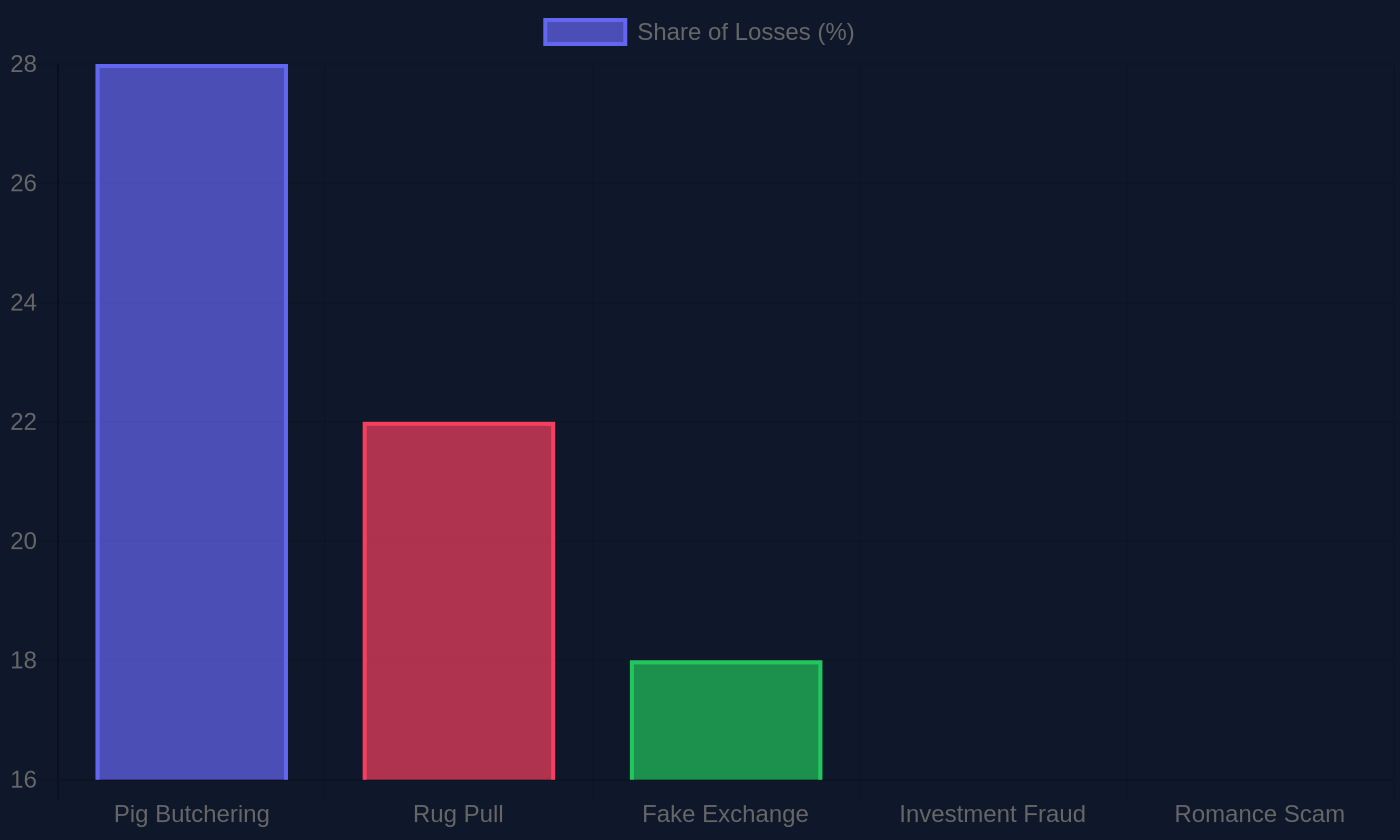
IC3 complaint data identifies pig butchering as the leading crypto fraud category by dollar loss in 2025-2026, with victims recruited through dating apps, LinkedIn, and misdirected text messages before any investment platform is mentioned.
— FBI Internet Crime Complaint Center (IC3), FBI IC3 Annual Internet Crime Report, ic3.gov, 2025
How Do Scammers Build Trust Before Stealing Your Money?
Scammers build trust across weeks or months before ever mentioning an investment. The relationship comes first, the pitch comes last. According to the FBI's Internet Crime Complaint Center, so-called "pig butchering" operators cultivate victims through daily messaging — dating apps, LinkedIn requests, misdirected "wrong number" texts — long before any wallet address appears. The delay is deliberate. A victim who has invested emotional energy questions the scheme less.
Fabricated legitimacy does the rest. Scammers deploy fake profit dashboards, cloned exchange websites, and scripted testimonials to manufacture proof that returns are real. CryptoKiller's analysis of 105,980 ad creatives shows recurring use of doctored earnings screenshots and forged regulatory badges. Across 6,388 brands using celebrity impersonation, operators borrow familiar faces to shortcut credibility.
Why do experienced investors fall for it?
Manufactured urgency defeats due diligence. Scammers frame opportunities as closing windows — "the pool fills in 2 hours," "only 5 slots left" — pressuring targets to skip verification. The SEC's Investor Alert on virtual currency investments names this exact pressure pattern.
Experience offers little protection here. The grooming targets emotion, not financial literacy.
How Do Scammers Fabricate Profits to Keep Victims Depositing?
Fraudulent platforms fabricate profits through database entries, not real cryptocurrency. The dashboard shows a climbing balance, complete with green charts and daily gains, but no coins exist behind those numbers. Victims see a $50,000 portfolio that is only a value stored in the operator's back-end.
Why do early withdrawals succeed?
Small early withdrawals succeed by design. Scammers release $200 or $500 on a first request to prove the platform pays. That single payout builds confidence and pulls the victim toward a larger deposit, often reinvesting the withdrawn amount plus fresh funds. CryptoKiller's analysis of 12,695 scam brands shows this trust-building payout as a recurring pattern across cloned trading sites.
What happens on the large withdrawal?
The fee wall appears when victims request significant sums. Operators demand a fake 'withdrawal tax', an 'anti-money-laundering fee', or an 'account verification charge' before releasing funds. Each payment funnels more money to the scammer and unlocks nothing. The FTC's cryptocurrency scam guidance documents this fee-extraction cycle, in which no withdrawal ever clears.
The SEC's virtual currency investor alert names fixed daily return promises and pressure to deposit before verification as hallmark signals of Ponzi-structured crypto investment fraud.
— U.S. Securities and Exchange Commission, SEC Investor Alert: Bitcoin and Other Virtual Currency-Related Investments, sec.gov/investor/alerts/ia_virtualcurrencies.pdf
Red Flags: How Can You Spot a Crypto Scam Before Sending Funds?
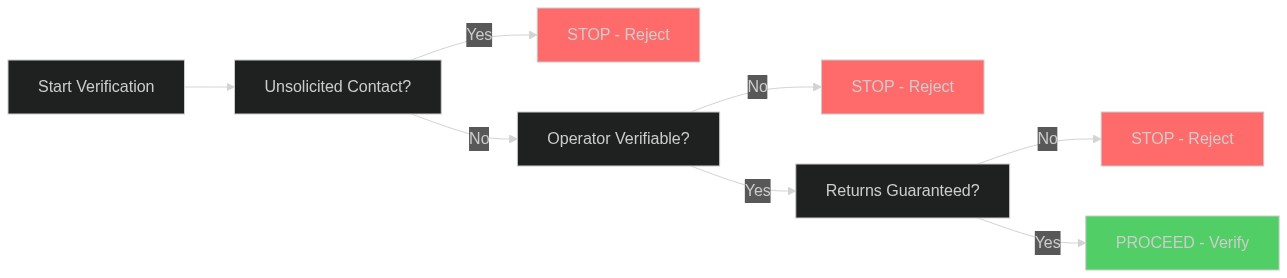
You can spot a crypto scam by checking three signals before any deposit: how the platform contacted you, whether its operators are verifiable, and what it promises. Any one of these signals warrants a full stop.
Who contacted you, and how?
Unsolicited contact is the most reliable early warning. Legitimate platforms do not recruit investors through dating apps, WhatsApp groups, or unexpected LinkedIn messages. The FBI's Internet Crime Complaint Center (IC3) links a large share of crypto-investment losses to "pig butchering" schemes that begin with a stranger's friendly message. CryptoKiller's analysis of 12,695 scam brands shows fake platforms funnel victims from social feeds into private chats, where pressure escalates away from public view.
Can you verify the operator?
Check for three things a real firm publishes: regulatory registration, a physical address, and named leadership. Fraudulent platforms omit all three or fabricate them. The SEC's virtual currency alert advises investors to confirm registration before sending money. Absence of a verifiable regulator is a decision-stopping red flag.
What does it promise?
Guaranteed returns do not exist in legitimate markets. Scams also demand recruitment of friends and charge "withdrawal fees," "taxes," or "unlock fees" before releasing funds that never arrive. Across 105,980 ad creatives analyzed, fixed-percentage return claims recur constantly.
What Should You Do If You've Been Scammed?
Stop all payments immediately. Scammers demand additional "release fees," "taxes," or "verification deposits" to unlock frozen funds, and those payments never return the original money. Each new transfer funnels more of your balance to the same wallet.
Preserve every scrap of evidence before it disappears. Scam platforms delete accounts and rotate wallets within days once a victim stops paying.
- Screenshots of the dashboard, chat logs, and any fake "profit" balances
- Transaction IDs and wallet addresses for every deposit you sent
- Communications — emails, WhatsApp threads, Telegram handles, phone numbers
Where to Report
File a report with the FTC at reportfraud.ftc.gov and the FBI Internet Crime Complaint Center (IC3) at ic3.gov. Both feed enforcement databases that investigators use to link cases across victims. Contact your bank or card issuer next — chargebacks recover funds when the deposit used a credit card rather than a crypto transfer.
Set realistic expectations. Once funds move through a self-custodied wallet, recovery is unlikely, and any "recovery service" promising retrieval for an upfront fee is a second scam. CryptoKiller tracks 12,695 scam brands, and recovery-fraud operations frequently recycle the same playbook that took your money the first time.
FTC consumer complaint data documents a recurring fee-extraction cycle in fake exchange scams — victims are charged escalating 'withdrawal taxes' and 'AML fees' that never release funds, a pattern consistent across thousands of reported cases.
— Federal Trade Commission, FTC Consumer Advice: Cryptocurrency Scams, consumer.ftc.gov, 2025
How to Verify a Crypto Platform Before You Invest
Verify a crypto platform by searching three government databases before you deposit a single dollar. The FTC, SEC, and CFTC each publish enforcement actions against fraudulent operators, and a platform name that surfaces in those records signals abandon. The SEC's Investor Alert on virtual currency investments documents the recurring fraud patterns regulators pursue.
What checks expose a fake platform?
Run the domain through ScamAdviser to pull three data points: registration age, ownership records, and existing fraud reports. Sites registered within the past 90 days that promise guaranteed returns match the profile CryptoKiller flags across 12,695 scam brands tracked. Legitimate exchanges never cold-contact users with unsolicited investment offers.
Review the platform's on-chain history where a wallet address is available. Funds that funnel immediately into mixing services or fresh wallets indicate laundering, according to blockchain analysis.
Report suspected fraud to the FTC at reportfraud.ftc.gov and the FBI's IC3. Both agencies aggregate complaints that feed later enforcement.
When This Guide Does NOT Apply
This article is not for you if you have already sent funds to a suspected scam and need recovery guidance — for that, see our bank reporting guide and asset recovery scam warning. It is also not for you if you are researching a specific platform by name; our live review database covers individual operators. If you are already verifying platforms through SEC EDGAR and IC3's complaint portal before every deposit, you are past this guide's foundational level.
Frequently Asked Questions
What is the most common crypto scam right now?
Pig butchering scams lead reported losses in 2025-2026, according to FBI IC3 data. Scammers build romantic or professional relationships over weeks, then direct victims to fake investment platforms showing fabricated profits. The victim deposits funds, sees phantom gains on-screen, then cannot withdraw without paying escalating fees. The relationship building phase is deliberate—it establishes trust before the financial trap closes.
Can you get money back after a crypto scam?
Recovery is unlikely once funds reach blockchain addresses, since transactions are irreversible. Filing reports with the FTC and FBI IC3 contributes to enforcement actions against scam operations. Avoid recovery service firms charging upfront fees—they exploit victims a second time. Report immediately to your bank or exchange; some freeze transactions if flagged within hours.
How do I report a crypto scam in the US?
File reports with the FTC at reportfraud.ftc.gov and the FBI Internet Crime Complaint Center at ic3.gov. Contact your bank or crypto exchange simultaneously to document the fraud in their records. Provide transaction IDs, wallet addresses, and screenshots of communications. These reports feed law enforcement databases used to identify patterns and shut down operations.
Are crypto giveaway promotions always scams?
Any promotion asking you to send crypto first to receive more in return is a scam. Legitimate projects and celebrities do not operate this way. The mechanics are simple: you send funds to a wallet address, receive nothing, and the scammer disappears. No exceptions exist—giveaway promotions requesting upfront deposits are theft.
What is a rug pull in crypto?
A rug pull occurs when token or DeFi project developers drain the liquidity pool and vanish, leaving investors holding worthless tokens with no recourse. Early adopters and insiders often exit first, inflating prices before collapse. Victims cannot recover funds because the contract code allows withdrawals only by the deployer. New tokens with minimal verification are highest-risk targets.
How do fake crypto exchanges steal your money?
Fake exchanges clone legitimate platform interfaces and allow deposits while displaying fabricated account balances. Withdrawal requests are blocked or denied. Scammers then demand escalating fees, administrative charges, or tax payments to unlock accounts. Victims continue paying, chasing phantom balances that never existed. The platform disappears once pressure increases or funds dry up.
What are the warning signs of a pig butchering scam?
Unsolicited contact from a stranger online initiating personal or professional conversation. Gradual shift toward investment opportunities after weeks of relationship building. An exclusive platform absent from major app stores or regulatory databases. Inability to withdraw funds without paying fees, or excuses delaying withdrawals. Any combination signals the setup phase of a long-term fraud.
Sources

Prioritize CryptoKiller's scam investigations in your Google results.