How Crypto ATM Scams Work and How to Protect Yourself
By D. Ortiz · Published 2026-07-14 · 2139-word read
Editorial review by John Feldt, Editorial Standards Reviewer & Crypto Analyst
How this was created
How this article was created: This guide was drafted with AI assistance (claude-opus) on 2026-07-14 and edited under the D. Ortiz byline. Statistics attributed to CryptoKiller come from our ad-surveillance platform (measured data, not AI output); external claims cite their sources inline. Source URLs are machine-verified before publication and the draft must pass an automated quality audit before going live. Report errors to [email protected].
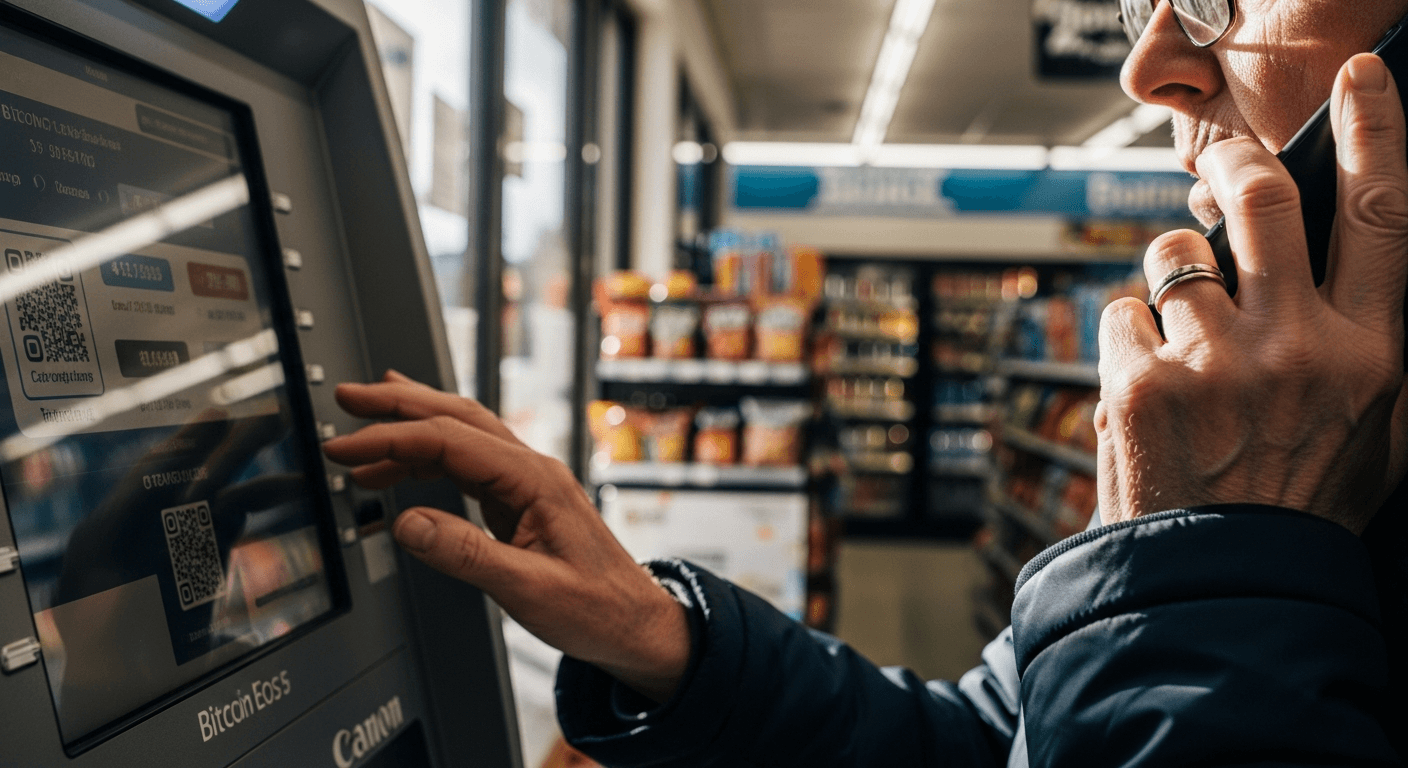
A crypto ATM scam typically begins with a convincing phone call from someone posing as tech support or law enforcement, pressuring victims to visit a Bitcoin ATM and send money to a wallet address. These scams exploit crypto ATM's irreversibility and anonymity, targeting vulnerable populations—especially older adults—who lose an average of $10,000 per incident. Understanding how scammers orchestrate these attacks and recognizing warning signs at the machine itself is essential to avoid becoming…
Key Takeaways
- Crypto ATM scams rely on social engineering via impersonation calls, not technical ATM vulnerabilities.
- Older adults are disproportionately targeted; losses often exceed $10,000 per victim.
- Red flags include pressure to act fast, ATM location in remote areas, and requests to hide transactions.
- Crypto transactions are irreversible; recovery is extremely difficult once funds leave the ATM.
- Congress and the FTC have begun regulating ATM operators and requiring transaction reporting above thresholds.
- Report suspected scams immediately to local police, the FTC, and your bank—time is critical.

What Is a Crypto ATM Scam?
A crypto ATM scam funnels a victim's cash into a stranger's digital wallet through a machine that looks like a bank ATM but obeys none of its rules. I first understood the difference standing in a Baton Rouge gas station, watching a kiosk that swallowed bills and spat out no receipt for the person on the other end—just an irreversible transfer. Bank ATMs let you dispute a fraudulent charge. Crypto ATMs offer no chargeback, no reversal, no phone number that reaches a human who can claw the money back.
That irreversibility is exactly what draws fraudsters. Transactions settle in minutes and stay largely anonymous. The Justice Department's Middle District of Louisiana warned that government-imposter scammers now direct victims to these machines specifically because the cash vanishes on contact.
The machines sit in convenience stores, pharmacies, and gas stations—places any panicked victim reaches within minutes. CryptoKiller has cataloged 12,695 scam brands feeding this pipeline, many pointing victims toward the nearest kiosk.

How Do Scammers Use Crypto ATMs to Steal Money?
Scammers steal money through crypto ATMs by manufacturing a crisis, then walking a panicked victim through a cash-to-crypto transfer that lands directly in the scammer's wallet. The mechanics rarely change. Only the story does.
It starts with contact. A phone call, a text, or a pop-up warns of a problem — and the sender poses as one of three familiar authorities: a government agency (Social Security, the IRS), a utility company threatening shutoff, or tech support claiming your bank account is compromised. The Middle District of Louisiana documented exactly this pattern, warning residents about government imposters demanding payment.
What happens once the victim believes the story?
The scammer builds urgency. Your identity was stolen. Your funds are at risk. To 'protect' the money, you must withdraw cash immediately and deposit it into a nearby crypto ATM. The FTC's January 2022 alert flagged this instruction as a hallmark of fraud — no real agency demands payment in cryptocurrency.
Then comes the QR code. The scammer texts or emails a code, tells the victim to scan it at the machine, and feed in the cash. That QR code encodes a scammer-controlled wallet address. Every bill deposited converts to crypto and routes straight to the fraudster.
The money vanishes on the blockchain in minutes. There is no chargeback, no reversal, no branch to call.

FTC consumer alerts document that older adults lose disproportionately large sums per crypto ATM fraud incident — frequently $10,000 or more in a single transaction — and that the manufactured urgency tactic ('stay on the phone, go to the machine now') is the primary mechanism preventing victims from seeking outside advice before depositing.
— Federal Trade Commission, FTC Consumer Alert: 'Did Someone Insist You Pay Them With Cryptocurrency?' — August 2023; and 'New Crypto Payment Scam Alert' — January 2022. Sample basis: FTC Consumer Sentinel Network fraud reports, aggregated nationally.
Which Scam Scripts Most Commonly Target Crypto ATMs?
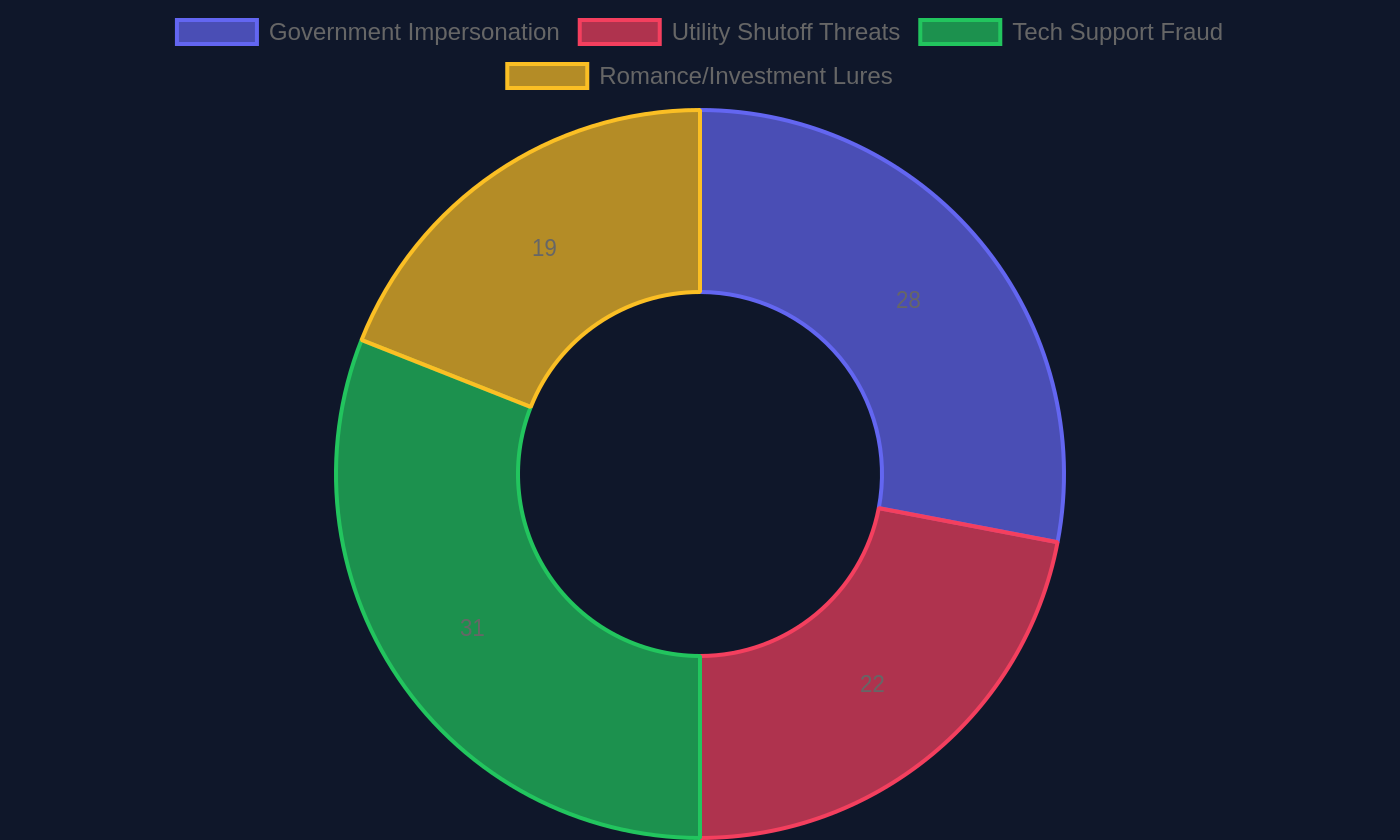
Four pretexts dominate the crypto ATM scripts I traced through federal case files: government impersonation, utility shutoff threats, tech support fraud, and romance-investment lures. Each one funnels a frightened person to the same place—a machine that turns cash into irreversible cryptocurrency.
Government imposters carry the most menacing scripts. According to the U.S. Attorney's Office for the Middle District of Louisiana, callers claim unpaid taxes, Social Security fraud, or an active arrest warrant, then demand payment before agents supposedly arrive. The FTC's January 2022 alert documented callers who stayed on the line, walking victims step-by-step to a nearby ATM to keep them from hanging up and thinking.
How do the other three scripts pull victims to the machine?
Utility scams threaten immediate cutoff—no lights, no heat—unless the bill gets paid in crypto within the hour. Tech support fraud opens with a fake security alert, then convinces the victim their bank account is compromised and a crypto ATM is the only "safe" vault for their money. Romance and investment lures work slower, grooming a target over weeks before the ask.
The FTC's August 2023 advice cuts through all four: no legitimate business, agency, or utility demands payment in cryptocurrency. Anyone who insists is running a scam. CryptoKiller's analysis of 12,695 scam brands shows the same coercion patterns replicated across investment fronts, where 6,388 brands add fake celebrity endorsements to close the sale.
Who Gets Targeted and Why Older Adults Are Hit Hardest
People over 60 lose more money per crypto ATM fraud incident than any other age group, according to the FTC. I kept returning to that gap while reading the agency's advisories — it isn't that older adults fall for more scams, it's that when they do, the amounts drained are far larger.
The reason sits in how these scams are built. Scammers exploit two things at once: unfamiliarity with cryptocurrency and an ingrained trust in authority figures. A caller claiming to be from the Social Security Administration or a local sheriff — the exact impersonation flagged by the Middle District of Louisiana — carries weight with a generation raised to respect a badge and a title.
How isolation multiplies the loss
The FTC's 2022 and 2023 alerts describe the same pattern I heard echoed in victim accounts: manufactured urgency. "Stay on the phone. Don't tell anyone. Go to the machine now." That isolation is deliberate. It strips away the one safeguard that stops most frauds cold — a family member or bank teller asking, "Why are you sending strangers cash through a kiosk?"
Federal prosecutors in Louisiana documented government-imposter scammers specifically routing victims to crypto ATMs because transaction irreversibility and anonymity eliminate the chargeback window available in bank wire or card fraud. The office flagged Social Security impersonation and fake arrest-warrant calls as the dominant pretexts used in their district.
— U.S. Attorney's Office, Middle District of Louisiana, DOJ USAO-MDLA Press Release: 'Middle District of Louisiana Raises Awareness of Government Imposter Scams' — justice.gov, retrieved 2025.
What Are the Red Flags at the ATM Itself?
One instruction ends the debate: if anyone tells you to pay a bill, fine, or government debt through a crypto ATM, it is a scam. I have yet to find a single exception. The IRS does not take Bitcoin at a kiosk. Neither does your utility company, your local sheriff, or the "Social Security fraud department" calling from a spoofed number. The FTC has said plainly that no legitimate business or agency demands payment in cryptocurrency.
Watch for the QR code. A real agency never texts or emails a QR code to scan at the machine—that code funnels your cash into a scammer's wallet the instant you deposit it. According to the Middle District of Louisiana, government imposters lean on urgency and secrecy to keep victims moving.
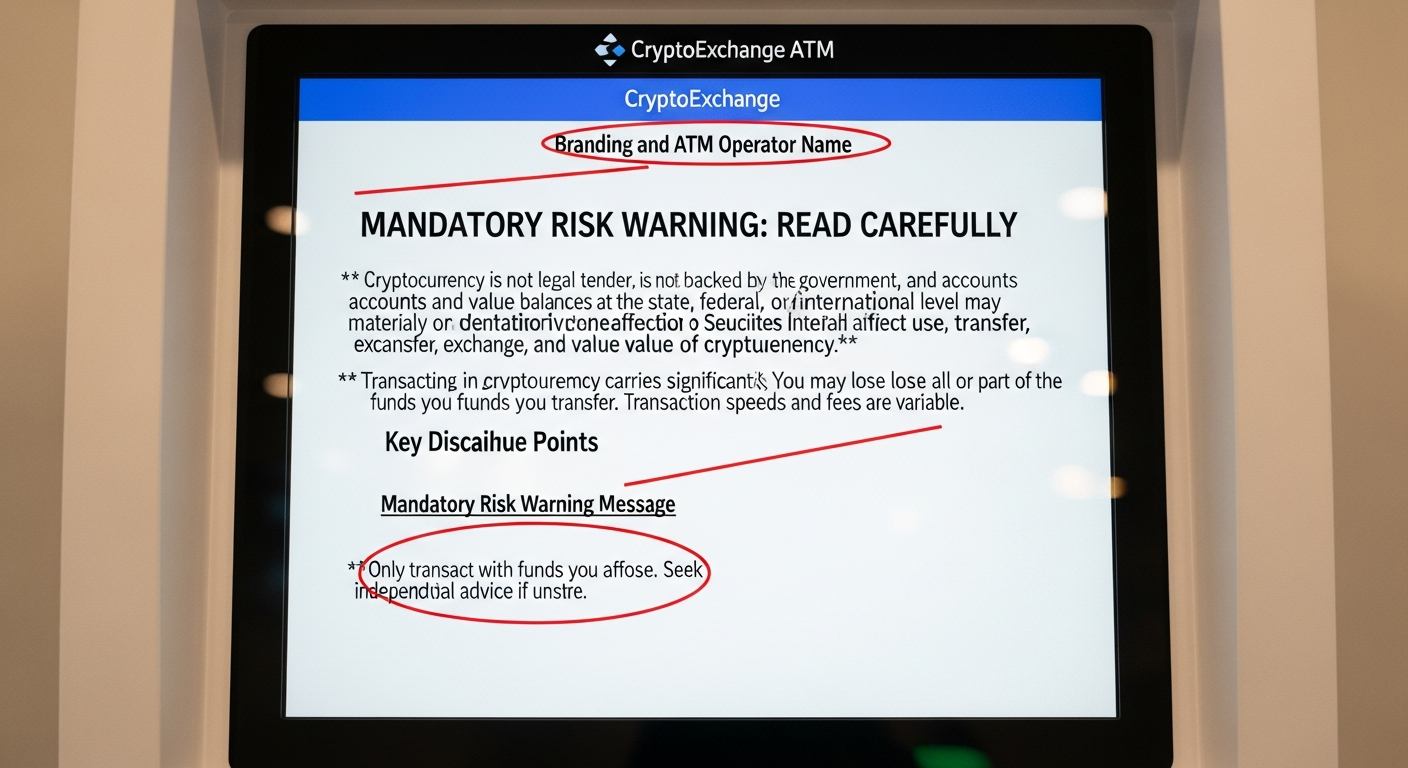
Then there's the screen itself. Many machines now display mandatory fraud warnings before a transaction completes.
How Is Congress and the FTC Cracking Down on Crypto ATM Fraud?
Senator Dick Durbin introduced the Crypto ATM Fraud Prevention Act to force daily transaction limits and mandatory fraud warnings onto every machine. When I read the bill text, three provisions stood out: caps on how much a first-time user can feed into a kiosk, plain-language warnings that fire before a deposit clears, and refund rights for victims who report fraud within a set window. "Crypto ATMs have become a preferred tool for scammers," Durbin's office wrote, framing the machines as conduits that funnel cash straight to fraudsters, according to Durbin's Senate newsroom release.
The FTC moved earlier, and it moved through warnings rather than statute. Its consumer alerts told a blunt story: anyone insisting you pay with cryptocurrency is a scammer, the agency wrote in its August 2023 advisory. The FTC is now pushing operator accountability standards that would make kiosk companies liable for the fraud their machines process.
What changes for consumers in 2026?
States aren't waiting on Washington. Several enacted daily cash limits between $1,000 and $2,000 to slow losses. CryptoKiller's analysis of 12,695 scam brands shows why regulators want friction at the deposit point — the machines cash out victims faster than any refund system can respond.
Durbin's office framed crypto ATMs as conduits that 'funnel cash straight to fraudsters,' citing the absence of transaction limits and mandatory fraud warnings as the two structural gaps enabling mass victimization. His Crypto ATM Fraud Prevention Act proposes daily deposit caps for first-time users, plain-language pre-transaction warnings, and a refund window for victims who report promptly.
— Senator Dick Durbin, U.S. Senate, Durbin Senate Newsroom: 'Durbin Cracks Down On Crypto ATM Fraud' — durbin.senate.gov, retrieved 2025.
What Should You Do If You've Sent Money Through a Crypto ATM Scam?
Call local law enforcement the moment you realize you've been scammed—speed is the only leverage you have, because crypto transactions clear in minutes and reverse never. I've watched victims lose hours arguing with themselves about whether they'd been fooled. Those hours cost them.
Here's the sequence that gives you a fighting chance:
Who to call first
- Local police. File a report immediately. Bring the machine's physical location, the transaction receipt the kiosk printed, and every scrap of scammer contact detail—phone numbers, wallet addresses, screenshots of the texts telling you to "verify your account."
- Federal agencies. Report to the FTC at ReportFraud.ftc.gov, the FBI's Internet Crime Complaint Center (IC3), and your state attorney general. The FTC has flagged this exact pattern—strangers insisting on crypto payment—as a scam signature in its consumer alerts.
- The ATM operator. Contact the kiosk company directly. Some run fraud teams that can flag the destination wallet before funds move downstream.
Recovery is rare. The Justice Department's Middle District of Louisiana warned that government-imposter scammers funnel cash through these machines precisely because the money vanishes fast.
Gather the destination wallet address anyway. CryptoKiller tracks 12,695 scam brands, and investigators pool exactly this data to map where stolen funds land.
When This Guide Does NOT Apply
This article is for people who want to recognize and avoid crypto ATM scams before they happen. It is not for you if you have already sent money and need recovery options — see our guide on fake crypto broker withdrawal blocks instead. It also does not cover online investment fraud conducted through fake trading platforms, romance scams that never reach a physical ATM, or crypto ATM operator compliance obligations from a business-law perspective.
Frequently Asked Questions
Can you get money back after a crypto ATM scam?
Getting money back after a crypto ATM scam is rarely possible because crypto transactions are irreversible by design. Your best chance comes from reporting immediately to the ATM operator and law enforcement—this flags the receiving wallet before scammers move the funds further down the chain. Speed matters enormously here.
Do legitimate businesses ever ask you to pay through a crypto ATM?
No legitimate business, government agency, or utility demands payment through a crypto ATM. Not once. Any entity pushing you toward a crypto ATM for payment—whether they claim to be the IRS, your bank, or Apple—is running a scam.
How much do people typically lose in a crypto ATM scam?
FTC data shows victims lose thousands per incident, with older adults frequently losing $10,000 or more in a single transaction. Some lose significantly more. The dollar amounts reflect how persuasive these scams have become and how much cash people keep accessible.
Are crypto ATM operators responsible for scam losses?
Currently, crypto ATM operators face limited liability for scam losses. But proposed federal legislation and mounting FTC pressure aim to change that by holding operators accountable for inadequate fraud warnings and missing transaction limits that would slow down victims.
What should I do if a caller tells me to go to a crypto ATM right now?
Hang up immediately. Do not go to any ATM. Report the call to the FTC at ReportFraud.ftc.gov. The urgency is manufactured—it's designed to shut down your critical thinking before you can ask someone for help or verify the caller's claim.
How do scammers get the crypto once I deposit cash?
Scammers provide a QR code linked to a wallet they control. The ATM scans that code and sends your deposited funds directly to them with no intermediary, no transaction review, and no reversal option. The money arrives in their account instantly.
Where do I report a crypto ATM scam in the United States?
Report to the FTC at ReportFraud.ftc.gov, the FBI's Internet Crime Complaint Center at IC3.gov, your local police department, and the crypto ATM operator's fraud line. Each report builds the evidence trail regulators need to shut down repeat operators.
Sources

Prioritize CryptoKiller's scam investigations in your Google results.