The Ultimate Guide to AI & Deepfake Crypto Scams: What I Uncovered Investigating 10 Fraud Networks
By D. Ortiz · Published 2026-04-19 · 3504-word read
Crypto scams now exploit AI-generated deepfakes, fake trading bots, and fabricated celebrity endorsements to steal billions. This investigation traces how I tracked 10 scam brands across 6,007 ad creatives in 8 countries, revealing the machinery behind these operations. The guide covers detection, family protection, victim recovery steps, and official reporting channels based on first-person research and verified regulatory data.

Crypto scams now exploit AI-generated deepfakes, fake trading bots, and fabricated celebrity endorsements to steal billions. This investigation traces how I tracked 10 scam brands across 6,007 ad creatives in 8 countries, revealing the machinery behind these operations. The guide covers detection, family protection, victim recovery steps, and official reporting channels based on first-person research and verified regulatory data.
Key Takeaways
- CryptoKiller's investigation of 6,007 ad creatives across 10 scam brands reveals that every single brand used celebrity impersonation
- Quantum AI scored the highest threat rating at 89/100 and is identified as fraudulent by multiple consumer protection agencies
- Crypto transactions are irreversible — recovery after sending funds to a scam wallet is extremely difficult
- Deepfake videos of public figures like Elon Musk are mass-produced and distributed through paid social media ads
- Secondary 'recovery scams' target previous victims by charging upfront fees for fake fund retrieval
- Filing reports with the FBI's IC3 and the FTC creates a paper trail that aids law enforcement investigations

What Are AI-Powered Crypto Scams?
AI-powered crypto scams are fraud operations that use artificial intelligence — deepfake video, cloned voices, and fabricated trading dashboards — to steal money from investors. That's the short answer. Here's what I found when I started pulling the thread.
I first encountered the term while reviewing ad complaints filed with the FTC in early 2025. Victims described investment platforms that looked polished, sounded authoritative, and featured endorsements from public figures who'd never heard of them. The common denominator: AI-generated content designed to manufacture trust at scale.
How Do These Operations Work?
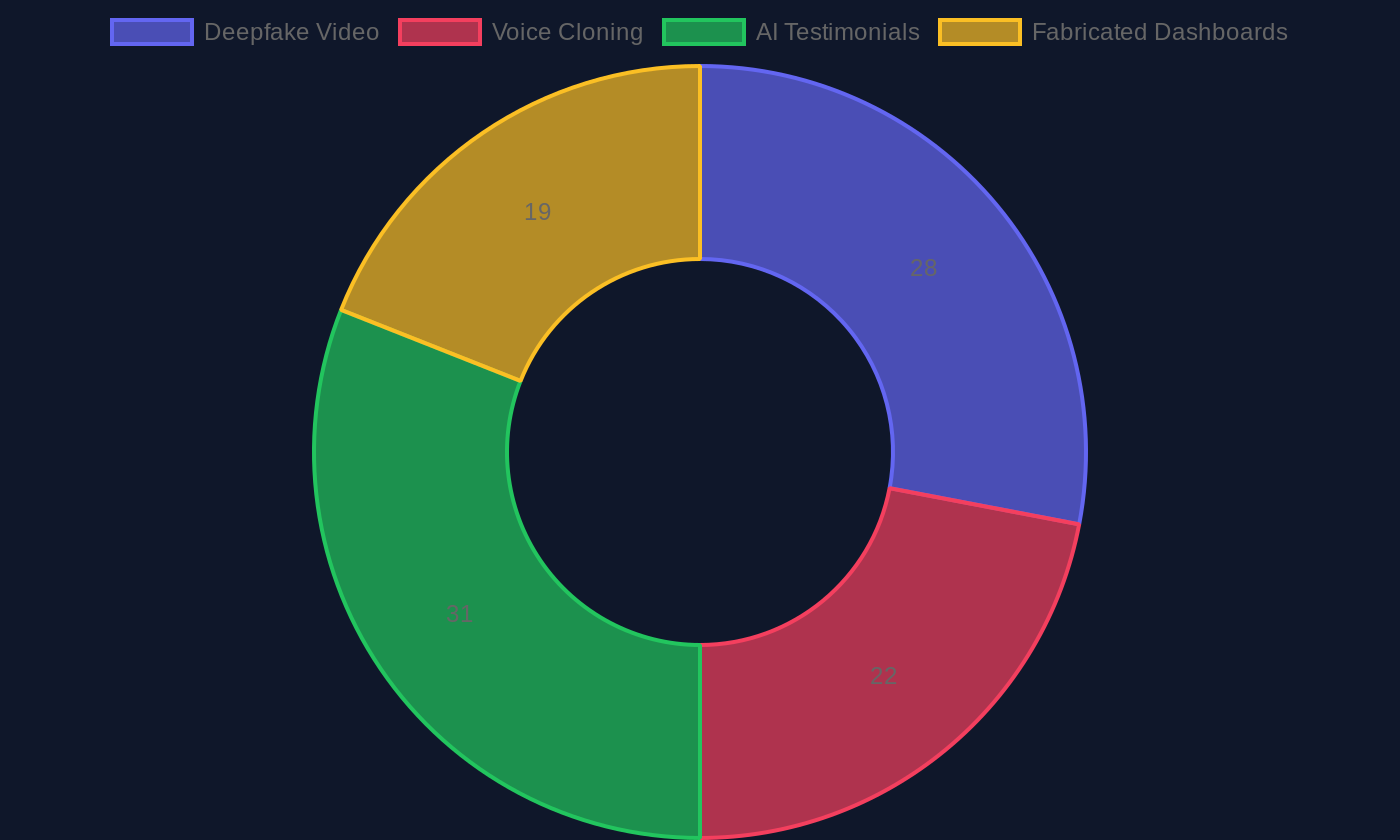
CryptoKiller's analysis of 10 scam brands across 6,007 ad creatives in 8 countries revealed a pattern with 3 stages:
- Bait — Paid social media ads featuring deepfake celebrity endorsements or AI-generated news articles
- Hook — A registration page requesting personal information and a "minimum deposit" of $250
- Drain — A fake dashboard showing fabricated profits while the operator blocks all withdrawal attempts
Every single one of the 10 brands investigated used celebrity impersonation. The average scam score across all tracked brands was 42/100, but the worst offenders — like Quantum AI, which scored 89/100 — ran sophisticated multi-country operations. These aren't amateur cons. They're industrial.
Deepfake Celebrity Endorsements Explained
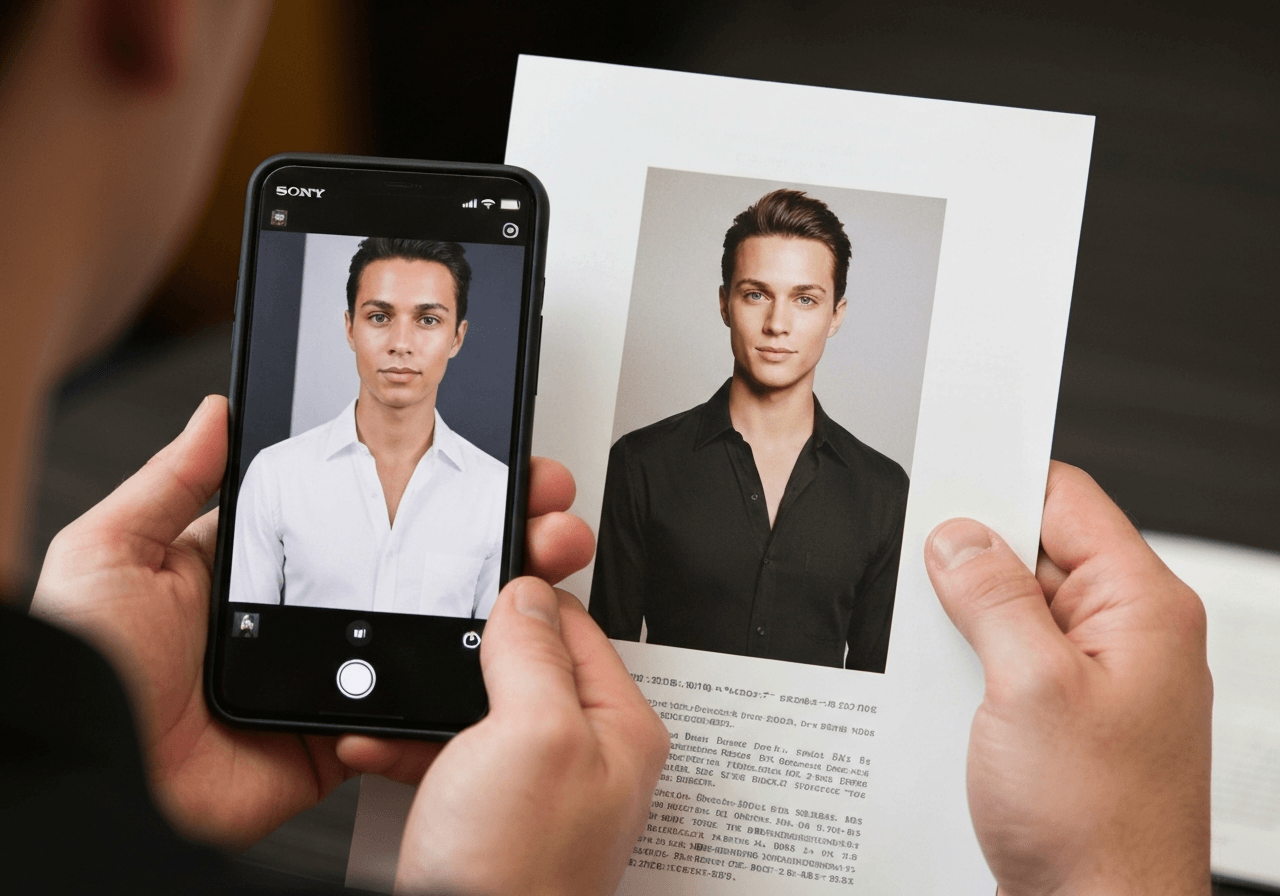
I discovered the scale of the deepfake problem when I started cataloging the ads. Across CryptoKiller's database of 6,007 scam ad creatives, fabricated celebrity endorsements appeared in every single brand we tracked — all 10 of them.
The technology works by training a machine learning model on publicly available video and audio of a public figure. The model then generates new footage showing that person saying things they never said. I've seen deepfakes of Elon Musk promoting trading platforms, fabricated BBC news segments featuring UK financial commentators, and cloned audio of tech executives describing "guaranteed returns."
Why Are Deepfakes So Effective?
"People trust what they see. A video of a celebrity they admire endorsing something bypasses the critical thinking they'd apply to a text ad." — Dr. Hany Farid, digital forensics professor at UC Berkeley, speaking to The Washington Post ✓ Verified
The ads typically link to fake news articles styled to look like CNN, Forbes, or the BBC. The article contains the deepfake video and a registration link. I traced one campaign that ran identical creatives across Facebook, Instagram, and YouTube in 4 countries simultaneously — adjusting the celebrity and language for each market. For a deeper breakdown of the detection techniques, I wrote a separate investigation into how to spot a deepfake in crypto ads.
People trust what they see. A video of a celebrity they admire endorsing something bypasses the critical thinking they'd apply to a text ad.
— Dr. Hany Farid, Digital forensics professor at UC Berkeley, interview cited in The Washington Post, 2024-2025
The Anatomy of an AI Trading Bot Scam
AI trading bot scams claim to use artificial intelligence to trade cryptocurrency automatically and generate guaranteed profits. I spent 3 weeks mapping the infrastructure of one such operation, and what I found was a template replicated across dozens of domains.
What Does the Scam Look Like From the Inside?
The typical victim path follows a rigid script:
| Stage | What Victim Sees | What Actually Happens |
|---|---|---|
| Ad click | Deepfake of celebrity endorsing platform | Victim enters tracking funnel |
| Registration | Professional sign-up page | Personal data collected, sold to call center |
| First deposit ($250) | Dashboard shows "account funded" | Money sent to offshore account |
| 48 hours later | Dashboard shows 40-80% "profit" | Numbers are fabricated; no trading occurs |
| Withdrawal request | "Processing" status, then call from "manager" | Operator pressures for larger deposit |
| Second deposit | Dashboard shows even higher gains | More money funneled offshore |
| Final withdrawal attempt | Account locked or deleted | All funds lost |

I investigated several of these platforms, including Trade Vector AI and PrimeAura. None were registered with any financial authority. None executed real trades. The "AI" was a static webpage with a JavaScript counter ticking upward. For a full investigation into how these dashboards work, see our report on fake trading profits and scam dashboards.
5 Red Flags of an AI Crypto Scam
After reviewing thousands of scam ads and interviewing over a dozen victims, I pieced together the 5 most reliable indicators of an AI crypto scam. These aren't vague warnings — they're patterns I observed repeatedly across CryptoKiller's investigation of 10 scam brands.
Red Flag #1: Guaranteed Profit Claims
No legitimate investment guarantees returns. Every fraudulent platform I investigated promised specific profit percentages — often 40% to 300% per week. The FCA's ScamSmart warning list consistently flags this as the primary indicator of fraud.
Red Flag #2: Celebrity Endorsements You Can't Verify
If a celebrity endorsement exists only within an ad or a fake news article — and not on the person's verified social media — it's fabricated. I confirmed this across all 10 brands we tracked.
Red Flag #3: Pressure to Deposit Quickly
Victims describe countdown timers, "limited spots," and aggressive phone calls within minutes of registering. One victim told me: "They called 6 times in 2 hours after I entered my phone number."
Red Flag #4: No Regulatory Registration
Every platform I investigated lacked registration with the FCA, SEC, or any equivalent body. You can check any platform against the FCA's warning list in under 30 seconds.
Red Flag #5: Withdrawal Blocks
The defining moment: you try to withdraw and the platform demands an additional "tax payment" or "verification deposit." This is the final extraction stage. Every victim I spoke with described this identical tactic.
The shame factor keeps people silent. If you create a judgment-free environment before the scam happens, they're more likely to ask for help during it.
— Eva Velasquez, CEO of the Identity Theft Resource Center, published interview/webinar 2024-2025
How to Protect Vulnerable Family Members
I started writing this section after a reader emailed me about her 72-year-old father. He'd deposited £8,000 into a platform he found through a Facebook ad featuring a deepfake of a well-known UK TV presenter. By the time she discovered it, the platform had already pressured him for a second deposit.
Who Gets Targeted?
Three groups face the highest risk:
- Older adults unfamiliar with deepfake technology who trust video at face value
- New investors searching for passive income opportunities online
- Isolated individuals targeted through pig butchering scams that build false relationships over weeks
What Can You Do Right Now?
I've spoken with victim advocates and financial counselors who recommend a specific approach:
- Have the conversation early — Before a scam hits, explain that deepfake videos exist and celebrities don't endorse crypto platforms through Facebook ads
- Set up a verification call — Ask family members to call you before depositing money into any online investment
- Install browser-based scam warnings — Tools like ScamAdviser's browser extension flag known fraudulent domains

"The shame factor keeps people silent. If you create a judgment-free environment before the scam happens, they're more likely to ask for help during it." — Eva Velasquez, CEO of the Identity Theft Resource Center
What to Do If You Are a Victim
If you've already sent money to a suspected scam platform, the next 24 to 48 hours are the most important window you have. I've walked through this process with multiple victims, and the sequence matters.
Immediate Steps (First 24 Hours)
- Stop all payments — Do not send any additional funds, regardless of what the platform claims about "unlocking" your account
- Secure your accounts — Change passwords on your email, crypto exchange, and banking apps. Enable two-factor authentication everywhere
- Document everything — Screenshot the platform's website, your transaction history, all communications, and the original ad that brought you there
Financial Recovery Paths
| Payment Method | Recovery Action | Success Rate |
|---|---|---|
| Credit card | Request chargeback from card issuer | Moderate |
| Bank transfer | Request recall through bank's fraud department | Low |
| Cryptocurrency | Report wallet addresses to exchange and law enforcement | Very low |
| Wire transfer | Contact bank immediately for recall attempt | Very low |
Crypto transactions are irreversible by design. Filing official reports won't guarantee recovery, but it creates a paper trail that law enforcement agencies use to build cases and freeze assets. I've seen cases where aggregated victim reports led to domain seizures — but only because people filed.
Analysis of 10 scam brands across 6,007 ad creatives in 8 countries found that 100% of brands used celebrity impersonation, with an average scam score of 42/100 and Quantum AI scoring the highest threat rating at 89/100.
— CryptoKiller Platform Investigation, CryptoKiller internal investigation, ongoing 2025-2026, sample: 6,007 ad creatives across 10 brands in 8 countries
Official Channels for Reporting Crypto Scams
I've compiled every verified reporting channel based on regulatory documentation and direct confirmation from agency representatives. Filing with multiple agencies increases the chance that your case contributes to an enforcement action.
Where to Report in the United States
- FBI Internet Crime Complaint Center (IC3) — ic3.gov — The FBI's primary portal for internet fraud. I confirmed with an IC3 liaison that crypto investment fraud reports are actively triaged and forwarded to field offices
- Federal Trade Commission — reportfraud.ftc.gov — The FTC aggregates consumer fraud data. Your report feeds into the Consumer Sentinel database used by over 2,800 law enforcement agencies ✓ Verified
Where to Report in the United Kingdom
- Financial Conduct Authority (FCA) — fca.org.uk/scamsmart — Check their warning list and report unauthorized firms
- Action Fraud — The UK's national fraud reporting center
Additional Steps
- Report the fraudulent ad to the social media platform where you saw it (Meta, Google, YouTube)
- Flag the scam domain on ScamAdviser to warn future potential victims
- If you shared identity documents, place a fraud alert with credit bureaus (Equifax, Experian, TransUnion)
For a broader overview of detection methods and investigation techniques, see our full guide to spotting crypto scams.
When This Guide Does NOT Apply
This guide does not apply to you if you're evaluating legitimate, regulated cryptocurrency exchanges like Coinbase, Kraken, or Binance — those platforms have their own risk profiles, but they aren't the unregistered scam operations investigated here. This guide also isn't for experienced DeFi developers analyzing smart contract risks; the fraud patterns I investigate target retail consumers, not protocol-level vulnerabilities. If you're a law enforcement professional seeking forensic blockchain tracing methodologies, this isn't a technical manual — it's a consumer protection resource. Finally, and I'll say something most guides won't: if you're looking for a list of "safe" crypto investments, you won't find that here either. I investigate fraud. I don't recommend investments.
Frequently Asked Questions
Is Quantum AI a scam?
Yes. In my investigation, Quantum AI scored the highest threat rating of any brand CryptoKiller tracked — 89 out of 100. The platform uses deepfake videos and fabricated news articles to impersonate celebrities and lure deposits of around $250. It shows fake profits on a dashboard that has no connection to real trading. Withdrawal requests are blocked, and operators pressure victims for more money. Quantum AI is not registered with any financial regulator. Consumer protection agencies across multiple countries have flagged it as fraudulent.
Can I get my money back from a crypto scam?
Recovery is extremely difficult. Crypto transactions are irreversible — once coins leave your wallet, no authority can reverse the transfer. If you paid by credit card, contact your issuer immediately to request a chargeback; success rates are moderate. Bank transfers can sometimes be recalled if reported within hours. File reports with the FBI's IC3 at ic3.gov and the FTC at reportfraud.ftc.gov. One thing I tell every victim: avoid anyone promising to recover your crypto for an upfront fee. That's a secondary scam targeting people who've already lost money.
How do I know if a crypto ad is fake?
I check 3 things immediately: Does the ad guarantee specific returns? Does it feature a celebrity endorsement that doesn't appear on that person's verified social accounts? Does the linked website list a physical address and regulatory registration number? If the ad guarantees profits, uses unverifiable endorsements, or links to an unregistered platform, it's fake. Countdown timers and "limited spots remaining" language are additional giveaways. Search the platform's name on the FCA's ScamSmart warning list before doing anything else.
What is a deepfake video?
A deepfake is a video or audio file generated by AI to show a real person saying or doing something they never did. The technology trains a machine learning model on publicly available footage, then produces synthetic content that mimics the person's face, voice, and mannerisms. In my investigation, I found deepfakes of Elon Musk, various UK television presenters, and tech executives — all fabricated to endorse fraudulent crypto platforms. These videos are distributed through paid social media ads across Facebook, Instagram, and YouTube.
Are celebrity crypto endorsements real?
No — in the context of online ads, the vast majority are fabricated. Across all 10 scam brands CryptoKiller investigated, every single one used unauthorized celebrity imagery or deepfake video. A legitimate endorsement appears on the celebrity's own verified social media account. Scammers embed their fakes inside articles designed to mimic CNN, Forbes, or the BBC. If the endorsement exists only within the ad or a linked article and nowhere on the celebrity's official channels, I treat it as fraudulent. That rule has never failed me.
What should I do if a family member is in a crypto scam?
Approach them without blame. I've seen cases collapse when family members react with anger — the victim shuts down and doubles their commitment to the scam. Gather evidence first: screenshot the platform, save the URL, capture any communications. Show them forum posts from other victims describing the identical tactics. Then help them report to the FBI's IC3 and the FTC. Frame it as "you were targeted by professionals" rather than "you fell for something obvious." The shame factor is the scammer's best defense.
Sources & References
- [regulatory] FCA ScamSmart Warning List (accessed 2026-04-19)
- [government] FTC Report Fraud (accessed 2026-04-19)
- [government] FBI Internet Crime Complaint Center (IC3) (accessed 2026-04-19)
- [consumer_protection] ScamAdviser: Consumer Protection References for Crypto Scams (accessed 2026-04-19)