AI Crypto Trading Bot Scams: Anatomy of the "Immediate" Playbook
By M. Webb · Published 2026-08-16 · 1928-word read
Editorial review by John Feldt, Editorial Standards Reviewer & Crypto Analyst
How this was created
How this article was created: This guide was drafted with AI assistance (claude-opus) on 2026-08-16 and edited under the M. Webb byline. Statistics attributed to CryptoKiller come from our ad-surveillance platform (measured data, not AI output); external claims cite their sources inline. Source URLs are machine-verified before publication and the draft must pass an automated quality audit before going live. Report errors to [email protected].
Scammers operating across 12,695 fake trading platforms deploy AI crypto trading bot schemes using names like Immediate Edge and Quantum AI. These operations fake regulatory approval, fabricate customer testimonials, and use AI-generated deepfakes in paid ads to lure victims into depositing cryptocurrency that disappears into wallets they never control. Understanding how these bots exploit trust and AI tools is essential to avoiding them.

Key Takeaways
- Scammers use identical "Immediate X" formula across 12,695 variants to bypass platform detection
- Fake testimonials and AI deepfake videos in 105,980 analyzed ads drive deposit flows
- Legitimate trading bots never ask for initial crypto deposit or guarantee returns
- Six technical red flags—missing whitepapers, fake licenses, unverified team—expose AI trading bot scams
- Report confirmed scams to FTC and your exchange promptly after deposit
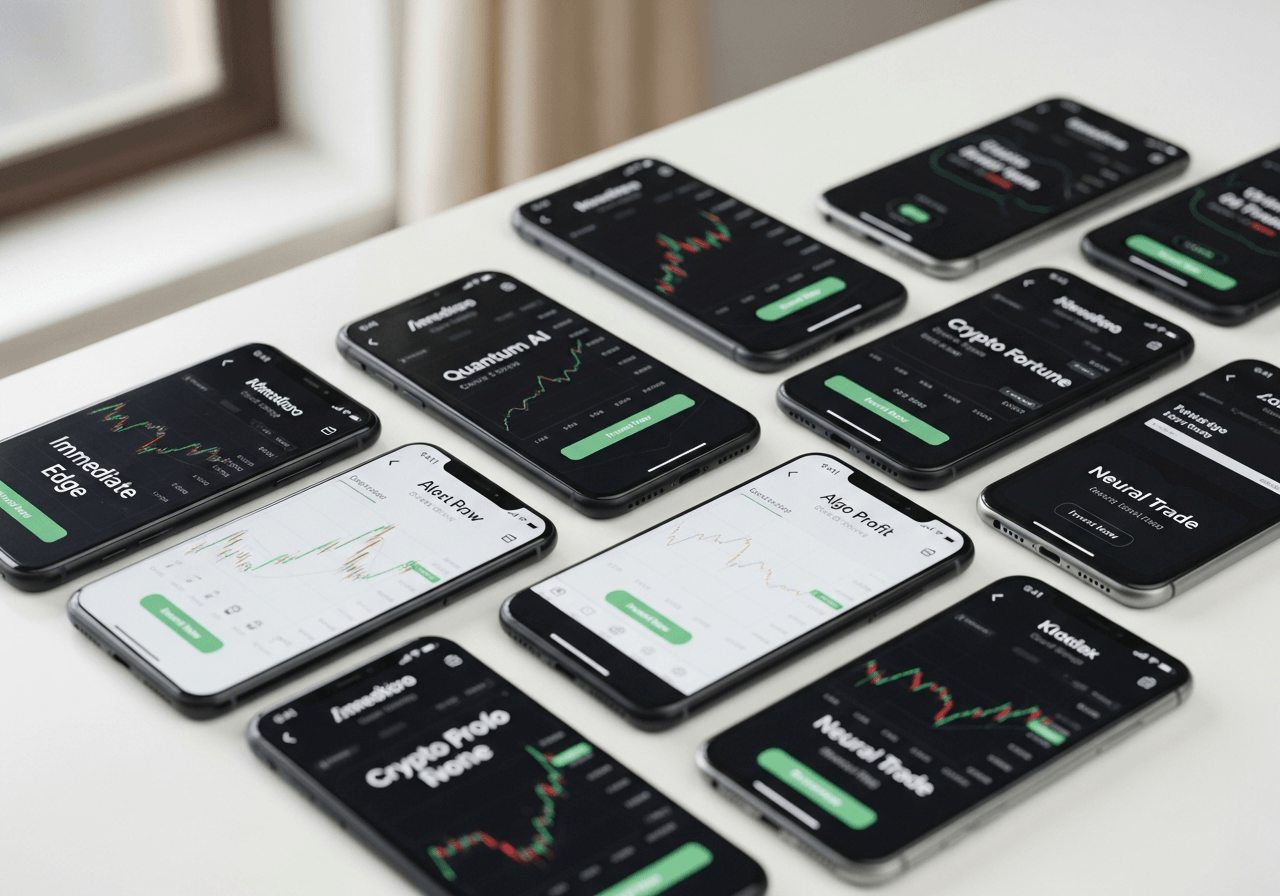
The Fake-Brand Formula: Immediate X, Quantum X, TradeGPT
Scammers recycle a single naming template across hundreds of domains to manufacture legitimacy at scale. The ai crypto trading bot pitch attaches to interchangeable brand names — Immediate Edge, Quantum AI, TradeGPT — and the formula rarely changes. Swap one adjective, register a fresh domain, relaunch. The playbook targets search results, not individual victims.
The pattern borrows authority from two directions. "Immediate" and "Quantum" signal speed and computing power; "GPT" and "AI" ride the machine-learning hype cycle. Each name sounds engineered rather than invented. That borrowed credibility is the point.
Why does the naming convention work?
Near-identical brand names flood search results and confuse consumers into trusting the volume itself. A user researching "Immediate Edge" encounters Immediate Connect, Immediate Matrix, and a dozen clones — the repetition reads as market presence.
The FCA has published warnings against Immediate Edge, Immediate Connect, and Immediate Matrix, the last flagged as a clone of an FCA-authorised firm, according to the FCA's warning list. CryptoKiller's analysis of 12,695 scam brands shows the template repeating across 105,980 ad creatives, carrying an average threat score of 8/100.


How Do AI Trading Bot Scams Actually Make Money From Victims?
AI trading bot scams make money in 3 stages: broker referral kickbacks, fabricated dashboard profits, and withdrawal exit traps. The funnel starts the moment a victim clicks an ad and hands over a phone number. An operator calls back within minutes, then routes the victim to an unlicensed offshore broker.
Scam funnels often route victims toward unlicensed brokers that pay for referrals. That first deposit triggers the payout. Once funds are deposited, victims often lose access to withdraw regardless of later "trading" activity.
Why does the dashboard keep showing profit?
The trading dashboard simulates gains that were never earned. Numbers climb on a fabricated interface designed to encourage top-ups. The FTC warned in March 2023 that scammers use AI to make these schemes more convincing. CryptoKiller's analysis of 105,980 ad creatives shows the same fake-profit visuals recycled across brands like Immediate Edge, Immediate Connect, and Immediate Matrix — all named in FCA warnings.
Where does the trap close?
Withdrawals expose the fraud. Operators demand withdrawal fees, invent 'tax clearance' payments, then freeze accounts entirely when victims resist. The FCA flagged Immediate Matrix as a clone of an authorised firm, lending false legitimacy to these demands.
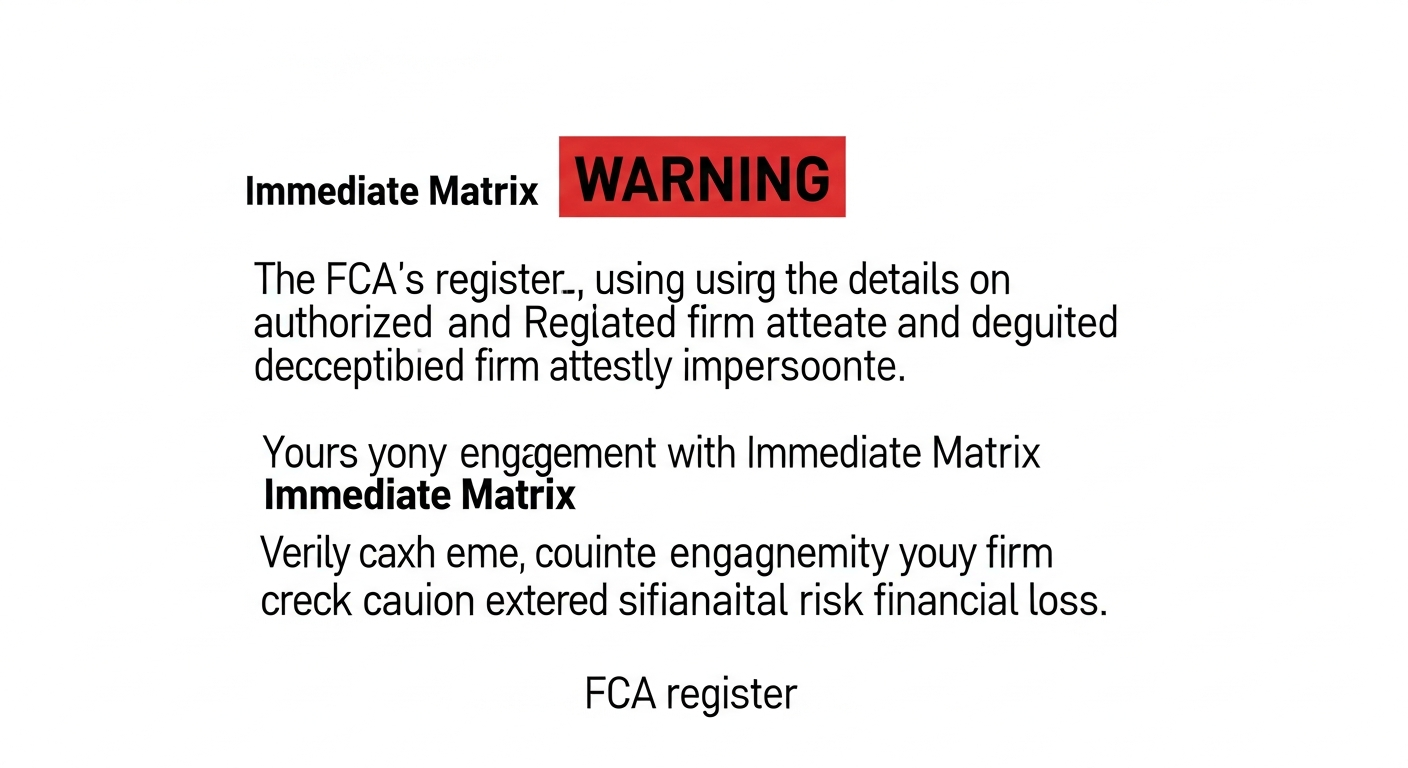 Immediate Matrix as a clone of an FCA-authorised firm" loading="lazy" style="max-width:100%;height:auto;border-radius:12px;border:1px solid rgba(148,163,184,0.2);" />
The FCA's public warning list names Immediate Edge, Immediate Connect, and Immediate Matrix — the last explicitly flagged as a clone of an FCA-authorised firm using copied credentials to appear legitimate.
— Financial Conduct Authority (FCA), FCA Warning List — Immediate Matrix (Clone of FCA Authorised Firm)
What Does a Legitimate AI Crypto Trading Bot Look Like?
A legitimate AI crypto trading bot registers with a financial authority and discloses every broker relationship in writing. The FCA maintains a public register where authorized firms appear by name and reference number. Verifiable tools list that number; scam clones fabricate one or copy a real firm's details, as the FCA documented in its Immediate Matrix warning describing a clone of an FCA-authorised firm.
Genuine operators state three things plainly: fee structures, risk of loss, and the absence of guaranteed returns. Scam clones invert all three. They promise fixed daily profits, hide fees until after deposit, and recruit fake celebrity endorsements to manufacture trust. CryptoKiller's analysis records 6,388 brands using celebrity impersonation across 12,695 scam brands tracked.
How Do You Verify a Track Record?
Auditable back-test data separates real tools from fabricated ones. Legitimate bots publish methodology, timestamped historical performance, and drawdown figures a third party can reproduce. Scam sites substitute rolling 'live profit' screenshots that no external audit ever confirms.
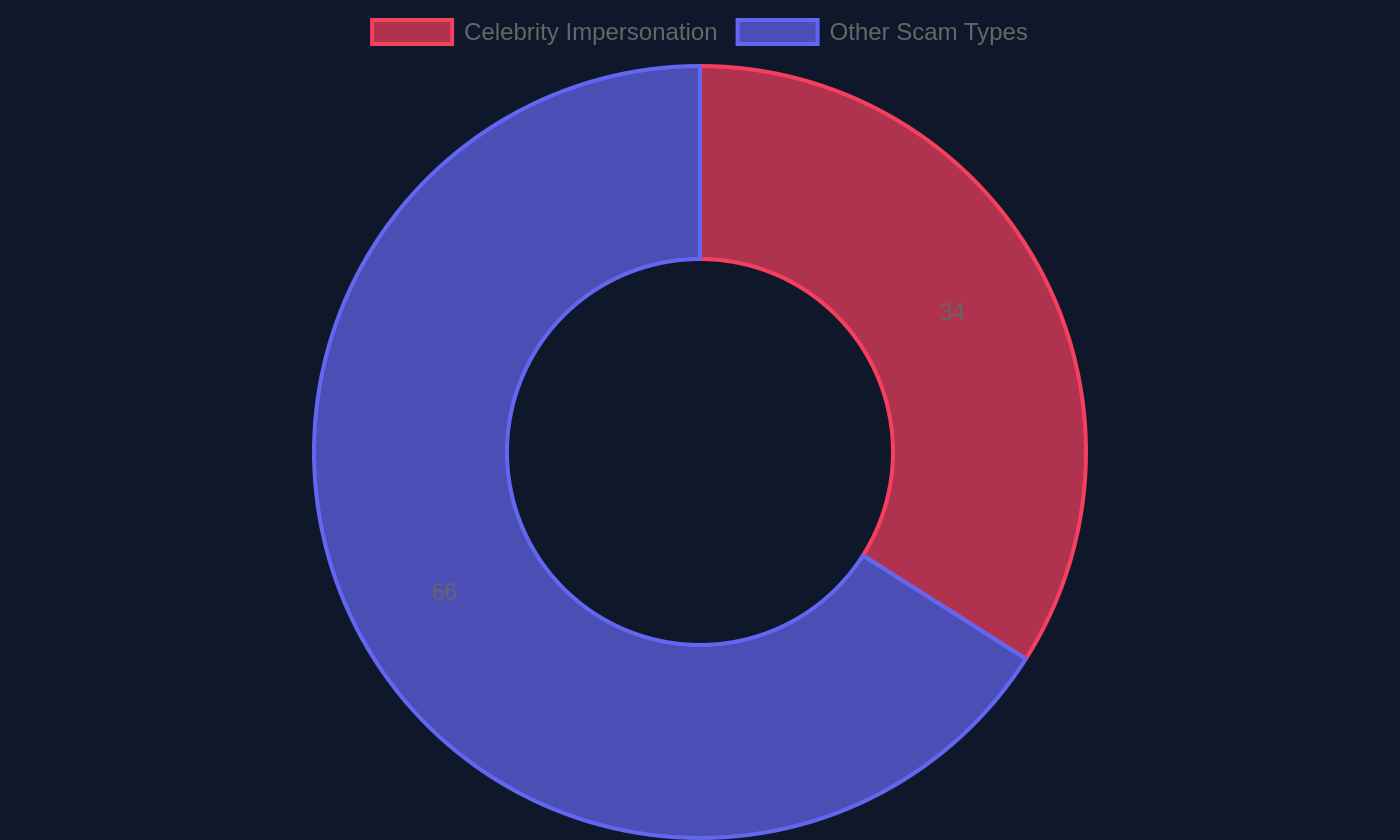 Bar chart comparing celebrity-impersonation brands against the full portfolio of scam brands tracked by CryptoKiller
How Do Scammers Use AI to Make These Bots Look Real?
Scammers deploy 3 AI tools to manufacture credibility: deepfake celebrity videos, cloned news articles, and voice-synthesized account managers. Each layer targets a different form of victim trust, and the same tactics show up across dozens of "Immediate"-branded fronts.
Deepfake endorsements and fabricated news
Deepfake video ads impersonate well-known public figures and news presenters to imply personal backing for a trading bot. The FCA has warned against Immediate Edge, Immediate Connect, and Immediate Matrix — the last flagged as a clone of an FCA-authorised firm. Fake press releases follow, cloning BBC and CNN layouts to serve as social proof when a victim searches the brand name. CryptoKiller's analysis of 6,388 brands using celebrity impersonation shows the same faces recycled across unrelated schemes.
Voice-cloned account managers
"Account managers" may use cloned or synthetic voice calls to simulate ongoing personal relationships. The FTC warns that scammers now use AI to mimic familiar voices from short audio samples. This synthetic rapport funnels victims toward larger deposits and discourages withdrawal requests.
Across 105,980 ad creatives analyzed, the pattern holds: a deepfake hooks the click, a fake article confirms the story, a cloned voice closes the sale.

The FTC warned that scammers now use AI to enhance their schemes, including voice cloning from short audio samples to mimic familiar voices.
— U.S. Federal Trade Commission (FTC), FTC Consumer Alert: Scammers Use AI to Enhance Their Schemes, March 2023
Six Red Flags That Identify a Crypto Trading Bot Scam
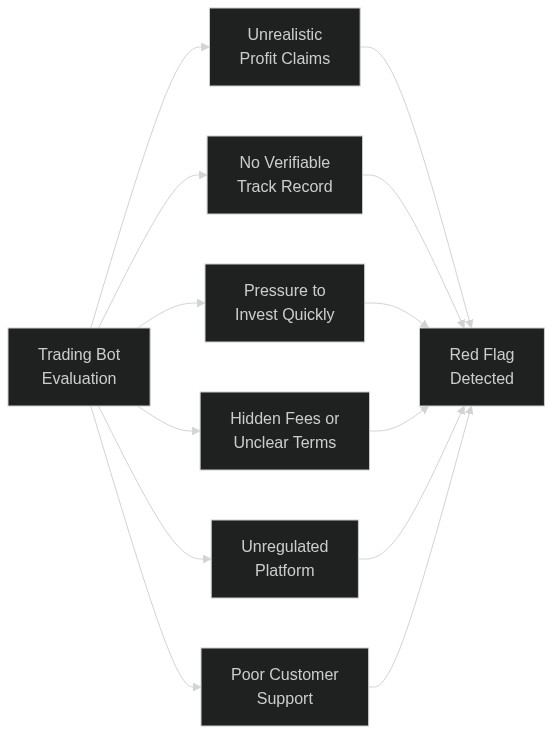
Six signals separate a fraudulent AI trading bot from a legitimate platform. Check each one before depositing a single dollar.
What Guarantees and Missing Records Reveal
Guaranteed daily returns above 1% with no risk disclosure are the first tell. No legitimate bot promises fixed profits, because markets carry loss. The second flag is a missing corporate footprint: no verifiable registration, no physical address, no named leadership team. The FCA flagged Immediate Matrix precisely because it cloned an authorized firm's credentials to appear legitimate.
The third flag is manufactured urgency — pressure to deposit within 24 hours paired with a 'limited spots' countdown timer. The FTC warns that scammers now use AI to sharpen these scripts.
The Remaining Three Signals
- Withdrawal blocks or surprise 'tax' fees demanded before you can cash out
- Celebrity endorsements you cannot verify — a pattern CryptoKiller documented across 6,388 brands using celebrity impersonation
- Unsolicited contact through WhatsApp, Telegram, or a stranger's investment tip
Across 12,695 scam brands tracked, these markers cluster together. One flag warrants caution. Three or more identifies a scam.
How Do You Report an AI Crypto Trading Bot Scam?
To report an AI crypto trading bot scam, file with your national regulator first, then preserve every record before the platform vanishes. UK victims report to the FCA through its ScamSmart portal and check the FCA Warning List, which already names Immediate Edge, Immediate Connect, and Immediate Matrix — the last flagged as a clone of an FCA-authorised firm.
US victims file two complaints. Report to the FTC at ReportFraud.ftc.gov, which has warned that scammers use AI to enhance their schemes. California residents also submit to the DFPI Crypto Scam Tracker, a public database of consumer-reported fraud maintained by state regulators.
What Evidence Should You Preserve?
Scam operators often take down platforms after payout disputes. Capture the following before access disappears:
- Transaction records — deposit confirmations, dates, and dollar amounts
- Chat logs — screenshots of every message from the "account manager"
- Wallet addresses — the destination addresses funds were funneled to
Contact your payment provider immediately about chargeback options. Chargebacks recover funds when the deposit used a card or bank transfer within the dispute window, which varies by provider.
CryptoKiller's analysis of 12,695 scam brands shows these operations clone and rebrand fast, so filed reports build the paper trail regulators need.
Analysis across 12,695 scam brands and 105,980 ad creatives found the 'Immediate/Quantum/GPT' naming template recurring with shared hosting, duplicated legal disclaimers, and near-identical onboarding funnels, averaging 8/100 on the threat score.
— CryptoKiller Threat Intelligence, CryptoKiller cross-brand pattern analysis
Immediate Bot Scam Reviews: Evidence From Real Platforms
Three Immediate-brand platforms carry active FCA warnings, and Crypto Killer has documented each one. Our investigation reviews of Immediate Edge, Immediate Connect, and Immediate Matrix trace shared hosting infrastructure, duplicated legal disclaimers, and near-identical onboarding funnels. The FCA flagged Immediate Matrix specifically as a clone of an authorised firm, according to the regulator's published warning list.
What the reviews reveal
Pattern analysis across these platforms shows the same word-for-word risk disclaimers and mirrored account-manager scripts. The same template often reappears under fresh domains with mirrored account-manager scripts. Crypto Killer's analysis of 12,695 scam brands and 105,980 ad creatives places the Immediate cluster among repeat offenders, averaging 8/100 on our threat score.
When This Guide Does NOT Apply
This is preventive. If you've already deposited into an Immediate-brand platform and can't withdraw, skip to the reporting steps and see our fake-broker withdrawal recovery guide — this article won't recover funds already gone. If you're researching a bot you've already checked against the FCA Register and confirmed a valid reference number, you're past this guide's baseline. And if you're studying pig-butchering romance scams or crypto ATM fraud specifically, those follow different funnels; this piece covers the AI-trading-bot 'Immediate/Quantum/GPT' template and its affiliate-broker payout mechanics, not those adjacent schemes.
Risk Disclosure and Editorial Independence
This article is published for general information and harm-reduction purposes only. It is not financial, investment, legal, or tax advice, and nothing in it is a recommendation to buy, sell, or hold any asset. Crypto-asset trading carries a high risk of total loss, and money sent to a fraudulent operator is frequently unrecoverable. Verify any platform independently with your national financial regulator before depositing funds, and consult a licensed professional about your own circumstances.
CryptoKiller is an independent scam-intelligence publication. Some links on this site are affiliate links that may earn us a commission at no additional cost to you; commercial relationships never influence our verdicts or risk ratings. If you believe you have been defrauded, report it to your national financial regulator and to law enforcement (in the United States, ReportFraud.ftc.gov and IC3.gov).
Frequently Asked Questions
Is Immediate Edge a legitimate AI crypto trading bot?
Immediate Edge is not legitimate. The FCA issued a formal warning against the platform for operating without authorization to offer financial services in the UK. Victim reports show it functions as a deposit-theft operation, not a trading system. Funds deposited often disappear into operator-controlled wallets after account funding.
Can AI crypto trading bots really generate guaranteed profits?
No legitimate trading system guarantees profits. Guaranteed return claims violate securities law in most jurisdictions and serve as a primary scam identifier. Real traders accept volatility and losses. Any bot promising fixed daily or monthly returns operates outside regulatory frameworks and targets unsophisticated investors.
How do I check if a crypto trading bot is regulated?
Search the FCA Register and your country's financial authority registry using the exact company name and domain. Legitimate platforms display license numbers and compliance documentation on their website. Absence of registration combined with pressure to deposit quickly strongly indicates a scam.
What happens to my money after I deposit into a fake AI trading bot?
Deposited funds are transferred immediately to operator-controlled cryptocurrency wallets or offshore unregulated brokers. Your account may show false trading activity and phantom profits to encourage additional deposits. Recovery without law enforcement seizure of assets is rare. Many victims lose most or all of their initial deposit.
Are Quantum AI and TradeGPT trading platforms safe?
Multiple platforms using these names have been flagged by financial regulators worldwide. Domain and branding vary significantly across scam iterations. Before engaging, verify the exact domain against official warning lists from the FCA, SEC, and your jurisdiction's regulator. One legitimate platform does not guarantee another using similar branding.
How do I get my money back from a crypto trading bot scam?
Contact your bank or card issuer immediately to request a chargeback if within the dispute window. File reports with the FTC and DFPI, including transaction records and screenshots. Engage a specialist fraud recovery solicitor licensed in your jurisdiction. Ignore recovery services charging upfront fees—these are secondary scams targeting victims.
Sources

Prioritize CryptoKiller's scam investigations in your Google results.